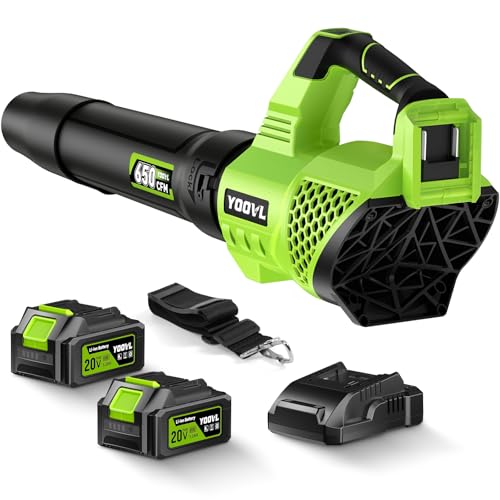
Best Cordless Leaf Blower with Battery and Charger
Cut the cord, skip the fuel, and clear your yard faster. This research-backed guide breaks down airflow, battery runtime, weight, and kit contents so you can choose a complete cordless leaf blower package with confidence.
See Recommended ModelsWhy a complete kit matters: A cordless leaf blower is only as useful as its power source. Buying a model that includes both a battery and a charger removes guesswork, ensures compatibility, and lets you start working on day one. This guide focuses on full kits and the specifications that actually affect real-world performance.
Why Choose a Cordless Leaf Blower?
Cordless leaf blowers have transformed yard cleanup. Without a power cord or a gas can, you can move freely across the lawn, driveway, patio, and garden beds. Modern brushless motors and high-capacity lithium-ion batteries deliver airflow that rivals many gas models, while running quieter and producing zero emissions. For homeowners who value convenience and low maintenance, a battery-powered blower is often the most practical choice. If you are also upgrading other yard equipment, pairing tools from the same battery platform can simplify your setup—similar to how a cordless self-propelled mower and a cordless blower can share batteries and chargers.
Cordless models shine for routine tasks: clearing leaves from lawns, blowing grass clippings off walkways, drying wet surfaces, and tidying garden beds. They are especially handy in neighborhoods with noise restrictions, since electric blowers typically run at lower decibel levels than gas versions. For heavy, soaked leaf piles, a rake still helps, but a mid-range or premium cordless blower can handle light wet debris when airflow is high enough. For broader seasonal cleanup strategies, see our fall gardening guide.
Key Specs That Actually Matter
Marketing labels can be confusing. Focus on these measurable factors when comparing cordless leaf blower kits.
Airflow (CFM)
Cubic feet per minute measures volume. Higher CFM moves more leaves at once, which matters for large piles and broad surfaces.
Air Speed (MPH)
Miles per hour measures force. Higher MPH helps dislodge stuck debris and push leaves across hard surfaces like driveways.
Battery Voltage & Runtime
Voltage hints at power class, while amp-hours and runtime tell you how long the tool runs. A complete kit includes both battery and charger.
Weight & Balance
A lightweight blower reduces fatigue during long sessions. Handheld models are easiest to maneuver; backpack models suit larger properties.
Noise Level
Lower decibel ratings are friendlier to neighbors and more comfortable for extended use. Check manufacturer noise specifications.
Kit Contents
Confirm the package includes a battery and charger, plus nozzles or attachments. Complete kits prevent compatibility surprises.
Cordless Leaf Blower Tiers at a Glance
Rather than quoting prices, this table uses universal quality tiers so the guide stays useful over time. Compare relative strengths across categories and match them to your yard size and workload.
| Tier | Best For | Typical Strengths | Trade-offs |
|---|---|---|---|
| Entry-level | Small yards, light leaves, quick tidy-ups | Lightweight, easy to store, simple controls | Lower CFM and MPH, shorter runtime |
| Mid-range | Average suburban yards, mixed debris | Balanced airflow, brushless motors, better runtime | Heavier than entry-level, still limited for huge piles |
| Premium | Large properties, frequent cleanup, wet leaves | High CFM and MPH, long runtime, quieter operation | Higher weight, larger batteries, more complex controls |
| Top-tier / backpack | Extended sessions, big leaf volumes | Maximum power, harness support, sustained runtime | Bulkier storage, higher learning curve |
What to Look For in a Battery and Charger Kit
The battery and charger are not accessories—they define the ownership experience. A complete kit should include a battery that matches the blower's power draw and a charger that fits your routine.
- Battery chemistry: Lithium-ion is standard. Look for packs with built-in charge indicators and temperature protection.
- Charger speed: Faster chargers reduce downtime if you own only one battery. Some kits include rapid chargers.
- Battery platform: If you already own other cordless tools, choose a blower that shares the same battery platform.
- Runtime vs. weight: Larger batteries extend runtime but add weight. Handheld blowers benefit from balanced packs.
- Attachments: Nozzles and concentrators improve control. Vacuum kits add collection capability but increase weight.
- Warranty coverage: Check separate warranty terms for the tool, battery, and charger.
If you plan to store your blower and battery in a shed, consider how temperature affects battery life. Keeping batteries indoors during extreme heat or cold helps preserve capacity. For shed organization ideas, explore our garden tool storage guide.
Handheld vs. Backpack Cordless Blowers
Handheld cordless blowers are the most popular choice for residential use. They are easy to grab for quick jobs, store compactly, and maneuver well around garden beds and patio furniture. Mid-range and premium handheld models now deliver airflow that handles most suburban leaf cleanup.
Backpack cordless blowers distribute weight across the shoulders and typically offer longer runtime and higher power. They are ideal for larger lots, long driveways, and extended fall cleanup. The trade-off is bulkier storage and a higher learning curve. If you maintain a large lawn, a backpack blower can complement equipment like a battery electric zero-turn mower by keeping clippings and leaves off hard surfaces.
Maintenance and Safety Tips
Cordless blowers require less maintenance than gas models, but a few habits extend their life. Clean the intake vents after dusty jobs, check the nozzle for debris, and store batteries at moderate temperatures. Avoid charging a hot battery immediately after heavy use; let it cool first.
- Wear eye protection and hearing protection during extended use.
- Never point the blower at people, pets, or fragile plants.
- Use lower settings near garden beds to avoid displacing mulch.
- Keep batteries away from moisture and inspect chargers for damage.
- Follow the manufacturer's guidance for battery storage and charging cycles.
For seasonal garden prep that pairs well with leaf cleanup, see our winter garden preparation guide and spring gardening checklist.
Ready to Compare Complete Kits?
Browse recommended cordless leaf blower kits with battery and charger included, and match airflow and runtime to your yard.
View Recommended ModelsFrequently Asked Questions
What should I look for in a cordless leaf blower with battery and charger?
Focus on airflow (CFM), air speed (MPH), battery voltage and runtime, overall weight, noise level, and whether the kit includes both a battery and a charger. A complete kit is more convenient than buying components separately.
How long does a cordless leaf blower battery last?
Runtime depends on battery capacity and the blower's power setting. Entry-level models may run 15 to 25 minutes, mid-range models often reach 30 to 45 minutes, and premium high-capacity batteries can exceed an hour on lower settings.
Are cordless leaf blowers as powerful as gas models?
Premium cordless models now rival many gas blowers for typical residential tasks like clearing leaves, grass clippings, and driveway debris. Gas still has an edge for sustained heavy-duty commercial use, but cordless offers quieter operation and no fuel mixing.
Can I use a cordless leaf blower for wet leaves?
Mid-range and premium cordless blowers with high CFM and MPH ratings can move light wet leaves, but heavy soaked piles are best handled with a rake first. For consistently wet conditions, choose a model with higher airflow.
Do I need a blower with a vacuum function?
A vacuum function is useful if you want to collect leaves for composting or disposal. Blower-vac combos are heavier and often less powerful as blowers, so choose based on whether collection matters to you.
Final Thoughts
The best cordless leaf blower with battery and charger is the one that matches your yard size, debris type, and storage space. Prioritize a complete kit, compare CFM and MPH honestly, and consider battery platform compatibility if you already own cordless tools. With the right model, leaf cleanup becomes faster, quieter, and far less tiring—so you can spend more time enjoying your garden and less time managing debris. For more outdoor cleanup and lawn care advice, explore our lawn care guides and garden tool reviews.