Bird Baths: Your Complete Guide to Choosing, Placing & Maintaining
Transform your garden into a thriving bird sanctuary. Learn how to pick the right bird bath, position it for maximum visitors, and keep the water clean and inviting all year round.
Explore Bird Bath TypesWhy a bird bath matters: A well-placed bird bath is one of the simplest and most rewarding additions to any garden. It provides birds with a reliable source of clean water for drinking and bathing — especially important during hot summers and freezing winters. Whether you are a first-time buyer comparing entry-level pedestal baths or a seasoned birder looking at premium heated models, this guide gives you the complete, trustworthy information you need to make a confident decision.
What to Know Before Buying a Bird Bath
Bird baths are more than decorative garden ornaments — they are functional wildlife stations. Before you compare models, understand the four factors that matter most: material, depth, stability, and maintenance. A bath that looks beautiful but is too deep or tips easily will attract few birds, while a simple, well-chosen design can become the busiest spot in your garden.
If you are also planning to enhance the surrounding landscape, our guides on garden ornaments and butterfly plants pair beautifully with a bird-friendly garden design. And if you want to attract hummingbirds alongside your feathered bathers, consider container plants for hummingbirds and butterflies.
Key Considerations
- Depth: Aim for 1–2 inches of water. Deeper bowls need stones or ramps so birds can bathe safely.
- Material: Stone and concrete resist tipping; metal heats up quickly in sun; resin is lightweight but can blow over in wind.
- Stability: A wide base prevents tipping. Ground-level baths are safer for larger birds and small mammals.
- Ease of cleaning: Smooth surfaces and removable bowls make weekly scrubbing far easier.
- Water movement: A fountain, bubbler, or dripper keeps water fresh, deters mosquitoes, and attracts more birds by sound.
Types of Bird Baths Compared
Bird baths come in several core designs, each suited to different gardens and budgets. The classification below uses universal quality tiers rather than prices, so the guidance stays relevant for years.
Pedestal Bird Baths
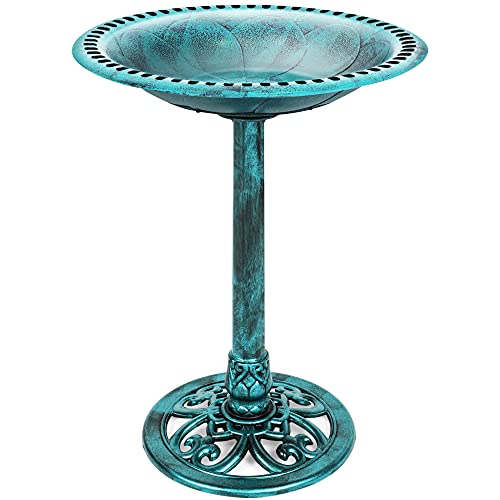
The classic garden centerpiece. Available in resin, concrete, or metal. Entry-level resin models are lightweight and easy to reposition; mid-range concrete versions offer better stability and a timeless look. Ideal for open lawns and flower beds.
Ground & Dish Bird Baths
Low-profile baths that sit directly on soil, gravel, or decking. Excellent for ground-feeding birds and small wildlife. Mid-tier models often feature textured interiors for grip and drainage holes to prevent overflow.
Hanging Bird Baths
Suspended from branches, shepherd's hooks, or pergolas. Great for small gardens and patios. Choose models with a shallow bowl and a sturdy chain or bracket to prevent swaying in wind.
Solar Fountain Bird Baths
Integrated solar panels power a small pump that keeps water moving. Premium models include battery backup for cloudy days. For a deep dive, see our guide to the best solar bird bath fountain with battery backup.
Heated Bird Baths
Designed for winter use, these keep a patch of water ice-free so birds can drink in freezing weather. Premium heated models include thermostatic controls and weather-resistant cords. Pair with frost protection strategies for a complete winter garden plan.
Stone & Artisan Bird Baths
Hand-carved stone, cast concrete, or sculptural designs that double as garden art. Luxury-tier options are heavy, durable, and often feature integrated drippers or fountains. Best for formal gardens and long-term installations.
How to Choose the Right Bird Bath
Choosing a bird bath is a balance of practicality and aesthetics. Start with where you will place it, then match the material and features to your climate and maintenance preferences. A mid-range concrete pedestal bath is a reliable all-rounder for most gardens, while a premium solar fountain adds movement without wiring.
| Feature | Entry-Level | Mid-Range | Premium / Luxury |
|---|---|---|---|
| Material | Resin, thin metal | Concrete, thick resin | Cast stone, artisan ceramic |
| Stability | Moderate — may tip in wind | Good — weighted base | Excellent — heavy, grounded |
| Water Movement | Still water only | Optional add-on dripper | Integrated fountain or bubbler |
| Winter Use | Not recommended | Drain and store | Heated models available |
| Maintenance | Frequent scrubbing | Weekly cleaning | Easy-clean surfaces, removable bowls |
| Best For | First-time buyers, small gardens | Most gardens, year-round use | Formal gardens, dedicated birders |
Where to Place Your Bird Bath
Placement determines how many birds visit and how safe they feel. Follow these proven guidelines to get it right the first time.
Choose partial shade
Shade keeps water cooler, slows evaporation, and reduces algae growth. A spot that receives morning sun and afternoon shade is ideal.
Keep it 10–15 feet from cover
Birds need a quick escape route from predators. Place the bath near trees or shrubs — but not directly under branches where droppings and leaves accumulate.
Ensure a clear approach
Birds should have open flight paths to the bath. Avoid placing it against walls or in tight corners where cats can ambush.
Keep it visible from indoors
A bath visible from a window brings hours of enjoyment. A window-mounted or hanging bath near a patio works well if space is limited.
Level the ground
A pedestal bath on uneven ground is unstable. Set it on a level patio stone or compacted gravel base for safety.
If your garden has drainage issues near the chosen spot, review our drainage solutions guide before installing a heavy stone bath. For larger garden projects, the garden structures section offers ideas for integrating bird baths with pergolas and arbors.
Bird Bath Maintenance Made Simple
Clean water is the single most important factor in attracting birds. A dirty bath breeds algae and bacteria and can spread disease among visitors. Build a simple routine:
- Daily: Top up the water and remove leaves or debris.
- Every 1–2 days (warm weather): Replace the water entirely to prevent mosquito breeding.
- Weekly: Scrub the bowl with a stiff brush and a diluted vinegar solution (avoid harsh chemicals). Rinse thoroughly.
- Monthly: Inspect for cracks, loose fittings, or pump blockages. Clean fountain filters if applicable.
- Seasonally: In winter, drain and store non-heated baths or switch to a heated model.
A small fountain or bubbler dramatically reduces maintenance by keeping water moving and oxygenated. It also attracts more birds — the sound of splashing water carries far and signals a reliable water source.
Attracting More Birds to Your Bath
A bird bath works best as part of a bird-friendly garden. Combine water with food and shelter for the greatest variety of visitors.
- Plant nectar-rich flowers to attract hummingbirds and butterflies — see our guides on hanging plants that attract hummingbirds and butterflies and hanging flowering plants that attract hummingbirds.
- Offer seeds from native plants; our article on black oil sunflower seeds for birds explains why this is a top choice.
- Create layered cover with shrubs and trees; the butterfly plants guide includes bird-friendly species too.
- Add a dripper or fountain — moving water is irresistible to birds.
- Keep cats indoors or use a bell on the collar to protect bathing birds.
Ready to Welcome More Birds?
Browse our curated selection of bird baths and garden essentials below — chosen for durability, bird-friendliness, and ease of maintenance.
Shop Recommended Bird BathsFrequently Asked Questions
How often should I change the water in a bird bath?
Change the water every one to two days in warm weather and at least twice a week in cooler months. Regular cleaning prevents algae growth and mosquito breeding while keeping the water fresh and inviting for birds.
Where is the best place to put a bird bath?
Place your bird bath in a shaded or partially shaded spot near trees or shrubs, about 10 to 15 feet from cover. This gives birds a safe escape route from predators while keeping the water cooler and reducing evaporation.
Do bird baths attract mosquitoes?
Standing water can attract mosquitoes if left unchanged for several days. Refresh the water every one to two days and consider adding a small fountain or bubbler to keep the water moving, which discourages mosquito egg-laying.
What water depth is best for a bird bath?
A depth of about 1 to 2 inches is ideal. Birds need shallow water to bathe safely. If your bath is deeper, add a few flat stones or a specially designed ramp so birds can enter and exit comfortably.
How do I keep bird bath water from freezing in winter?
Use a heated bird bath or a submersible de-icer designed for outdoor use. These keep a small area of water open so birds can drink during freezing weather. Alternatively, refill the bath with warm water each morning.
Do I need a fountain or bubbler?
Not strictly, but a fountain or bubbler keeps water fresh, prevents stagnation, and dramatically increases bird visits. The sound of moving water is a powerful attractant, and circulation reduces mosquito breeding.
Exploring more ways to enrich your outdoor space? Our garden ornaments and outdoor living guides can help you design a cohesive, wildlife-friendly garden. And if you are considering a complete landscape refresh, the landscaping section covers everything from hardscaping to planting plans.