Pruning Shears: The Complete Guide to Choosing, Using & Caring for Garden Pruners
Pruning shears are the hardest-working tool in any garden. Learn how bypass and anvil pruners differ, what to look for at each quality tier, and how to keep your blades sharp season after season.
EXPLORE THE BUYING GUIDEWhy pruning shears matter: Every cut you make shapes the health, shape, and productivity of your plants. A clean, sharp cut heals fast; a dull or wrong-type cut invites disease and dieback. Whether you tend roses, fruit trees, shrubs, or houseplants, the right pair of pruners makes the work easier and the results visibly better.
This guide walks you through the two main blade designs, the handle and blade materials that define each quality tier, and a simple maintenance routine that keeps your shears cutting cleanly for years. When you are ready to shop, our recommended selection below covers reliable options across every tier.
What Are Pruning Shears and Why Do They Matter?
Pruning shears — also called hand pruners or secateurs — are hand-held cutting tools designed for stems and branches roughly the thickness of a pencil up to about the width of your thumb. They are the tool you reach for constantly: deadheading spent blooms, shaping shrubs, harvesting herbs, cutting back perennials, and training young trees. Because you use them so often, the quality of the blade and the comfort of the grip directly affect how much you enjoy garden work.
Good pruning practice also protects plant health. Clean cuts made with sharp blades seal over quickly, while crushed or torn stems create entry points for fungi and bacteria. That is why serious gardeners treat their pruners as precision instruments rather than disposable hardware. For broader guidance on timing and technique across different plants, see our pruning tips guide.
Bypass vs. Anvil Pruners: The Two Core Designs
Nearly every hand pruner on the market falls into one of two categories. Understanding the difference is the single most important decision you will make when buying.
Bypass Pruners
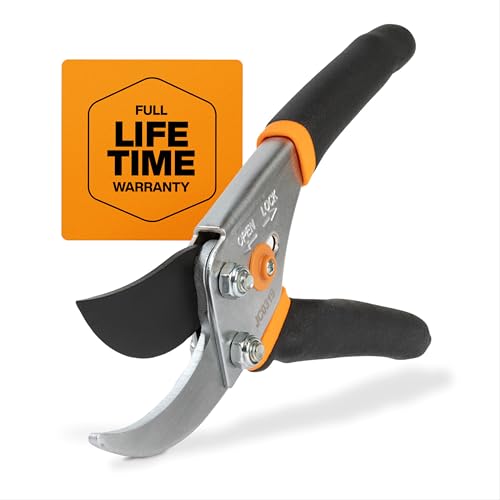
Bypass shears work like scissors: a curved sharp blade slices past a flat, hook-shaped counter blade. This slicing action makes clean cuts on living growth, which is why bypass pruners are the standard choice for roses, shrubs, perennials, and green wood. The curved blade holds the stem in place as it cuts, reducing slipping. Most gardeners should start with a quality bypass pruner as their primary tool.
Anvil Pruners
Anvil shears have a straight sharp blade that presses down onto a flat anvil surface, crushing the stem as it cuts. This design is excellent for dead wood, dry branches, and woody stems that would dull or damage a bypass blade. The trade-off is that the crushing action damages living tissue, so anvil pruners are not ideal for green growth you want to keep healthy. Many gardeners keep both types on hand: bypass for living plants, anvil for cleanup work.
| Feature | Bypass Pruners | Anvil Pruners |
|---|---|---|
| Cutting action | Slicing, scissor-like | Crushing, chopping |
| Best for | Living green stems, roses, shrubs, perennials | Dead wood, dry branches, cleanup |
| Cut quality | Clean, fast-healing cuts | Crushed ends, slower healing on live wood |
| Blade shape | Curved sharp blade + hook counter blade | Straight sharp blade + flat anvil |
| Replaceable parts | Usually blades and springs are replaceable | Usually blades are replaceable |
| Recommended for beginners | Yes — primary tool | Optional — secondary cleanup tool |
Blade and Handle Materials: What the Quality Tiers Mean
Pruning shears are commonly grouped into quality tiers based on materials, construction, and finish. Rather than thinking in terms of numbers, think in terms of how long the tool will last and how well it will perform under regular use.
Entry-Level Shears
Often use stamped steel blades and basic plastic or soft-grip handles. Adequate for light, occasional tasks like deadheading and cutting herbs. Expect to replace them sooner under heavy use.
Mid-Range Shears
Feature forged or heat-treated blades that hold an edge longer, with aluminum or reinforced handles and replaceable parts. A strong choice for regular home gardeners who want durability without going top-tier.
Premium Shears
Typically use high-carbon or hardened steel blades, precision rivets, and ergonomic handles with shock absorption. Designed for daily use and long service life, with serviceable components.
Luxury Shears
Hand-finished blades, exotic wood or premium composite handles, and meticulous fit and finish. These are heirloom-quality tools for collectors and professionals who want the finest cutting feel.
Within each tier, the blade steel is the biggest differentiator. High-carbon steel takes a very sharp edge but needs regular care to prevent rust. Stainless steel resists corrosion but may not hold an edge quite as long. Coated blades (such as titanium or non-stick coatings) reduce sap buildup and make cleanup easier. Handles range from basic plastic to aluminum to wood, with ergonomic grips and rotating handles helping reduce hand fatigue during long sessions.
Buying tip: Prioritize replaceable blades and springs. A mid-range pruner with serviceable parts will often outlast a budget model that must be thrown away when the blade dulls.
How to Choose the Right Pruning Shears
Before you shop, match the tool to your actual garden tasks. Here is a simple framework:
- Primary tool for living plants: Choose a bypass pruner with a blade that holds an edge. This is the pair you will use most.
- Cleanup and dead wood: Add an anvil pruner or a small pruning saw for branches beyond hand-pruner capacity.
- Hand size and grip: Look for handles that fit your hand comfortably. Ergonomic, non-slip grips and rotating handles reduce fatigue for gardeners with arthritis or who prune for long stretches.
- Cutting capacity: Check the maximum stem diameter the tool is rated for. Trying to cut branches that are too thick stresses the mechanism and can bend the blade.
- Safety lock: A reliable locking mechanism keeps the blade closed when the tool is stored or carried.
- Replaceable parts: Blades, springs, and bumpers should be serviceable, extending the life of the tool.
If you are also choosing tools for indoor plant care, our indoor plant care guide covers the small snips and accessories that pair well with a primary outdoor pruner.
How to Sharpen and Maintain Pruning Shears
Sharp blades cut cleaner and are actually safer, because you need less force and the blade is less likely to slip. A simple routine keeps your shears in top shape:
- Clean after every use: Wipe sap and debris from the blades with a damp cloth. Sap left to harden makes the blades sticky and attracts rust.
- Dry thoroughly: Water left on carbon steel blades causes pitting. Dry completely before storage.
- Sharpen the bevel: Use a diamond file or sharpening stone following the existing bevel angle. A few light passes restore a keen edge. Do not sharpen the flat back of a bypass blade aggressively.
- Oil the pivot: A drop of light oil on the pivot bolt keeps the action smooth. Wipe away excess.
- Store closed and dry: Engage the safety lock and store in a dry location. A holster protects the blade and your hands.
For a deeper dive into cutting technique and timing across plants, revisit our pruning tips resource, and consider soil guides to keep pruned plants recovering strongly. If you grow roses, our guide on whether rose bushes should be cut back in spring pairs perfectly with a good bypass pruner.
Maintenance habit: Set aside five minutes at the end of each gardening session to wipe, dry, and oil your pruners. This single habit dramatically extends blade life and keeps cuts clean.
Safety and Best Practices
Pruning shears are sharp tools, and safe habits protect both you and your plants:
- Always engage the safety lock when setting the tool down or carrying it.
- Cut away from your body and keep your free hand clear of the blade path.
- Do not force a cut that is too large for the tool — switch to a pruning saw.
- Wear gloves, especially when working with thorny plants like roses.
- Disinfect blades between plants when disease is a concern, using rubbing alcohol or a diluted bleach solution.
Frequently Asked Questions About Pruning Shears
Should I buy bypass or anvil pruners first?
Start with a quality bypass pruner. It handles the majority of living-plant tasks and gives clean cuts. Add anvil pruners later for dead wood and cleanup work.
How often should I sharpen my pruning shears?
Sharpen whenever cuts start to feel rough or require extra force — often every few weeks during heavy pruning season. Light maintenance sharpening is better than waiting until the blade is dull.
Can I use pruning shears on branches that are too thick?
No. Forcing thick branches stresses the mechanism and can bend or chip the blade. Check the rated cutting capacity and switch to a pruning saw for larger limbs.
How do I prevent rust on my pruners?
Dry the blades completely after each use and apply a light coat of oil. Store in a dry place and avoid leaving the tool outdoors or in damp sheds.
Are replaceable blades worth it?
Yes. Replaceable blades and springs let you extend the life of a good pair of shears rather than replacing the whole tool when a component wears out.
Ready to Choose Your Pruning Shears?
Explore our recommended selection of pruning shears across every tier, from budget-friendly entry-level pairs to premium and luxury models built to last for years.
VIEW RECOMMENDED PRUNING SHEARS