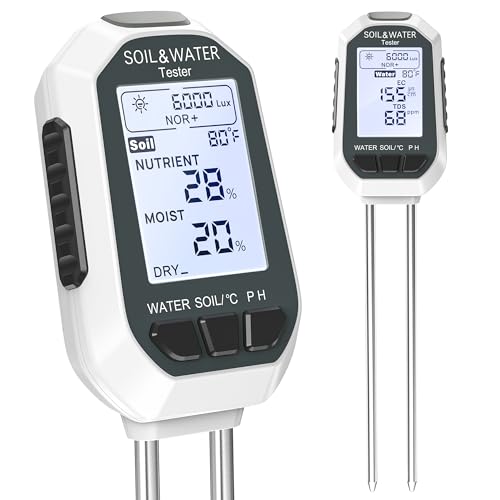
Soil Testers: The Complete Guide to Choosing & Using Soil Test Kits
Stop guessing what your garden needs. A reliable soil tester reveals pH, nutrient levels, and moisture — so every plant gets the right conditions to thrive.
What Is a Soil Tester and Why Do You Need One?
A soil tester is a diagnostic tool that measures key properties of your garden soil — most commonly pH, moisture, and macronutrients like nitrogen (N), phosphorus (P), and potassium (K). Some advanced models also read soil temperature and ambient light. Instead of relying on visual symptoms that appear only after a plant is already stressed, a tester lets you catch imbalances early.
For gardeners working with raised beds, containers, or unfamiliar ground, testing is especially valuable. If you're building new beds this season, pair your soil tester with a quality raised bed soil mix to create a consistent baseline before planting. And if you're sourcing new plants to add to your garden, knowing your soil pH first will help you pick species that naturally thrive in your conditions — check local availability through plants for sale near me.
Types of Soil Testers: Which Style Fits Your Garden?
Soil testers come in several formats, each suited to different gardening styles and levels of precision. Understanding the trade-offs helps you avoid buying a tool that's either overkill or underpowered for your needs.
Analog Probe Meters
Simple two-prong probes that read pH and moisture directly from the soil. Best for quick spot checks and budget-conscious gardeners who want a basic read without batteries or calibration.
Digital Handheld Testers
Battery-powered units with a display that show pH, moisture, and sometimes temperature. More consistent readings and easier to read than analog dials — a solid everyday choice.
Multi-Parameter Digital Kits
Measure pH plus NPK, moisture, and temperature with higher precision. Often include calibration features and sturdy probes. Ideal for serious gardeners and multi-bed setups.
Chemical Colorimetric Kits
Test-tube kits where soil is mixed with a solution and compared against a color chart. Excellent for detailed NPK readings and educational use, though more hands-on per test.
If you're maintaining a large lawn or multiple garden zones, a digital multi-parameter model is usually the best long-term investment. For containers and indoor setups, a compact probe that fits into smaller pots pairs nicely with careful indoor plant care routines.
What Do Soil Testers Measure?
Different testers offer different readings. Here's what the most common measurements mean for your garden:
- pH: Determines how easily plants absorb nutrients. Most vegetables prefer slightly acidic to neutral soil (around 6.0–7.0), while acid-loving plants like blueberries and hydrangeas need lower pH.
- Nitrogen (N): Fuels leafy growth. Low nitrogen shows up as pale, yellowing leaves and slow growth.
- Phosphorus (P): Supports root development and flowering. Deficiencies often cause poor blooming and weak roots.
- Potassium (K): Strengthens overall plant health, disease resistance, and fruit quality.
- Moisture: Helps you water accurately instead of by feel — especially useful for containers and raised beds that dry out faster.
- Temperature: Soil temperature influences seed germination and root activity; useful when starting seeds or seed starting indoors.
How to Choose the Right Soil Tester
With so many options on the market, focus on these practical criteria rather than flashy features you won't use:
For gardeners who also maintain indoor collections, a tester that works in both garden beds and potting soil is a practical choice — especially if you use potting soil and potting mix that varies in pH between brands. And when you're ready to expand your plant collection after fixing soil issues, browsing a local plant store near me lets you match new plants to your tested conditions.
Accuracy and Reliability: What to Expect
Accuracy varies significantly by price tier — and knowing this prevents disappointment. Entry-level analog probes are useful for rough readings but can drift over time and are sensitive to soil moisture and probe insertion depth. Mid-range digital testers offer noticeably more consistent results and are the sweet spot for most home gardeners. Premium multi-parameter kits deliver the highest precision and often include calibration standards.
Regardless of tier, technique matters as much as the device. Take readings from several spots in the same bed and average them — soil is rarely uniform. Avoid testing right after fertilizing, and make sure the soil is moist but not waterlogged for the most reliable probe readings.
Pro Tips for Better Readings
- Clean probes with a damp cloth after each use to prevent cross-contamination between beds.
- Test at root depth (typically 2–6 inches) rather than at the surface.
- Remove debris, mulch, and stones from the test spot before inserting the probe.
- Take a baseline reading before adding amendments, then retest after a few weeks.
- Store digital testers with batteries removed during long off-seasons.
How to Use a Soil Tester: Step by Step
Prepare the test area
Clear mulch and surface debris, then water lightly if the soil is bone dry. Moist soil gives more stable probe readings.
Insert the probe at root depth
Push the probe slowly into the soil to about 2–6 inches, depending on your plants. Avoid forcing it — if it won't go in, loosen the soil first.
Wait for the reading to stabilize
Analog meters typically need 30–60 seconds; digital units usually settle within a few seconds. Don't remove the probe while the value is still changing.
Record and repeat
Note the reading, then test two or three more spots in the same bed. Average the results for a representative picture of that area.
Clean and store
Wipe the probe clean and store the tester dry. Recheck after major amendments or seasonal changes.
Interpreting Your Results: What the Numbers Mean
Once you have readings, the next step is translating them into action. Here's a practical reference for the most common measurements:
- pH below 6.0: Soil is acidic. Many vegetables benefit from agricultural lime, but acid-loving plants are perfectly happy here.
- pH 6.0–7.0: The ideal range for most garden vegetables and flowers — nutrient availability is at its best.
- pH above 7.0: Alkaline soil. Elemental sulfur or acidifying amendments can gradually lower it; choose alkaline-tolerant plants in the meantime.
- Low nitrogen: Add compost or a balanced organic fertilizer and consider planting nitrogen-fixing companions.
- Low phosphorus: Bone meal or rock phosphate helps, especially before flowering crops.
- Low potassium: Wood ash or kelp meal are traditional sources; test again after a few weeks.
When adjusting soil, make changes gradually and retest. Pairing soil corrections with proper soil guides and good watering habits prevents swings that stress plants more than the original imbalance. If weeds are thriving while your plants struggle, the soil may be compacted or depleted — test before reaching for organic weed killer, since fixing fertility often reduces weed pressure naturally.
Common Soil Testing Mistakes to Avoid
- Testing only one spot: Soil varies across a yard. Sample multiple locations and average the results.
- Testing dry or soaked soil: Extremes skew probe readings. Aim for consistently moist soil.
- Ignoring probe depth: Surface readings don't reflect what roots actually experience.
- Never recalibrating: Digital testers drift over time; follow the manufacturer's calibration schedule.
- Testing right after fertilizing: Fresh amendments temporarily inflate nutrient readings. Wait a few weeks.
- Skipping seasonal retests: Soil changes with seasons, rainfall, and cropping — make testing a routine, not a one-time event.
Frequently Asked Questions About Soil Testers
What does a soil tester measure?
A soil tester typically measures soil pH, and many models also assess nitrogen, phosphorus, and potassium (NPK) levels, as well as moisture and temperature. These readings help gardeners understand soil fertility and make informed decisions about amendments.
Are digital soil testers more accurate than analog ones?
Digital soil testers often provide more precise and consistent readings than analog meters, especially in mid-range and premium models. Entry-level analog testers can be useful for quick checks but may drift over time and require more frequent calibration.
How often should I test my garden soil?
Most experts recommend testing your garden soil at least once or twice a year, ideally in spring before planting and in fall after harvest. More frequent testing may be needed if you notice plant health issues or make significant soil amendments.
Can a soil tester be used for indoor plants?
Yes, many soil testers work well for indoor plants and container gardens. However, for potted plants, it's important to choose a model with a probe short enough to fit in smaller pots and to test multiple spots for a representative reading.
Do I need a soil tester if I use compost?
Compost improves soil structure and adds nutrients, but it doesn't guarantee balanced pH or complete nutrient coverage. A soil tester confirms whether your compost-amended beds are actually in the ideal range — and catches imbalances before they affect plants.
Ready to Give Your Garden the Right Foundation?
A soil tester turns guesswork into confident gardening. Test first, amend precisely, and watch your plants respond with healthier growth and better harvests.
Explore Recommended Soil Testers ↓