Compost Tumblers: Turn Kitchen & Yard Waste Into Rich Compost
Discover how a compost tumbler can accelerate decomposition, reduce odor, and fit neatly into any backyard. Compare types, sizes, and materials to choose the right model for your garden.
Browse Recommended TumblersWhy a Compost Tumbler Belongs in Every Garden
Composting is one of the most rewarding habits a gardener can adopt. By recycling kitchen scraps, grass clippings, and dry leaves, you create a nutrient-rich soil amendment that improves drainage, feeds beneficial microbes, and reduces the need for synthetic fertilizers. Traditional open piles work, but they demand patience and frequent turning. A compost tumbler solves both problems by enclosing the material in a drum that rotates easily, aerating the contents with minimal effort.
Because the drum is elevated and enclosed, tumblers keep pests away, retain heat for faster breakdown, and allow you to manage moisture more precisely. Whether you have a sprawling backyard or a compact patio, a tumbler lets you produce finished compost in weeks rather than months. If you are new to the process, reviewing a foundational composting guide before you buy will help you understand the balance of greens and browns that makes every system work. For those who want a simpler, stationary solution, compost bins offer a complementary option worth comparing.
How Compost Tumblers Work
Every tumbler relies on the same principle: frequent aeration accelerates the activity of aerobic bacteria. As you rotate the drum, material that was at the bottom is lifted and exposed to oxygen, while clumps are broken apart. This steady mixing prevents the anaerobic pockets that cause foul smells and slows decomposition.
The Four Ingredients of Fast Compost
- Greens — kitchen scraps, grass clippings, and coffee grounds supply nitrogen and moisture.
- Browns — dried leaves, shredded paper, and cardboard add carbon and structure.
- Water — the pile should feel like a wrung-out sponge; too wet and it goes anaerobic, too dry and microbes stall.
- Air — regular turning, ideally every two to three days, keeps oxygen flowing to the core.
When these four elements are in balance, internal temperatures can climb high enough to speed up breakdown and help neutralize weed seeds and pathogens. A tumbler makes maintaining that balance far easier than an open pile because you control both moisture and aeration with a simple spin.
Types of Compost Tumblers
The market offers several designs, each suited to different households and garden sizes. Understanding the trade-offs helps you avoid buying a unit that is either too small to keep up with your waste or too large to turn comfortably.
Single-Chamber Tumblers
The most common and budget-friendly design. You fill, tumble, and wait for the entire batch to finish before starting a new one. Ideal for small households with modest waste output.
Dual-Chamber Tumblers
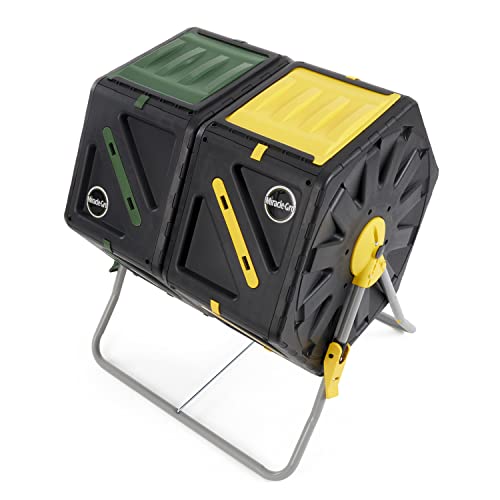
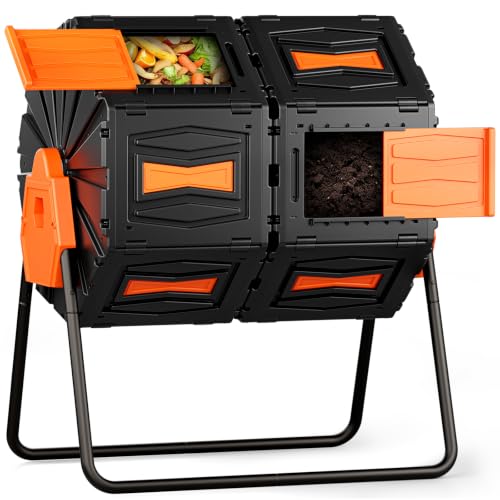
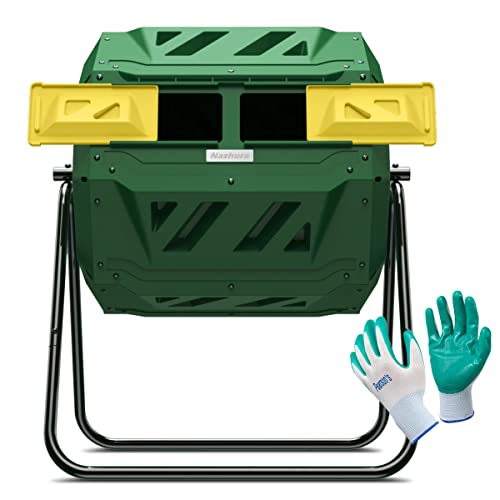
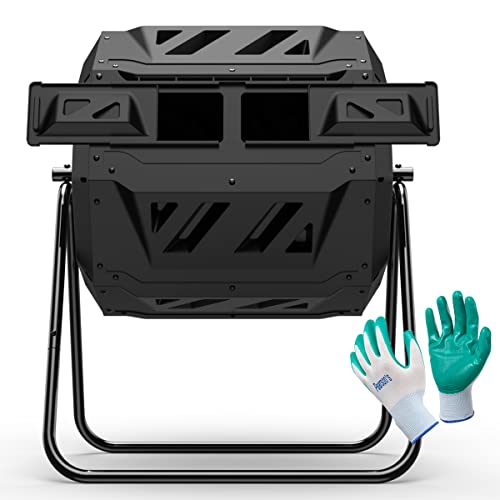
Two separate compartments let you cure one batch while actively filling the other. This continuous-flow approach suits larger families or gardeners who want a steady supply of finished compost.
Rolling & Horizontal Tumblers
These sit on the ground and roll along a track or wheels. They hold larger volumes and are easy to move, but they take up more floor space and can be harder to empty.
Vertical & Raised Tumblers
Mounted on a stand at waist height, these are the most ergonomic option. They save space, keep the drum off the ground, and make loading and unloading easy on the back.
Most gardeners gravitate toward a raised, dual-chamber model because it balances ergonomics with continuous production. Entry-level single-chamber units remain a smart choice for beginners who want to test the composting habit before committing to a larger system.
What to Look For When Buying a Compost Tumbler
Capacity and Household Size
Capacity is measured in gallons, and the right size depends on how much organic waste your household generates. A single person or couple typically produces enough scraps for a 30 to 40 gallon tumbler. Families of three or more, or gardeners who add yard waste, usually need 60 to 80 gallons. Dual-chamber models let you work with two smaller batches instead of one oversized load, which often composts more evenly.
Material and Durability
Most tumblers are made from UV-stabilized plastic, which resists rot and is lightweight enough to spin easily. High-end models may use thicker, recycled plastic or add metal reinforcement at the axle and frame. If you live in a region with intense sun, look for a tumbler explicitly rated for UV resistance to prevent cracking over time.
Aeration and Mixing Features
Internal fins or baffles lift material as the drum rotates, improving mixing. Some premium tumblers include aeration ports or ventilation slots that let air circulate even between turns. The easier the drum is to spin, the more likely you are to turn it regularly — which is the single biggest factor in how fast your compost finishes.
Ease of Loading and Emptying
Large sliding doors make it easy to add scraps without disassembling the unit. A secure latch is equally important; a door that pops open can spill material and attract animals. Check whether the emptying hatch is wide enough to shovel finished compost out comfortably, and whether the height of the drum suits your back.
Frame and Stability
A sturdy base prevents the tumbler from tipping or wobbling when full, which can weigh a surprising amount. Powder-coated steel frames generally last longer than thin plastic bases. If your yard slopes, look for a stand with wide feet or leveling options.
Compost Tumbler Comparison at a Glance
The table below groups tumblers by quality tier rather than by specific product, so you can match a class of model to your needs without relying on prices that change frequently.
| Feature | Entry-Level | Mid-Range | Premium |
|---|---|---|---|
| Typical Capacity | 27–40 gallons, single chamber | 40–60 gallons, single or dual chamber | 60–80+ gallons, dual chamber |
| Material | Thin UV plastic, basic frame | Thicker recycled plastic, steel frame | Heavy-duty UV plastic, reinforced steel axle |
| Aeration | Basic internal fins | Improved fins with ventilation slots | Multiple aeration ports and deep mixing baffles |
| Best For | Beginners, small households | Families, steady compost production | Serious gardeners, large volumes |
| Durability | Budget-friendly lifespan | Several seasons of heavy use | Long-term investment |
Entry-level tumblers are a low-risk way to start, while mid-range models usually offer the best balance of capacity, durability, and ease of turning. Premium units make sense if you compost year-round and want the smoothest mechanism and largest batch size.
Tips for Getting the Most From Your Tumbler
- Chop scraps small. Smaller pieces break down faster and prevent clumping inside the drum.
- Keep the green-to-brown ratio near 1:2 or 1:3. This is the sweet spot for odor control and microbial activity.
- Turn every two to three days. Regular aeration is more important than any single additive you can buy.
- Monitor moisture. Add dry leaves if the mix is soggy, or a splash of water if it is dusty and dry.
- Start a second batch early. Dual-chamber models shine here, but even a single chamber benefits from staging a new pile in a separate bin.
- Clean the drum occasionally. A quick rinse between batches prevents residue buildup and keeps the mechanism running smoothly.
If you also grow vegetables, finished compost is one of the best amendments for beds and containers. Pairing a tumbler with a drip irrigation system and a garden sprinkler setup helps you manage moisture across the whole garden while your compost matures. And for gardeners expanding their toolkit, browsing gardening tools alongside your tumbler purchase makes it easy to build a complete composting station.
Frequently Asked Questions About Compost Tumblers
How long does it take to make compost in a tumbler?
A well-managed compost tumbler can produce finished compost in as little as 2 to 4 weeks during warm weather. Cooler temperatures, larger batches, or less frequent turning can extend the process to 6 to 8 weeks.
What size compost tumbler do I need?
For a typical household with a small to medium garden, a 40 to 60 gallon tumbler is a good starting point. Larger households or those with bigger gardens may benefit from a 60 to 80 gallon dual-chamber model.
Do compost tumblers smell bad?
Compost tumblers are designed to minimize odor. Foul smells usually indicate an imbalance of greens and browns, excess moisture, or lack of aeration. Correcting these issues typically eliminates odor quickly.
Can I put meat and dairy in a compost tumbler?
Most experts recommend avoiding meat, dairy, and oily foods in enclosed tumblers because they can attract pests and cause odors. Stick to fruit and vegetable scraps, coffee grounds, yard waste, and shredded paper.
Is a tumbler better than an open compost pile?
Tumblers speed up decomposition by making aeration easy and by retaining heat. They also deter pests and fit into smaller spaces. Open piles can work well for large yards and slow composting, but tumblers generally suit urban and suburban gardeners better.
Ready to Start Composting?
Browse our curated selection of compost tumblers below and pick the one that matches your household size and garden goals.
See Recommended Tumblers