Hose Nozzles: The Complete Guide to Choosing the Right Spray Nozzle
Water smarter, not harder. Learn how spray patterns, materials, ergonomics, and connection standards affect performance — so you can pick a hose nozzle that fits your garden, your grip, and your watering routine.
SHOP RECOMMENDED HOSE NOZZLESWhy the right hose nozzle matters: A hose nozzle is the single most-touched piece of watering equipment in your garden. It controls pressure, spray shape, and water volume — which directly affect plant health, soil erosion, and how much water you waste. This guide breaks down every decision factor so you can buy with confidence.
What You'll Learn on This Page
What a Hose Nozzle Really Does
A hose nozzle is more than a cap on the end of your hose. It is a flow-control device that converts the raw pressure from your outdoor tap into a controlled spray. The nozzle's internal mechanism — whether a rotating collar, a trigger valve, or a fixed aperture — determines the water's velocity, pattern, and reach. For gardeners, this means the difference between gently misting seedlings and blasting dirt off a patio.
Choosing the right nozzle also ties into your broader watering strategy. If you are building a more efficient irrigation setup, pairing a quality nozzle with a reliable drip irrigation system reduces waste and gives you flexible options for beds and containers. For lawns, a dedicated garden sprinkler often complements handheld watering, while a nozzle remains essential for spot tasks and cleanup.
Types of Hose Nozzles
Not all nozzles serve the same purpose. The best choice depends on whether you are watering delicate flowers, washing a car, filling a pond, or rinsing a driveway. Below are the main categories you will encounter, each with a recommended quality tier.
Adjustable Twist Nozzle
The most common all-purpose type. Rotate the front collar to cycle through mist, shower, flat, cone, jet, and stream. Ideal for mixed garden tasks.
Best for: General watering, beds, containers, light cleaning.
Trigger Nozzle
Squeeze the trigger to start flow and release to stop. Often includes a locking clip for continuous watering. Comfortable for long sessions.
Best for: Frequent on/off watering, car washing, patio rinsing.
Brass Fireman Nozzle
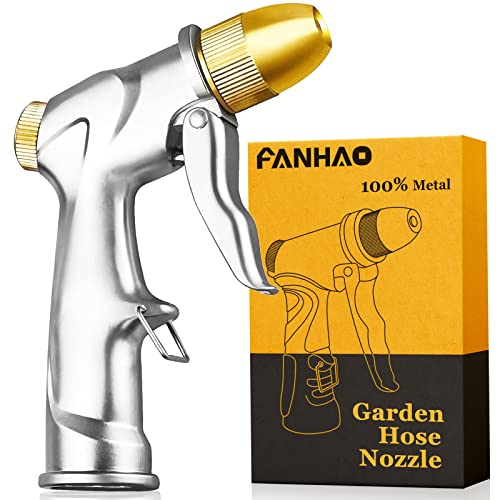
A classic solid-brass design with a twist barrel. Extremely durable, resists UV and frost, and delivers a strong, smooth stream.
Best for: Heavy-duty use, large properties, long-term durability.
Fan Spray Nozzle
Fixed flat-fan pattern with no adjustment. Lightweight and simple, often sold in multi-packs for quick tasks.
Best for: Rinsing, light watering, budget setups.
Multi-Pattern Pistol Grip
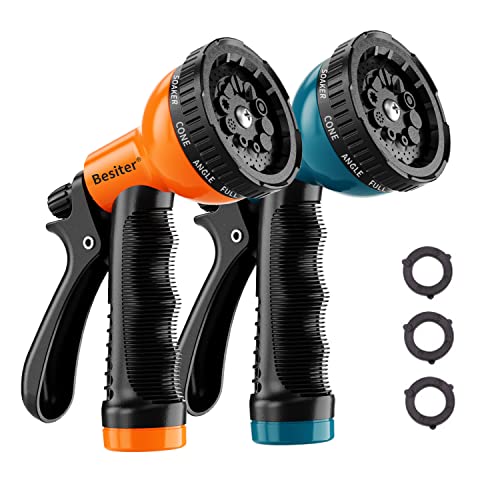
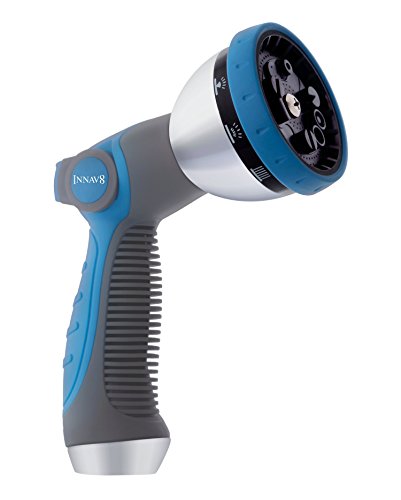
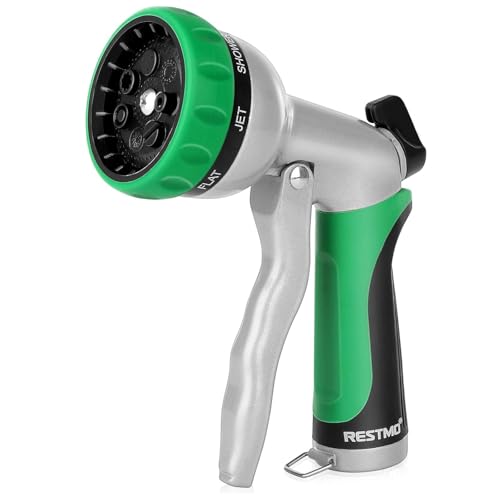
Combines a pistol-style handle with a rotating pattern selector. Ergonomic and versatile, often with rubber overmolding.
Best for: Everyday garden use, ergonomic comfort, versatile spray control.
Wand or Extension Nozzle
Long reach for hanging baskets, high planters, and hard-to-reach areas. Often paired with adjustable heads.
Best for: Hanging plants, deep beds, accessible watering without bending.
Spray Patterns Explained
The number of spray patterns a nozzle offers is often used as a selling point, but quality matters more than quantity. A well-machined nozzle with five distinct, useful patterns outperforms a cheap model with ten patterns that all feel the same. Here are the patterns worth having:
- Mist: Ideal for delicate seedlings, newly sown seeds, and humidifying indoor plants moved outside for the season.
- Shower: Gentle and broad, perfect for watering flower beds and containers without displacing soil.
- Flat fan: Great for rinsing leaves, cleaning tools, and sweeping light debris off walkways.
- Cone: A focused, medium-pressure pattern for targeted watering of shrubs and small trees.
- Jet: High-pressure stream for blasting mud off boots, cleaning gutters, or reaching distant spots.
- Stream: Full-flow output for filling buckets, ponds, or watering cans quickly.
If you grow edibles, you will appreciate a nozzle that lets you switch to a soft shower when watering young carrots or leafy greens. For container gardens, a mist setting helps keep foliage healthy without overwatering.
Materials: Brass, Plastic, and Metal Alloys
The material of a hose nozzle affects its weight, durability, and how it handles pressure and temperature extremes. Here is how the main options compare:
Brass
Solid brass is the gold standard for longevity. It resists corrosion, UV damage, and freezing better than most plastics, and it feels substantial in the hand. Brass nozzles are typically in the premium or high-end tier and are a smart investment if you want a single nozzle to last many seasons.
Plastic and Reinforced Polymer
Modern reinforced plastics are lightweight, budget-friendly, and available in ergonomic shapes. Entry-level and mid-range plastic nozzles are fine for light-duty watering, but prolonged sun exposure can make them brittle over time. Look for UV-stabilized polymer and rubberized grips for better longevity.
Metal Alloys and Zinc
Zinc and aluminum alloys offer a middle ground: more durable than basic plastic but lighter and often more affordable than solid brass. Many mid-tier trigger nozzles use a metal body with rubber overmolding for comfort and grip.
Editor's tip: If you garden in a climate with freezing winters, choose a nozzle that can be fully drained and stored indoors. Brass and high-quality metal models tolerate cold better than thin plastic, but no nozzle should be left attached to an outdoor tap through a hard freeze.
Ergonomics and Grip Comfort
You will hold your hose nozzle hundreds of times a season. A comfortable grip is not a luxury — it is a practical feature that reduces hand fatigue and improves control. When evaluating ergonomics, consider:
- Trigger resistance: A stiff trigger becomes painful during long watering sessions. Mid-range and premium models usually have smoother spring mechanisms.
- Locking clip: A trigger lock lets you water continuously without squeezing, which is essential for filling cans or deep-soaking beds.
- Rubber overmolding: Soft grips improve wet-weather control and reduce slipping.
- Weight: Brass is durable but heavier. If you have limited hand strength, a reinforced polymer or alloy model may be more comfortable.
- Handle shape: Pistol grips suit most hands, while rear-trigger designs can reduce wrist strain for some users.
For gardeners who spend long periods kneeling or bending while watering, pairing a comfortable nozzle with supportive garden kneelers can make routine tasks noticeably easier.
Connections and Leak Prevention
Most hose nozzles use a standard threaded connection that fits typical garden hoses. Leaks usually originate at the coupling rather than the nozzle body. To minimize drips and wasted water:
- Inspect the rubber washer inside the female coupling and replace it if it is cracked or flattened.
- Hand-tighten the connection firmly — over-tightening can damage the washer or threads.
- Check the O-ring or seal inside the nozzle if water drips from the body.
- Store hoses on a hose reel to prevent kinks and stress on the coupling.
Quick-connect adapters are a popular upgrade for people who switch between nozzles, sprinklers, and wands frequently. They reduce wear on threads and speed up changes, though a quality nozzle with a well-machined thread will already minimize leak issues.
Hose Nozzle Comparison at a Glance
Use this table to match nozzle types to common garden tasks. The tier descriptors indicate relative market positioning, not absolute quality — the best choice depends on your usage frequency and environment.
| Nozzle Type | Quality Tier | Spray Patterns | Durability | Best Use Case |
|---|---|---|---|---|
| Adjustable Twist | Mid-range | 6–8 | Good | All-purpose garden watering |
| Trigger Nozzle | Premium | 5–7 | Very good | Frequent on/off tasks, cleaning |
| Brass Fireman | High-end | 3–5 | Excellent | Heavy-duty, long-term use |
| Fan Spray | Entry-level | 1 (fixed) | Fair | Light rinsing, quick tasks |
| Multi-Pattern Pistol | Mid-tier | 7–10 | Good | Ergonomic everyday watering |
| Wand / Extension | Premium | 4–6 | Very good | Hanging baskets, deep beds |
Buying Checklist: What to Look For
Before you commit to a nozzle, run through this practical checklist. It will help you avoid a purchase that feels good in the store but frustrates you in the garden.
- Spray range: Does it cover the patterns you actually need? Mist for seedlings, jet for cleaning, shower for beds.
- Build quality: Look for reinforced threads, solid internal mechanisms, and UV-resistant materials.
- Grip comfort: Hold it (or read reviews) with wet hands in mind. Rubber grips and smooth triggers matter.
- Weight: Brass is durable but heavier. Consider your hand strength and session length.
- Connection fit: Confirm it fits your hose thread standard and includes a spare washer.
- Freeze tolerance: If you garden in cold climates, choose a model that drains fully and store it indoors.
- Brand support: A reputable brand with replacement parts and a clear warranty is worth considering. For comparisons, see our brand comparisons guide.
- Value tier: If you water daily, invest in a premium or high-end model. For occasional use, a budget-friendly or mid-tier nozzle is perfectly adequate. Our budget-friendly tools guide covers smart low-cost picks.
Care and Maintenance
A hose nozzle is a simple tool, but a little maintenance goes a long way. Follow these habits to extend its life:
- Drain after use: Empty the nozzle and hose before storing, especially in freezing weather.
- Clean mineral buildup: Soak the nozzle head in a diluted vinegar solution if spray patterns become uneven.
- Replace washers: Keep a small supply of rubber washers on hand — they are the most common failure point.
- Avoid dropping: Brass and metal nozzles can dent; plastic models can crack if dropped on hard surfaces.
- Store out of direct sun: UV exposure degrades plastic and rubber components over time.
- Inspect seals: Check O-rings and internal seals each season and replace them if they become stiff or cracked.
If you are also maintaining other watering equipment, our guides on garden sprinklers and hose reels cover similar care routines that keep your entire watering setup in good shape.
Frequently Asked Questions
What is the best hose nozzle for everyday garden watering?
An adjustable mid-range nozzle with multiple spray patterns and an ergonomic rubberized grip is the most versatile choice. It balances durability, comfort, and control across beds, containers, and lawns.
Are brass hose nozzles better than plastic ones?
Brass nozzles are typically more durable, resistant to UV degradation, and able to handle higher water pressure than plastic models. Plastic nozzles are lighter and budget-friendly, making them suitable for light-duty or occasional use.
What spray patterns should a good hose nozzle have?
A good all-purpose nozzle should offer at least a fine mist, a gentle shower for delicate seedlings, a flat fan for rinsing, a jet for cleaning, and a full-flow stream for filling buckets or watering deeply.
How do I prevent a hose nozzle from leaking at the connection?
Use a fresh rubber or silicone washer inside the female coupling, hand-tighten the connection firmly, and inspect the O-ring regularly. Replacing worn washers is the simplest fix for most connection leaks.
Should I drain my hose nozzle after each use?
Yes. Draining and storing the nozzle indoors or in a sheltered spot prevents freeze damage in cold months, reduces mineral buildup, and extends the working life of internal seals and mechanisms.
Ready to upgrade your watering routine? Scroll down to see our recommended hose nozzles and watering accessories. Each pick is selected to match the needs discussed in this guide — from budget-friendly everyday models to premium long-lasting brass nozzles.