Garden Sprinklers: The Complete Guide to Watering Your Lawn Right
Choosing the right garden sprinkler can mean the difference between a lush, healthy lawn and a patchy, stressed one. This guide breaks down every sprinkler type, explains coverage and pressure considerations, and helps you match a system to your yard — so you can water smarter, not harder.
Why garden sprinklers matter: Consistent, deep watering is the foundation of a healthy lawn and garden. The right sprinkler delivers even coverage without runoff, saves water, and reduces the manual effort of dragging hoses around. Whether you have a small city plot or a sprawling backyard, understanding sprinkler types and their trade-offs is the first step toward a watering routine that actually works.
Types of Garden Sprinklers Explained
Not all sprinklers are built for the same job. The four main categories differ in spray pattern, coverage area, durability, and how they handle water pressure. Here is how each type performs in real-world lawn care.
Oscillating Sprinklers
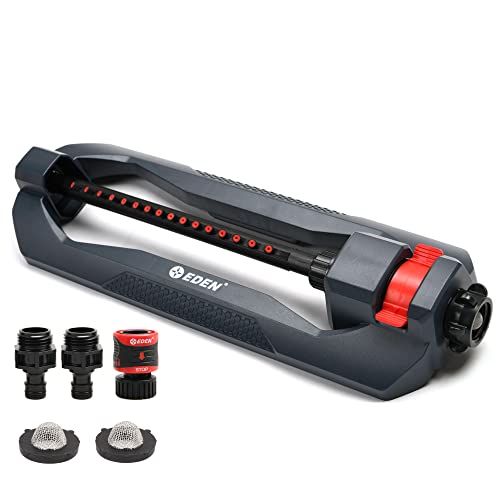
These sweep back and forth across a rectangular area, making them a natural fit for box-shaped lawns and narrow garden beds. They are typically budget-friendly and easy to set up. The trade-off is that coverage can become uneven at the edges, and plastic models may wear out faster under constant sun exposure. Best for small to medium rectangular lawns.
Impact Sprinklers
A classic design that uses a swinging arm to throw water in a long, adjustable arc. Impact sprinklers are known for their rugged construction and strong throw distance, making them a solid mid-range choice for larger lawns and areas with higher water pressure. They are noisier than rotary models but extremely reliable and repairable.
Rotary Sprinklers
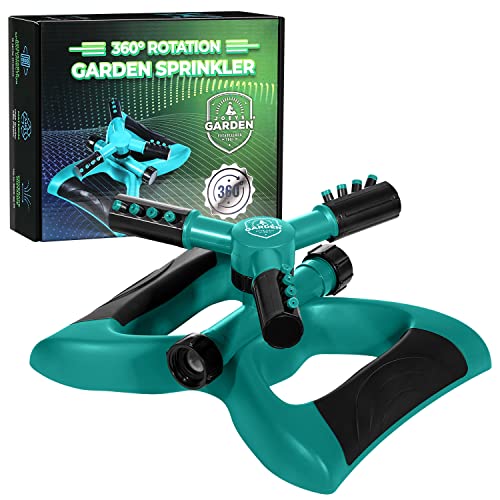
Rotary models use a gear-driven mechanism to deliver a steady, even stream in a circle or adjustable arc. They are generally more durable than oscillating types, resist clogging better, and distribute water more uniformly across large round areas. This premium category is ideal for homeowners who want consistent coverage with minimal repositioning.
Drip Irrigation Systems
Instead of spraying, drip systems deliver water slowly and directly to the root zone through a network of tubing and emitters. They use significantly less water than spray sprinklers, reduce evaporation and runoff, and are excellent for garden beds, raised beds, and containers. Installation is more involved, but the long-term efficiency is unmatched.
If you are building a permanent watering setup, consider pairing a drip system for beds with a drip irrigation system guide, and keep a portable sprinkler on hand for quick lawn touch-ups. For raised-bed gardens, a gravity-fed drip irrigation system can be a practical low-pressure alternative.
How to Choose the Right Sprinkler for Your Yard
Before buying, assess four practical factors: lawn size and shape, water pressure, soil type, and how much automation you want. Matching these to a sprinkler type prevents the common frustration of dry patches, water waste, and constant repositioning.
- Lawn size and shape Rectangular lawns pair well with oscillating sprinklers, while large round or irregular areas benefit from rotary or impact models. For very large properties, multiple sprinklers or a zoned system may be more efficient than one oversized unit.
- Water pressure and flow rate Low pressure can leave impact and rotary sprinklers underperforming, while high pressure may cause oscillating units to spray unevenly. Check your outdoor tap's pressure before committing to a type — or choose a model with an adjustable flow control.
- Soil type and drainage Clay soils absorb water slowly, so a sprinkler that delivers water too quickly causes runoff. In these cases, drip irrigation or a sprinkler with a lower application rate is better. Sandy soils drain fast and may need shorter, more frequent cycles.
- Automation and smart features If you want set-and-forget watering, look for a smart sprinkler controller that adjusts schedules based on weather data. These are a top-tier convenience upgrade for multi-zone lawns and help reduce unnecessary watering.
Sprinkler Type Comparison at a Glance
Use this quick-reference table to compare the main sprinkler categories on the factors that matter most for lawn care decisions.
| Sprinkler Type | Best For | Coverage Pattern | Durability | Water Efficiency |
|---|---|---|---|---|
| Oscillating | Small to medium rectangular lawns | Rectangular sweep | Entry-level to mid-range | Moderate |
| Impact | Large lawns, high-pressure areas | Adjustable circle or arc | Mid-range to premium | Moderate to good |
| Rotary | Large round or irregular lawns | Circle or adjustable arc | Premium | Good |
| Drip Irrigation | Garden beds, raised beds, containers | Point-to-point emitters | Top-tier (with proper installation) | Excellent |
For gardeners managing both lawn and planting beds, a combined approach often works best: a rotary or impact sprinkler for the lawn, plus a drip irrigation system for vegetables, herbs, and ornamentals. If you also maintain a gravel driveway or landscaped edges, keep weed pressure down with guidance on killing weeds in a gravel driveway so sprinkler spray does not feed unwanted growth.
Installation and Placement Tips for Even Coverage
Even the best sprinkler underperforms if it is placed poorly. A few simple placement rules can dramatically improve coverage and reduce water waste.
Position sprinklers so their spray reaches the edges of the lawn without hitting walls, fences, or driveways — hard surfaces waste water through runoff. For rectangular lawns, place oscillating sprinklers at one end and adjust the sweep to cover the full length. For circular coverage, set rotary or impact sprinklers at the center of the target area and adjust the arc to avoid overspray. If your yard slopes, water in shorter cycles to let it soak in before runoff occurs.
For permanent installations, consider a sprinkler system with buried lines and pop-up heads, which offers the most uniform coverage and is controlled by a timer or smart controller. For smaller or temporary setups, a quality garden hose paired with a hose nozzle gives you flexible manual control. Store hoses neatly with a hose reel to extend their lifespan and keep the yard tidy.
Keeping Your Sprinkler Performing Season After Season
Sprinklers are exposed to sun, hard water, and debris, so a little maintenance goes a long way. Flush the unit at the start of the season to clear sediment, check and clean clogged nozzles, and inspect hoses for cracks or leaks. In cold climates, drain and store sprinklers indoors before the first freeze to prevent cracked components.
If your lawn develops brown patches despite regular watering, the issue may be coverage rather than frequency. Recheck sprinkler placement, measure output with the can test, and adjust your schedule. For broader lawn troubleshooting, see our lawn care guides covering dethatching and grub control, which can both affect how well water reaches the soil.
Frequently Asked Questions About Garden Sprinklers
What type of garden sprinkler is best for a large lawn?
For large lawns, rotary sprinklers and impact sprinklers are generally the best choices. Rotary models cover wide circular areas with steady, even distribution, while impact sprinklers deliver strong, long-distance throw. Both handle higher water pressure well and reduce the need to reposition the device frequently.
How often should I run my garden sprinklers?
Most lawns need about 1 to 1.5 inches of water per week, including rainfall. Rather than daily light watering, run sprinklers two to three times per week for longer periods so water penetrates deeply and encourages strong root growth. Adjust frequency based on season, grass type, and soil drainage.
Are smart sprinkler controllers worth it?
Smart controllers are worth considering if you want convenience and water savings. They adjust schedules automatically using local weather data, skip watering when rain is forecast, and let you manage zones from a phone. For gardeners with multiple zones or fluctuating weather, the efficiency gains are meaningful.
What is the difference between oscillating and rotary sprinklers?
Oscillating sprinklers sweep back and forth to cover rectangular areas, making them ideal for narrow or box-shaped lawns. Rotary sprinklers spray in a circle or adjustable arc, covering larger round areas more evenly. Rotary models are generally more durable and better suited to high water pressure.
Ready to Upgrade Your Watering Routine?
Explore our hand-picked selection of garden sprinklers and watering tools below. Compare top-rated models and find the right fit for your lawn and garden beds.
See Recommended Sprinklers ↓