Drainage Solutions: Protect Your Yard from Water Damage
Standing water, soggy lawns, and flooded basements are more than an eyesore — they can destroy your landscape and your home's foundation. Discover proven drainage solutions that keep water moving where it should.
Explore Drainage MethodsWhy Drainage Matters: Poor drainage is one of the most common — and most overlooked — landscape problems. Excess water suffocates plant roots, erodes soil, creates mosquito breeding grounds, and can seep into foundations causing costly structural damage. The good news is that most drainage issues can be solved with the right combination of grading, surface channels, subsurface systems, and water-smart landscaping. This guide breaks down every major drainage solution so you can choose the right fix for your property.
Understanding Yard Drainage Problems
Before choosing a drainage solution, it helps to identify the source of the problem. Water accumulates for a few common reasons, and each points to a different fix.
- Improper grading: The soil slopes toward your house or pools in low spots instead of draining away. This is the most common cause of foundation water issues.
- Compacted soil: Heavy foot traffic, construction, or clay-heavy soil prevents water from soaking in, so it runs off or sits on the surface.
- Downspout discharge: Gutters that dump water right next to the foundation or onto a flat lawn overload the soil's capacity.
- High water table: In some regions, groundwater sits close to the surface, keeping soil saturated even when it hasn't rained.
- Hardscape runoff: Driveways, patios, and walkways shed water onto adjacent planting beds and lawns.
Walk your property during and after a heavy rain. Note where water pools, how long it lingers, and where it flows. This simple observation will tell you whether you need surface drainage, subsurface drainage, or a combination of both. If your lawn is also struggling with weeds that thrive in wet conditions, addressing drainage first will make weed control far more effective.
Surface Drainage Solutions
Surface drainage manages water above ground, guiding it away from problem areas before it can pool. These solutions are generally the easiest to install and the most budget-friendly.
Regrading & Resloping
The foundation of any drainage plan. Adding soil to create a gentle slope of about 1 inch per foot away from the house for the first 6–10 feet encourages water to flow away naturally. Affordable and highly effective for minor pooling.
Swales
A shallow, vegetated channel that carries water across the yard to a safe discharge point. Swales blend into the landscape and can be planted with moisture-loving grasses. Ideal for lots with a natural low line.
Dry Creek Beds
A decorative rock-lined channel that mimics a natural streambed. It moves water during storms and looks like a landscape feature the rest of the time. Excellent for sloped yards with erosion issues.
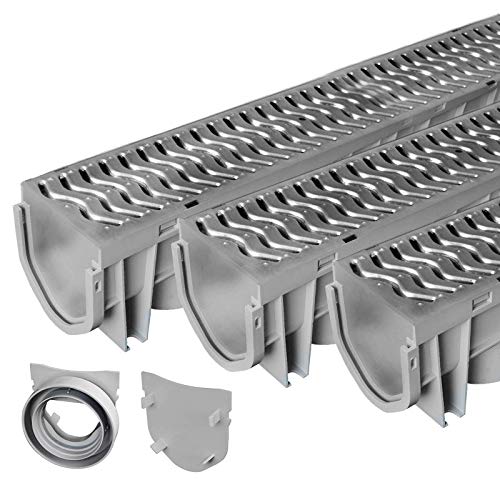
Channel Drains
Pre-formed linear drains set into hardscape surfaces like driveways and patios. They intercept sheet flow and route it to a discharge point. Common around garage aprons and patio edges.
Downspout Extensions
Simple but critical. Extending downspouts 6–10 feet from the foundation — or connecting them to a buried drain line — keeps roof water from saturating the soil next to your house.
Rain Gardens
A planted depression that captures and filters runoff from roofs and hardscapes. Rain gardens are a premium, eco-friendly solution that doubles as a pollinator habitat. They require careful siting and plant selection.
Subsurface Drainage Solutions
When water sits below the surface and keeps soil waterlogged, you need to move it underground. Subsurface systems capture groundwater and channel it to a safe outlet.
French Drains
A French drain is the workhorse of yard drainage. It's a gravel-filled trench containing a perforated pipe wrapped in filter fabric. Water enters the trench, passes through the gravel, and flows through the pipe to a discharge point. French drains are ideal for:
- Capturing groundwater at the base of a slope
- Redirecting water away from foundation walls
- Draining soggy lawn areas that stay wet for days
- Protecting retaining walls from hydrostatic pressure
A properly built French drain uses washed gravel, a slotted or perforated pipe, and a fabric barrier to keep soil from clogging the system. Installation depth and slope matter — the pipe needs a continuous downward grade of at least 1% to flow reliably. Mid-range French drain kits are widely available for DIY installation, while high-end professional installations include catch basins and cleanouts for long-term reliability.
Dry Wells (Soakaways)
A dry well is a buried, gravel-filled pit or a pre-formed plastic crate that collects water and allows it to slowly percolate into the surrounding soil. Dry wells work best in sandy, well-draining soils and are often paired with downspouts or French drains. They're an affordable mid-tier solution for small catchments but are not suitable for heavy clay soils where water can't infiltrate.
Catch Basins
A catch basin (or drain box) is a plastic or concrete box with a grate on top, set at a low point in the yard. It collects surface water and debris, then routes it into a buried drain line. Catch basins are commonly used at the bottom of swales, in driveway aprons, and at lawn low spots. They require periodic cleaning to remove leaves and sediment.
Sump Pumps
Where gravity drainage isn't possible — for example, a basement or a low-lying yard with no downhill outlet — a sump pump mechanically moves water to a safe discharge point. Sump pumps are a high-end solution typically used in conjunction with interior or exterior foundation drainage systems.
Drainage Solutions Compared
Use this comparison to match a drainage method to your property's specific challenge. "Tier" reflects the relative investment level, not a price.
| Solution | Best For | Installation Effort | Tier |
|---|---|---|---|
| Regrading | Minor pooling near foundation | Moderate (soil work) | Entry-Level |
| Swales | Lots with a natural low line | Moderate | Entry-Level |
| Downspout Extensions | Roof runoff near foundation | Low (DIY-friendly) | Entry-Level |
| Dry Creek Beds | Sloped yards with erosion | Moderate | Mid-Range |
| French Drains | Waterlogged lawns and slopes | High (trenching) | Mid-Range |
| Dry Wells | Small catchments in sandy soil | Moderate to High | Mid-Range |
| Catch Basins | Low spots and swale outlets | Moderate | Mid-Range |
| Rain Gardens | Eco-friendly runoff capture | Moderate (planting) | High-End |
| Sump Pumps | Basements and no-gravity sites | High (professional) | High-End |
Planning Your Drainage System
A successful drainage project starts with a plan, not a shovel. Follow these steps to design a system that works for your property.
- Map the water. Observe your yard during heavy rain. Mark low spots, flow paths, and areas where water lingers more than 24 hours.
- Identify the discharge point. Every drainage system needs a safe place for water to go — a storm drain, a street gutter, a natural swale, or a dry well. Confirm local regulations before discharging onto sidewalks or neighboring property.
- Start at the source. Manage roof water first with gutter maintenance and downspout extensions. Then address surface flow with grading and swales. Add subsurface drains last.
- Combine methods. Most effective drainage plans use two or three solutions together — for example, a swale that feeds a catch basin connected to a French drain.
- Protect planting beds. Route drainage away from flower beds and vegetable gardens, or use raised beds with good soil mix to keep roots above the water table. If weeds are thriving in wet areas, fix the drainage before treating them.
If your property has significant slope, retaining walls may be part of the solution — but they must include weep holes and backfill drainage to relieve water pressure. Pair wall installation with a French drain behind the wall for long-term stability. For sloped properties, consult a landscape professional to ensure the design handles storm flow safely.
Maintaining Your Drainage System
Drainage systems work quietly until they clog. A little routine maintenance keeps water flowing for years.
- Clean gutters twice a year and check downspout connections for leaks.
- Clear catch basin grates of leaves and debris before rainy seasons.
- Inspect French drain outlets for standing water or sediment buildup. Flush the line annually with a garden hose.
- Keep swales and dry creeks clear of fallen branches and overgrown vegetation.
- Recheck grading after soil settles — add soil to maintain slope away from the foundation.
- Watch for new wet spots after major storms; they signal a blockage or a design gap.
Frequently Asked Questions
What is the cheapest way to fix yard drainage?
Start with regrading and downspout extensions. These entry-level fixes solve many minor pooling problems without trenching or heavy equipment. If water still lingers, a surface swale is the next most affordable step.
How deep should a French drain be?
A typical French drain is 18–24 inches deep for lawn drainage, but depth depends on the water table and the depth of the problem area. The key requirement is a continuous slope of at least 1% along the pipe so water flows to the outlet.
Do I need a professional for drainage work?
Surface fixes like grading, swales, and downspout extensions are DIY-friendly. Subsurface systems that involve trenching, catch basins, or foundation drainage benefit from professional design and installation, especially on sloped lots or where the water table is high.
Will a French drain work in clay soil?
French drains can work in clay soil, but the slow infiltration rate means the system must outlet to a safe discharge point rather than relying on the soil to absorb water. In heavy clay, pair the drain with a catch basin and ensure the outlet has a clear path.
How do I stop water pooling at the bottom of a slope?
Install a swale or dry creek along the base of the slope to intercept water, then route it to a catch basin or French drain. Avoid planting water-sensitive species in the collection zone, and use moisture-tolerant plants if you want a planted solution.
Can drainage problems cause foundation damage?
Yes. Water that pools next to a foundation can increase hydrostatic pressure on basement walls and cause cracks, seepage, and settling. Correcting grading and extending downspouts are the first lines of defense; interior or exterior footing drains are the high-end fix.
Solve Your Drainage Problem with the Right Tools
From perforated pipe and catch basins to gravel and landscape fabric, the right supplies make a drainage project last. Browse recommended drainage and landscaping tools below.
See Recommended Products