
Hedge Trimmers: The Ultimate Buying Guide for a Perfect Garden
Discover the right hedge trimmer for your needs. Expert advice on types, features, and maintenance to help you achieve beautifully sculpted hedges and shrubs with confidence.
A beautifully manicured hedge is the cornerstone of a well-kept garden. It defines boundaries, provides privacy, and adds a structured elegance that few other landscaping elements can match. But achieving and maintaining those crisp lines requires the right tool for the job. A hedge trimmer is an essential investment for any gardener who values both efficiency and precision.
Whether you are a homeowner looking to tame an overgrown shrub or a seasoned landscaper managing extensive hedgerows, understanding the different types of hedge trimmers and their features is key to making a smart purchase. This guide will walk you through everything you need to know—from power sources and blade types to safety features and maintenance—so you can choose a tool that will serve you well for years to come. Let's explore the world of hedge trimmers together and help you find the perfect match for your gardening goals.
Why Invest in a Dedicated Hedge Trimmer?
While manual pruning shears are fine for small touch-ups, a dedicated hedge trimmer is a game-changer for several reasons. First and foremost is speed and efficiency. Powered hedge trimmers, whether electric or gas, make quick work of shaping large hedges, saving you hours of tedious labor. The reciprocating blades cut through foliage rapidly and uniformly, resulting in a cleaner, more professional-looking finish compared to manual tools.
Secondly, precision and control are significantly enhanced. Modern hedge trimmers are designed with ergonomics in mind, featuring balanced weights, comfortable grips, and vibration reduction. This allows you to guide the trimmer with a steady hand, creating smooth, flat surfaces and sharp angles with much greater ease than you'd achieve with hand shears. Safety has also improved dramatically; features like blade brakes and two-handed safety switches ensure the tool stops almost instantly when you release the trigger.
Finally, a hedge trimmer is a versatile investment that extends beyond just hedges. Many models can be used to shape ornamental shrubs, trim back overgrown bushes, and even cut back tough perennials. If you're serious about maintaining a healthy, attractive landscape, a hedge trimmer is not just a convenience—it's a necessity. Pair it with other essential gardening tools like loppers and pruning saws for thicker branches, and you'll have a complete toolkit for all your pruning tasks.
Types of Hedge Trimmers: Which One is Right for You?
Hedge trimmers come in several configurations, each with its own strengths and ideal use cases. Understanding these differences is the first step toward a smart purchase.
-
Corded Electric Hedge Trimmers
Corded electric models are a popular choice for homeowners with small to medium-sized gardens. They are generally the most budget-friendly option, lightweight, and easy to use. Because they plug into a standard outlet, they offer consistent power without the need for batteries or fuel. The main drawback is the cord, which can limit your range and pose a tripping hazard. However, for gardens with nearby outlets and compact hedges, a corded electric trimmer is a reliable and efficient workhorse.
-
Cordless (Battery-Powered) Hedge Trimmers
Cordless electric trimmers have seen tremendous improvements in recent years, making them a top choice for many gardeners. They offer the freedom to move around your yard without being tethered to a cord. Modern lithium-ion batteries provide ample runtime for most residential tasks, and models in the mid-range to premium tiers deliver power comparable to corded units. They are quieter than gas models and require minimal maintenance. For most homeowners, a cordless hedge trimmer represents the best balance of convenience, performance, and value. Be sure to consider the battery voltage and run time when comparing models.
-
Gas-Powered Hedge Trimmers
Gas-powered hedge trimmers are the powerhouse of the bunch, designed for large properties and heavy-duty use. They deliver unmatched cutting power and have no runtime limitations, making them ideal for extensive hedgerows and professional landscapers. However, they are heavier, noisier, and require more maintenance (fuel mixing, spark plugs, etc.) than electric models. If you have a large yard with thick, overgrown hedges and don't mind the extra maintenance, a gas trimmer is a durable and powerful investment. These are typically found in the high-end or top-tier category.
-
Manual Hedge Shears
For very small hedges, topiary, or delicate shaping work, manual hedge shears offer ultimate control and precision. They are quiet, require no power source, and provide a satisfying, hands-on gardening experience. While they are more labor-intensive and slower than powered options, they are an excellent choice for detailed work and are often used by topiary artists. Think of them as a specialized tool in your arsenal, complementing a powered trimmer for the finer details.
Pro Tip: If you're unsure where to start, a cordless electric hedge trimmer is often the most versatile choice for typical suburban gardens. It combines the convenience of no cords with sufficient power for most tasks, making it a great all-rounder. For larger properties or professional use, consider a gas-powered or high-end cordless model.
Key Features to Look For in a Hedge Trimmer
When comparing hedge trimmers, pay close attention to these features to ensure you get a tool that matches your needs:
Blade Length and Type: The length of the blade determines how much you can cut in one pass. Longer blades (24-30 inches) are great for large, flat surfaces, while shorter blades (16-20 inches) offer better maneuverability for detailed shaping. Laser-cut, diamond-ground blades provide cleaner cuts and stay sharp longer. Look for a blade gap that suits the thickness of the branches you'll be cutting.
Cutting Capacity: This refers to the maximum diameter of branches the trimmer can handle. Most standard models cut up to 1/2 inch, while heavy-duty models can handle up to 3/4 inch or more. Be realistic about your hedge's thickness; exceeding the capacity can damage the tool.
Power Source and Voltage: For cordless models, higher voltage generally means more power. However, battery platform compatibility is also crucial if you already own other tools from a particular brand. A trimmer with a brushless motor will be more efficient and longer-lasting than one with a brushed motor.
Weight and Ergonomics: You'll be holding the trimmer for extended periods, often at awkward angles. A lightweight model (under 8 lbs) with a rotating rear handle and soft-grip areas will reduce fatigue and improve your control. Vibration-dampening technology is also a plus for comfort.
Safety Features: A two-handed safety switch is non-negotiable—it prevents accidental startups. A blade brake that stops the blades instantly upon release of the trigger is a major safety advantage. Also, consider a blade guard or sheath for safe storage and transport.
Noise and Maintenance: Electric models are significantly quieter than gas-powered ones, which is considerate of your neighbors. Electric motors also require less maintenance, though you'll still need to keep the blades clean and sharp. For more on tool care, see our guide on cleaning and sharpening tools.
Essential Maintenance for Long-Lasting Performance
Proper maintenance is the secret to a hedge trimmer that performs flawlessly season after season. After each use, take a few minutes to clean the blades with a damp cloth to remove sap and debris. Sap can harden and cause the blades to stick, reducing efficiency and straining the motor. Periodically apply a light coat of machine oil or a specialized lubricant to the blades to prevent rust and ensure smooth operation.
Sharpening is perhaps the most overlooked maintenance task. Dull blades tear at branches rather than slicing cleanly, which can damage your plants and leave them susceptible to disease. Sharpen the blades every 10-20 hours of use using a fine-toothed file or a rotary tool. Follow the manufacturer's instructions for the correct angle. For a comprehensive guide on tool maintenance, check out our article on cleaning and sharpening garden tools.
For gas-powered models, regular engine maintenance—including air filter changes, spark plug checks, and fuel system cleaning—is essential. For cordless models, follow the battery care recommendations to maximize its lifespan, such as storing it in a cool, dry place and avoiding full discharges. Finally, store your hedge trimmer in a dry location with the blade guard on to protect the cutting edges. A well-maintained tool is a safe tool and a joy to use.
Safety Precautions When Using a Hedge Trimmer
Hedge trimmers are powerful cutting tools and demand respect. Always wear appropriate personal protective equipment (PPE), including safety glasses or goggles to protect your eyes from flying debris, sturdy gloves to protect your hands, and hearing protection if using a gas or loud electric model. Wear long pants and closed-toe shoes—never operate a hedge trimmer in sandals or bare feet.
Before you start, inspect the area for hidden hazards. Check for wires, fences, or stones hidden in the foliage. Ensure the power cord (for corded models) is routed safely away from the cutting area. Never attempt to cut branches that are too thick for the trimmer's capacity; use a lopper or pruning saw instead. For more on pruning techniques for different plants, see our guides on pruning tips and hydrangeas.
Maintain a stable footing and keep both hands on the tool. Do not overreach or cut above shoulder height. When cutting, start from the bottom of the hedge and work your way up, using a sweeping motion. This prevents branches from falling onto the blades and causing kickback. Finally, always disconnect the power source (unplug or remove the battery) before making any adjustments or clearing jammed material from the blades.
Frequently Asked Questions About Hedge Trimmers
What is the best type of hedge trimmer for a small garden?
For small gardens, a cordless electric hedge trimmer is often the best choice. They are lightweight, quiet, easy to maneuver, and don't require a nearby power outlet, making them ideal for quick touch-ups and smaller hedges. Mid-range models offer a good balance of power and battery life.
How often should I sharpen my hedge trimmer blades?
You should sharpen your hedge trimmer blades every 10 to 20 hours of use, or at least once a season. If you notice the blades tearing or crushing branches instead of cutting them cleanly, it's a sign they need sharpening. Regular maintenance ensures a clean cut and prolongs the tool's life. For more detailed instructions, see our guide on sharpening tools.
Can I use a hedge trimmer on thick branches?
Most standard hedge trimmers are designed for branches up to about 1/2 inch in diameter. For thicker branches, you should use a lopper or a pruning saw. Attempting to cut thick branches with a standard hedge trimmer can damage the blades and the motor. Some heavy-duty or gas-powered models can handle slightly thicker branches, but always check the manufacturer's specifications.
How do I choose between a corded and cordless hedge trimmer?
Choose a corded trimmer if you have a small to medium garden with easy access to power outlets and want the most budget-friendly option with unlimited runtime. Choose a cordless trimmer if you value freedom of movement, have a larger yard, or want to avoid the hassle of cords. Cordless models have advanced significantly and are now the preferred choice for many homeowners.
Top-Rated Hedge Trimmers and Garden Tool Recommendations
⚠️ AFFILIATE DISCLOSURE: This website contains affiliate links. As an Amazon Associate, we earn from qualifying purchases. If you make a purchase through these links, we may receive a small commission at no additional cost to you. Read our full affiliate policy.

BLACK+DECKER 20V MAX Cordless Hedge Trimmer, Battery and Charger Included, 22 Inch Steel Blade Lightweight Bush Trimmer, Soft Grip, Less Vibration (LHT2220)
Check price on Amazon
BLACK+DECKER Electric Hedge Trimmer, 17-Inch Corded 3.2 Amp, Dual Action, Reduced Vibration, Cleaner Cut, Lightweight, 3800 Cuts per Min (BEHT150)
Check price on Amazon
Fiskars 25"-33" Power-Lever Extendable Garden Hedge Shears, 10” Blades | Telescoping Adjustable Handles for High-Reach Pruning and Shaping, Self-Sharpening Serrated Steel Blades
Check price on Amazon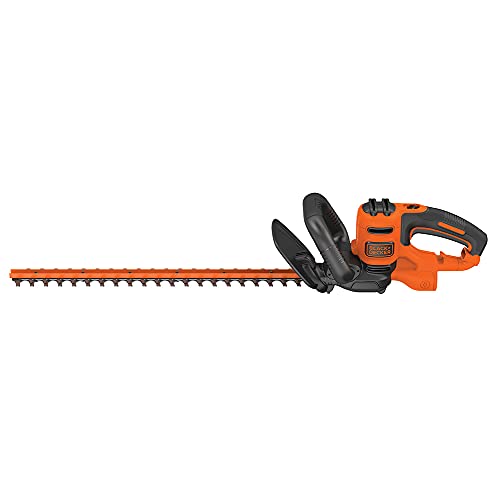
BLACK+DECKER 22" Electric Hedge Trimmer, Lightweight 4.0 Amp Corded Dual Action Shrub Trimmer, Full Wraparound Handle, High Output Low Vibration (BEHT350FF)
Check price on Amazon
20V 22-Inch Hedge Trimmer Cordless with 2x5.0Ah Battery & Charger | Bush & Shrub Trimmer | 180° Rotatable Handle | 3/5" Double-Action Blade | Dual Safety Lock for Garden and Yard Care
Check price on Amazon
Supstable Cordless Pole Saw & Hedge Trimmer 6-in-1, Mini Chainsaw Cordless/Electric Hedge Trimmer with Extension Pole, 15Ft Reach, Extendable Tree Pruner, Bush Trimmer Limb Branch Cutter, Grass Shears
Check price on Amazon
YRTSH Hedge Clippers Shears Hedge Shears for Trimming Borders, Garden Tools | Hedge Clippers Handheld, Bush Cutters Trimmer with Sharp Wavy Blades, Garden Shears for Hedges (19 Inch)
Check price on Amazon
Greenworks 40V 8 in Pole Saw Hedge Trimmer Kit, 2.0 Ah Battery and Charger | Cordless, Powerful Performance, Great For Pruning and Trimming Branches, Hard to Reach Areas, Storm Cleanup
Check price on AmazonDisclaimer
Let Gardening provides educational content only. Not a substitute for professional horticulturist or landscape architect services. Always consult a qualified professional for major landscaping or agricultural work. Some content may use AI. We are not responsible for plant damage, injuries, or outcomes. By using this site, you accept these terms. If you do not agree, please leave this website and discontinue its use. Read full disclaimer.