
Best Evergreen Plants for Pots Outside Front Door
Year-round structure, effortless curb appeal, and a welcoming entrance that looks good in every season — the right potted evergreens do all three. Here is exactly which plants to choose, how to care for them, and the container mistakes that quietly kill more evergreens than cold weather ever will.
The short answer: For most front doors, the strongest performers are Japanese holly, boxwood, dwarf arborvitae, and bay laurel. They keep their shape, tolerate part shade near a porch wall, and survive winter in a container without babying. The full guide below explains how to pick the right one for your climate, sun direction, and how much time you actually want to spend watering.
Planters flanking a front door do more visual work than almost anything else on a property. They frame the entry, draw the eye up to the house, and signal whether a home is cared for — all in a footprint of a couple of square feet. But they also sit in one of the harshest microclimates on the property: reflected heat from the wall, roof runoff, wind exposure, and root zones that freeze and thaw far faster than ground soil does.
That combination is why so many front-porch evergreens look great in May and half-dead by February. Choosing the right species is 80% of the battle. The rest is container sizing, drainage, and a watering rhythm that changes with the season.
Why Evergreens Beat Annuals at the Front Door
Annuals deliver a burst of color and then vanish. Evergreens deliver the constant: a clean architectural silhouette, deep green color in January, and a structure you can dress up with seasonal accents — a wreath, holiday lights, or a skirt of pansies in spring — rather than rebuild from scratch every few months.
They also hold their form. A well-shaped boxwood in a square planter reads as intentional design; a leggy fern in the same pot reads as an afterthought. If your goal is a front entry that looks composed without weekly fussing, evergreens are the lower-effort, higher-return choice.
How to Choose the Right Evergreen for Your Front Door
Four variables determine what will actually thrive in your specific container:
1. Sun Direction
A south- or west-facing door gets brutal afternoon heat and reflected glare from the wall. Those spots need sun-tolerant, heat-hardy evergreens. A north- or east-facing entry stays cooler and shadier, which rules out full-sun junipers but suits holly, boxwood, and yew.
2. Climate and Cold Hardiness
Container roots sit above ground, so they experience temperatures two U.S.D.A. zones harsher than the same plant in the ground. If you live in zone 5, treat your containers as zone 4 plants. Buy one zone hardier than your map zone says, and you will stop losing evergreens to winter kill.
3. Mature Size vs. Pot Size
Dwarf and compact cultivars are non-negotiable for containers. A full-size arborvitae will outgrow a 20-inch pot within two seasons and start root-binding. Look for cultivars labelled dwarf, compact, nana, or globosa.
4. Your Realistic Watering Commitment
Potted evergreens cannot send roots deep for moisture. In July, a large container near a hot wall may need water every other day. If that is not realistic, choose the most drought-tolerant species on the list and upsize the pot — more soil volume means slower dry-down.
The Best Evergreen Plants for Front Door Pots
The picks below are ordered roughly from most shade-tolerant to most sun- and heat-tolerant. All are available as dwarf or compact cultivars suitable for containers.
| Plant | Sun Needs | Hardiness Tier | Best For |
|---|---|---|---|
| Japanese Holly (Ilex crenata) | Part sun to part shade | High — very cold-tolerant | Formal entries, tight clipping, north-facing doors |
| Boxwood (Buxus) | Part sun to shade | High — cold-hardy | Classic symmetrical pairs, shaping, small pots |
| Dwarf Arborvitae (Thuja) | Full sun to part shade | High — hardy to zone 3–4 | Vertical accent, privacy screening, tall planters |
| Yew (Taxus) | Part sun to shade | High — very cold-tolerant | Deep green formal cones, shaded porches |
| Bay Laurel (Laurus nobilis) | Full sun to part shade | Mid — hardy to zone 8 | Fragrant foliage, culinary use, mild climates |
| Dwarf Alberta Spruce | Full sun | High — hardy to zone 3 | Conical holiday look, cold climates |
| Juniper (dwarf cultivars) | Full sun | High — very drought-tolerant | Hot, sunny entries, low maintenance |
| Rosemary (upright form) | Full sun | Low — zone 8+ only | Warm climates, fragrance, informal shape |
Japanese Holly — The Best All-Rounder
Japanese holly is the closest thing to a perfect container evergreen for most of the country. It holds a dense, naturally upright form, clips cleanly into cones or balls, tolerates part shade near a porch wall, and shrugs off cold that would scorch a boxwood. It also resists the boxwood blight that has devastated formal gardens in recent years — a genuine advantage if you are planting a matched pair.
Choose compact cultivars that stay under four feet in a container. Unlike many evergreens, Japanese holly handles being slightly root-bound better than most, which makes it forgiving in smaller planters.
Boxwood — The Classic Formal Choice
Boxwood is the plant most people picture when they imagine a formal front entry. Its fine texture and tight growth make it ideal for symmetrical pots, and it tolerates shade well enough to thrive under a covered porch. The catch is disease pressure: boxwood blight and leaf miner are widespread, so buy from a reputable nursery and avoid overhead watering.
For containers, pick slow-growing dwarf cultivars rather than full-size English boxwood, which will outgrow its pot quickly. If you are planting a matched pair flanking the door, buy both plants from the same nursery batch so their growth rate and habit match.
Dwarf Arborvitae — Vertical Structure in Tall Pots
If your entry needs height — a tall narrow planter beside a door, or a pair that reads as living columns — dwarf arborvitae is the workhorse. It is extremely cold-hardy, tolerant of both sun and part shade, and naturally columnar, so it needs almost no shaping.
The trade-off is that arborvitae dislikes dry soil more than most evergreens. In a container, that means consistent watering and a large pot. Choose globe or dwarf conical cultivars for containers, never full-size screening varieties.
Yew — For Shaded Entries
Yew is the most shade-tolerant evergreen on this list and one of the most cold-hardy. It clips into sharp formal shapes and holds deep green color even in low light. If your front door faces north and gets little direct sun, yew is a safer bet than juniper or spruce.
All parts of yew are toxic to pets and people if ingested — worth knowing if you have a dog that investigates planters at the door.
Bay Laurel — Fragrance and Function
Bay laurel brings something the conifers cannot: fragrant foliage you can actually harvest for cooking. It holds a dense, rounded form, tolerates part shade, and looks excellent in a classic urn. It is only hardy to zone 8, so it suits mild-winter climates or a sheltered entry.
In cooler zones, treat bay as a container plant you overwinter indoors or in a garage. It responds well to clipping, so you can keep it at a manageable size for years.
Dwarf Alberta Spruce — The Cold-Climate Cone
For northern entries, dwarf Alberta spruce delivers a perfect conical silhouette and exceptional cold hardiness. It is slower-growing than most conifers, which is exactly what you want in a container. The main requirement is full sun and consistent moisture — it sulks in shade and scorches in dry heat.
Inspect the foliage before buying; dwarf Alberta spruce is prone to spider mites, which show up as fine webbing and faded, greyish needles.
Juniper — For Hot, Sunny Entries
If your front door faces south or west and bakes in afternoon sun, dwarf juniper is the most forgiving choice. It is drought-tolerant, heat-tolerant, and largely pest-free, with cultivars ranging from low spreading forms to upright columnar shapes.
Juniper needs excellent drainage above all else. Blend extra grit or perlite into the potting mix and never let the pot sit in a saucer of standing water.
Rosemary — Warm-Climate Fragrance
Upright rosemary is a beautiful, fragrant front-door plant in zones 8 and warmer, where it can stay outdoors year-round. It needs full sun, sharp drainage, and a light hand on water — overwatering kills more container rosemary than cold does.
Outside its hardiness range, treat rosemary as an annual or overwinter it indoors. Its informal, slightly wild habit suits relaxed, cottage-style entries better than formal ones.
Container and Soil Setup That Actually Works
Most container evergreen failures are not plant problems — they are pot and soil problems. Get these three things right and the plant list above becomes almost maintenance-free.
Pot Size and Material
- Size: At least 15–20 gallons for a 3-gallon evergreen. Larger pots hold more soil, dry out slower, and insulate roots better in winter.
- Drainage hole: Non-negotiable. A pot without a drainage hole will drown an evergreen within a season. If you love a decorative pot with no hole, use it as a cachepot and plant into a nursery pot inside it.
- Material: Frost-proof ceramic, fibreglass, or thick resin survive freeze-thaw cycles. Thin terracotta cracks in hard winters and dries out fast in summer.
- Weight: Large pots are heavy when filled. Place them on pot feet or a rolling plant caddy before you fill them, not after.
Potting Mix
Never use garden soil in a container. It compacts, drains poorly, and suffocates roots. Use a quality soilless potting mix and amend it for drainage:
- Base: A peat- or coir-based potting mix with perlite already blended in.
- Drainage boost: Add 20–30% coarse bark, pumice, or extra perlite for conifers and juniper.
- Moisture retention: A small amount of compost or a moisture-retaining amendment helps in hot, exposed entries.
- pH: Most evergreens prefer slightly acidic soil. A potting mix designed for acid-loving plants suits holly, yew, and arborvitae well.
Year-Round Care for Potted Evergreens
Watering
Water when the top two inches of mix feel dry to the touch. In summer, a large pot near a hot wall may need water every two to three days. In winter, cut back to every two to three weeks — evergreens use very little water when growth is paused, and overwatering in cold soil causes root rot.
The most dangerous period is late winter: soil thaws, the sun warms the foliage, the plant transpires, but roots cannot yet take up water from frozen soil. Watering during a midwinter thaw prevents the desiccation that turns evergreens brown in March.
Feeding
Feed once in early spring as new growth begins, using a slow-release or organic fertilizer formulated for evergreens. Avoid high-nitrogen feeds in late summer — they push soft growth that winter kills. Container plants exhaust their soil nutrients faster than ground plants, so an annual spring feed is not optional.
Pruning
Light shaping in late spring or early summer keeps container evergreens dense and proportionate. Never hard-prune into bare wood on conifers — most will not regrow from old wood. For holly and boxwood, light regular clipping is better than one heavy cut.
Winter Protection
- Insulate the pot: Wrap containers in burlap or bubble wrap, or cluster pots together against the house wall.
- Raise off cold ground: Pot feet prevent the base from freezing into the patio and improve drainage.
- Block winter wind: A temporary burlap screen on the windward side prevents foliage burn.
- Water during thaws: See above — this single habit saves more evergreens than any other winter step.
Design Tips for a Polished Front Entry
Symmetry is the safest formula: two matched pots, two matched plants, equal distance from the door. It reads as deliberate and suits almost every architectural style.
For a less formal look, use one large statement pot with a single upright evergreen, then underplant with seasonal color — pansies in spring, heuchera in summer, ornamental kale in autumn. The evergreen provides the constant structure while the underplanting changes with the season.
Height matters. A pair of tall columnar evergreens draws the eye upward and makes an entry feel grander. Low rounded evergreens suit wide, horizontal entries better. Match the plant's silhouette to the architecture: conical for traditional homes, rounded for cottage styles, columnar for modern facades.
If you are building out the broader front-of-house planting, it helps to coordinate your container choices with the beds around them. Our guides to the best bushes to plant in front of your house and the best full-sun bushes for front-of-house planting cover the in-ground companions that tie the whole entry together.
Common Mistakes That Kill Front-Door Evergreens
- Undersized pots. A plant in a too-small pot dries out fast, root-binds, and freezes harder in winter. Size up.
- No drainage. The single most common cause of container evergreen death. Always check for a drainage hole.
- Garden soil in containers. Compacts and suffocates roots. Use soilless potting mix.
- Overwatering in winter. Cold, wet soil rots roots. Water sparingly and only when the mix is dry.
- Skipping winter insulation. Roots above ground freeze faster than in-ground roots. Wrap the pot.
- Buying full-size cultivars. They outgrow the pot within two seasons. Choose dwarf and compact forms.
- Ignoring the wall's reflected heat. A west-facing wall can push container temperatures far above air temperature. Choose heat-tolerant species or shade the pot.
Recommended Planters, Soil & Care Tools for Front-Door Evergreens
⚠️ AFFILIATE DISCLOSURE: This website contains affiliate links. As an Amazon Associate, we earn from qualifying purchases. If you make a purchase through these links, we may receive a small commission at no additional cost to you. Read our full affiliate policy.

Vitalismo 3FT Artificial Cedar Trees Set of 2 for Outdoor Front Porch | UV-Resistant Faux Cedar Topiary Trees with Realistic PE Foliage for Patio Entryway Front Door Porch and Outdoor Decor
Check price on Amazon
Aveyas 3ft Artificial Cedar Topiary Trees for Outdoor Front Porch Door, 3 Feet Faux Potted Plants Evergreen Fake Pine Cypress Tree for Outside Home Decor (3 ft Tall) - Set of 2 Pack
Check price on Amazon
VIVATREES 4FT Artificial Cedar Topiary Trees 2 Pack, Realistic Faux Cypress Trees with Square Black Planter Pot, UV Resistant Outdoor Evergreen Plants for Front Porch Patio Garden Home Decor
Check price on Amazon
2 Pcs Artificial Christmas Norfolk Pine Topiary Trees for Front Porch Decor | Pre-Assembly, with Flowerpots, Realistic Fake Pine Potted Plant, for Front Door Home Farmhouse Garden Xmas Outside Decoration
Check price on Amazon
LuceAlberi 3FT Artificial Cedar Topiary Trees Set of 2 for Outdoor Porch | UV Resistant Faux Cypress Pine Plants with Realistic Wood-Textured Trunk for Front Door, Winter Porch Decor Fake Evergreens
Check price on Amazon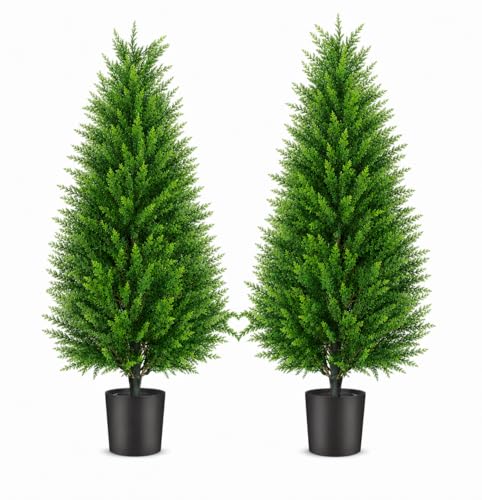
WhtSky Artificial Topiary Cedar Trees, 3FT Tall, Set of 2 | UV Resistant, Faux Evergreen Plants, Indoor Outdoor Decoration, With Pots, For Home Front Door Offices Entryway
Check price on Amazon
Artificial Green Plants Faux Greenery for Winter Outdoor Porch Planters | Fake Silk Realistic UV Resistant Fern Mixed Evergreen Shrubs Bushes Filler for Outside Front Door Patio Pot Decor, 8 Bundles
Check price on Amazon
Vitalismo 4FT Artificial Cedar Trees Set of 2 for Outdoor Front Porch | UV-Resistant Faux Cedar Topiary Trees with Realistic PE Foliage for Patio Entryway Front Door Porch and Outdoor Decor
Check price on AmazonFrequently Asked Questions
What is the best evergreen plant for a pot outside a front door?
Japanese holly, boxwood, and dwarf arborvitae are the top all-rounders for most climates. They are compact, cold-hardy, and tolerate the part-shade conditions common near a porch wall. For hot, sunny entries, dwarf juniper is the most forgiving.
Do evergreen plants in pots need special soil?
Yes. Use a well-draining soilless potting mix, ideally amended with 20–30% coarse bark or perlite for conifers. Never use garden soil in containers — it compacts and suffocates roots.
How often should I water evergreen plants in pots?
Water when the top two inches of mix feel dry. In summer that may be every two to three days; in winter, every two to three weeks. Check with your finger rather than following a fixed schedule.
Will potted evergreens survive winter outdoors?
Most cold-hardy evergreens survive if the pot is insulated and watered during midwinter thaws. Wrap the container in burlap or bubble wrap, raise it on pot feet, and shelter it from prevailing wind.
Can I keep a potted evergreen in the same container for years?
Yes, if you choose a dwarf cultivar and a generously sized pot. Root-prune and refresh the top layer of soil every two to three years, or step the plant up into a larger container as needed.
Why is my potted evergreen turning brown?
Brown needles usually point to one of three causes: winter desiccation (dry soil during cold weather), root rot from overwatering or poor drainage, or reflected heat scorching foliage near a hot wall. Check soil moisture first, then drainage.
Ready to Upgrade Your Front Entry?
The plants above are only half the equation — the right container, potting mix, and winter protection do the rest. Browse the recommended planters and care tools above, or start with our broader guide to front-of-house planting for the full picture.
Explore Front-of-House Planting Guides