
Full Sun Perennials That Bloom All Summer
Transform your garden into a continuous summer showcase with sun-loving perennials that deliver reliable, long-lasting color from early summer through the first frost.
Explore Top PicksThe core challenge every sun-garden owner faces: finding perennials that don't just bloom for two or three weeks and then fade into foliage. This guide cuts through the noise with proven, expert-selected varieties that deliver months of color in full sun. Whether you're building a new bed from scratch or filling gaps in an established border, these recommendations will help you create a garden that stays vibrant all season long.
Why Choose Long-Blooming Perennials
Perennials represent a long-term investment in your landscape. Unlike annuals that must be replanted every year, perennials return season after season, establishing deeper root systems and requiring less maintenance over time. When you choose varieties with extended bloom periods, you maximize that investment — getting months of visual reward from a single planting.
Full sun perennials that bloom all summer also support local ecosystems. Many of these plants are pollinator magnets, attracting bees, butterflies, and beneficial insects that improve the overall health of your garden. A well-designed perennial border with staggered bloom times creates a continuous food source for pollinators from early summer through fall.
From a design perspective, long-blooming perennials form the backbone of any low-maintenance landscape. They reduce the need for constant replanting, lower water consumption once established, and provide structure and color that anchors your garden's design. If you're planning a front-yard makeover, consider integrating these resilient plants into your low-maintenance landscaping ideas for the front of the house.
Top Full Sun Perennials That Bloom All Summer
These standout varieties have earned their place in gardens across a wide range of climates. Each one delivers reliable, extended bloom performance in full sun with minimal fuss.
Coneflower
Echinacea spp.A garden classic that blooms from early summer into fall. Modern varieties offer a spectrum of colors from classic purple to vivid orange, red, and white. Coneflowers are drought-tolerant once established and attract butterflies by the dozen.
- Bloom Time: June – September
- Sun: Full sun (6+ hours)
- Height: 18–48 inches
- Tier: Budget-friendly to mid-range
- Care: Low maintenance, deer-resistant
Black-Eyed Susan
Rudbeckia fulgidaBright golden-yellow daisies with dark centers light up the summer garden from July through September. This native perennial is tough as nails, tolerating heat, drought, and poor soil with grace. A must-have for naturalistic plantings.
- Bloom Time: July – September
- Sun: Full sun
- Height: 24–36 inches
- Tier: Budget-friendly
- Care: Very low maintenance
Daylily
Hemerocallis spp.With thousands of cultivars available, daylilies offer an extraordinary range of colors and flower forms. While individual blooms last only a day, established clumps produce dozens of buds that open sequentially over weeks. Repeat-blooming varieties extend the show even further.
- Bloom Time: June – August (repeat bloomers extend to fall)
- Sun: Full sun to part shade
- Height: 12–48 inches
- Tier: Budget-friendly to premium
- Care: Very low maintenance
Russian Sage
Perovskia atriplicifoliaSilvery-gray foliage and airy sprays of lavender-blue flowers create a hazy, romantic effect from mid-summer through fall. This tough subshrub thrives in heat and poor soil, making it an excellent choice for water-wise gardens and terraced gardening situations.
- Bloom Time: July – October
- Sun: Full sun
- Height: 36–60 inches
- Tier: Mid-range
- Care: Low maintenance, drought-tolerant
Perennial Salvia
Salvia nemorosa & hybridsSpikes of vivid purple, blue, pink, or white flowers rise above aromatic foliage from late spring through midsummer, with repeat bloom after deadheading. Salvias are workhorses in the sunny border, combining beautifully with ornamental grasses and other perennials.
- Bloom Time: May – August (with deadheading)
- Sun: Full sun
- Height: 18–36 inches
- Tier: Budget-friendly to mid-range
- Care: Low maintenance, deer-resistant
Coreopsis
Coreopsis spp.Cheerful, daisy-like flowers in shades of yellow, orange, and pink bloom prolifically from early summer into fall. Threadleaf varieties offer fine, airy texture, while grandiflora types provide larger, bolder blooms. Deadheading encourages even more flowers.
- Bloom Time: June – September
- Sun: Full sun
- Height: 12–36 inches
- Tier: Budget-friendly
- Care: Low maintenance, drought-tolerant
Blanket Flower
Gaillardia × grandifloraBold, daisy-like flowers with fiery red and yellow banding create a vibrant display from early summer through fall. Blanket flower laughs at heat, drought, and poor soil, making it an ideal choice for challenging sunny spots and xeriscape plantings.
- Bloom Time: June – October
- Sun: Full sun
- Height: 12–24 inches
- Tier: Budget-friendly
- Care: Very low maintenance
Shasta Daisy
Leucanthemum × superbumNothing says summer quite like a mass of crisp white daisies with sunny yellow centers. These robust perennials bloom from early summer into fall, especially with regular deadheading. They provide a clean, classic look that pairs effortlessly with virtually any color scheme.
- Bloom Time: June – September
- Sun: Full sun
- Height: 12–36 inches
- Tier: Budget-friendly to mid-range
- Care: Low maintenance
Agastache (Hummingbird Mint)
Agastache spp.Spikes of tubular flowers in shades of orange, pink, purple, and red bloom from midsummer through fall, drawing hummingbirds and butterflies from far and wide. The aromatic foliage is a bonus — pleasantly fragrant and deer-resistant.
- Bloom Time: July – October
- Sun: Full sun
- Height: 24–48 inches
- Tier: Mid-range
- Care: Low maintenance, drought-tolerant
Penstemon (Beardtongue)
Penstemon spp.Spikes of tubular, bell-shaped flowers in purple, pink, red, and white rise above glossy foliage from late spring into midsummer, with some varieties reblooming later. Native penstemons are exceptionally drought-tolerant and provide critical habitat for native bees.
- Bloom Time: May – August
- Sun: Full sun
- Height: 18–48 inches
- Tier: Mid-range
- Care: Low maintenance, drought-tolerant
Yarrow
Achillea millefoliumFlat clusters of tiny flowers in yellow, pink, red, and white bloom atop ferny, aromatic foliage from early summer into fall. Yarrow thrives in heat and drought, tolerates poor soil, and makes an excellent cut flower — fresh or dried.
- Bloom Time: June – September
- Sun: Full sun
- Height: 18–36 inches
- Tier: Budget-friendly
- Care: Very low maintenance
Sedum (Stonecrop)
Sedum spectabile & hybridsSucculent, fleshy foliage gives way to dense clusters of star-shaped flowers in late summer through fall. The flowers open pink and deepen to russet as the season progresses, providing essential late-season nectar for pollinators. Excellent for zen garden ideas and gravel plantings.
- Bloom Time: August – October
- Sun: Full sun
- Height: 12–24 inches
- Tier: Budget-friendly to mid-range
- Care: Very low maintenance, drought-tolerant
Comparison at a Glance
Use this quick-reference table to compare bloom periods, sunlight needs, and care levels across the top performers.
| Plant | Bloom Period | Sun Requirement | Height | Water Needs | Maintenance Tier |
|---|---|---|---|---|---|
| Coneflower | Jun – Sep | Full sun | 18–48 in | Low to moderate | Low |
| Black-Eyed Susan | Jul – Sep | Full sun | 24–36 in | Low | Very low |
| Daylily | Jun – Aug (repeat to fall) | Full sun to part shade | 12–48 in | Moderate | Very low |
| Russian Sage | Jul – Oct | Full sun | 36–60 in | Very low | Low |
| Perennial Salvia | May – Aug | Full sun | 18–36 in | Low to moderate | Low |
| Coreopsis | Jun – Sep | Full sun | 12–36 in | Low | Low |
| Blanket Flower | Jun – Oct | Full sun | 12–24 in | Very low | Very low |
| Shasta Daisy | Jun – Sep | Full sun | 12–36 in | Moderate | Low |
| Agastache | Jul – Oct | Full sun | 24–48 in | Low | Low |
| Penstemon | May – Aug | Full sun | 18–48 in | Low | Low |
| Yarrow | Jun – Sep | Full sun | 18–36 in | Very low | Very low |
| Sedum | Aug – Oct | Full sun | 12–24 in | Very low | Very low |
Designing a Continuous Bloom Garden
The secret to a garden that never lacks color is layering bloom times strategically. Even among "long-blooming" perennials, each has peak periods and slower moments. By combining early-summer starters like salvia and penstemon with mid-season workhorses like coneflower and daylily, then finishing with late-season stars like sedum and agastache, you create a seamless progression of color from May through October.
Consider height and texture as well as color. Tall, airy plants like Russian sage and agastache provide vertical interest and movement, while lower-growing varieties like coreopsis and blanket flower anchor the front of the border. Ornamental grasses make excellent companions, adding structure and autumn interest long after the flowers fade. If you're working with a slope or uneven terrain, terraced gardening techniques can help you manage drainage and create distinct planting zones.
For front-yard plantings where curb appeal is paramount, pair long-blooming perennials with evergreen shrubs for year-round structure. A foundation of evergreens ensures the garden never looks bare, while the perennials provide seasonal drama. Explore more flower bed landscaping ideas for the front of the house to integrate these plants effectively.
Don't overlook the power of repetition. Repeating the same perennial in drifts or clusters — rather than dotting single plants here and there — creates visual rhythm and makes the garden feel intentional and cohesive. Odd-numbered groupings of three, five, or seven plants typically look most natural.
Essential Care for Sun Perennials
Full sun perennials are generally robust, but a few key practices will keep them blooming prolifically and looking their best throughout the season.
Watering
While many sun perennials are drought-tolerant once established, they still need consistent moisture during their first growing season to develop deep root systems. Water deeply once or twice a week during dry spells, directing water to the soil rather than the foliage to prevent disease. Once established, most of the plants on this list thrive on rainfall alone, though they'll benefit from supplemental watering during extended drought.
Deadheading
Removing spent flowers is the single most effective way to extend bloom periods. For coneflower, coreopsis, salvia, and Shasta daisy, regular deadheading — snipping off faded blooms just above the next bud or leaf node — encourages the plant to produce more flowers instead of diverting energy into seed production. Daylilies benefit from having individual spent blooms snapped off daily, and removing entire spent flower scapes (stems) after they finish blooming keeps the plant tidy.
Fertilizing
Most full sun perennials are not heavy feeders and perform well with a light application of compost in spring. Over-fertilizing with high-nitrogen products can produce lush foliage at the expense of flowers. If your soil is poor, a balanced, slow-release fertilizer applied in early spring provides a gentle boost without causing excessive growth. A soil test every few years helps you understand exactly what your garden needs — and what it doesn't.
Division
Many perennials benefit from division every three to five years to rejuvenate growth and maintain vigor. Daylilies, Shasta daisies, and coneflowers are all easy to divide in early spring or early fall. Division not only invigorates the parent plant but also gives you free plants to expand your garden or share with friends.
Mulching
A two-to-three-inch layer of organic mulch helps retain soil moisture, suppress weeds, and moderate soil temperature. Avoid piling mulch directly against plant crowns, as this can promote rot. Reapply mulch annually in spring as it breaks down and enriches the soil.
Common Problems & Solutions
Powdery Mildew
This fungal disease appears as a white, powdery coating on leaves, often in late summer when humidity is high and air circulation is poor. Bee balm (Monarda) and some phlox varieties are particularly susceptible. Prevent it by spacing plants adequately, watering at the base, and avoiding overhead irrigation. If it appears, remove affected foliage and improve airflow. Many of the plants recommended in this guide — including coneflower, salvia, and Russian sage — show good natural resistance.
Flop-Over (Staking Issues)
Tall perennials like Russian sage, agastache, and some daylilies can become top-heavy and flop after heavy rain or wind. Strategic placement helps — put tall plants at the back of the border or use them near a fence or trellis. For extra support, use grow-through stakes or ring supports early in the season before the plants reach full height. A Chelsea chop (cutting back tall perennials by one-third in late May) encourages bushier growth and delayed bloom on some varieties.
Deer Damage
Many of the plants on this list — including coneflower, Russian sage, salvia, yarrow, and agastache — are naturally deer-resistant due to their aromatic foliage or tough texture. However, deer browsing habits vary by region and season. If deer pressure is high, combine resistant plants with physical barriers or repellents, especially during periods when natural forage is scarce.
Poor Bloom Performance
If perennials that should bloom all summer are producing foliage but few flowers, the cause is usually insufficient sunlight, overcrowding, or excessive nitrogen fertilizer. Most full sun perennials need a minimum of six hours of direct sunlight daily. Nearby trees or shrubs that have grown over the years may be casting shade that wasn't there when the plants were first installed. Monitor light conditions throughout the day and relocate or divide plants as needed.
Frequently Asked Questions
Full sun is generally defined as six or more hours of direct, unfiltered sunlight per day. The crucial word is "direct" — a spot that receives bright, indirect light all day but only an hour or two of direct sun does not qualify. Many of the perennials in this guide will tolerate less than six hours but will bloom less prolifically and may become leggy or prone to disease. Observe your garden at different times of day to accurately assess sun exposure before planting.
"Bloom all summer" is a relative term. No perennial blooms continuously at peak intensity from June through September without some fluctuations. The plants on this list are selected for their ability to maintain a strong floral display over a long window — typically three to five months — with proper deadheading and care. Some, like daylilies and salvia, produce distinct waves of bloom if cut back after the first flush. Others, like coneflower and black-eyed Susan, open new flowers over an extended period. The key is to combine several varieties with overlapping bloom times to create the impression of nonstop color.
Several strategies work well. The simplest is to plant tall varieties in locations with natural windbreaks or at the back of a border where neighboring plants can lend support. Grow-through stakes or grid-style supports placed early in the season — before the plants reach full height — are effective and quickly become hidden by foliage. The Chelsea chop method (cutting back tall perennials by one-third in late spring) promotes stockier, bushier growth that stands up better to weather. Finally, choosing compact cultivars of inherently tall species (dwarf Russian sage, compact agastache, or shorter daylily varieties) reduces the problem from the start.
Early spring and early fall are the ideal planting times for most perennials. Spring planting gives plants a full season to establish roots before winter, while fall planting takes advantage of cooler temperatures and reliable rainfall. In hot climates, fall planting is often preferred because it allows roots to develop before the stress of summer heat. Container-grown perennials can technically be planted any time the ground isn't frozen, but they require more attentive watering if planted during summer's heat. Avoid planting during the hottest, driest part of midsummer unless you can commit to daily watering for the first few weeks.
Yes — smaller varieties of many of these perennials perform beautifully in containers. Dwarf coneflowers, compact coreopsis, low-growing sedum, and smaller salvia varieties are all excellent container candidates. The main considerations are pot size (larger is better for root development and moisture retention) and winter hardiness. In cold climates, containers can freeze solid, damaging roots. Choose large pots that won't freeze as quickly, or move containers to a protected location during winter. Container perennials need more frequent watering than those in the ground, especially during hot, sunny weather. For indoor plants or smaller-space solutions, explore options for tall indoor plants that don't need much light.
Many of the perennials in this guide — coneflower, black-eyed Susan, agastache, salvia, and penstemon — are top-tier pollinator plants. To maximize their benefit, plant in drifts rather than single specimens, as pollinators prefer larger foraging patches. Aim for overlapping bloom times so something is always flowering. Include plants with different flower shapes (tubular, daisy-like, spike) to attract a wider diversity of pollinators. Avoid or minimize pesticide use, and consider leaving some seed heads standing through winter for birds and overwintering habitat. If you're also interested in supporting pollinators with indoor or container plantings, look into the best plants to grow indoors for air purification — many of these also contribute to a healthier garden ecosystem.
Division is necessary when plants become overcrowded, bloom less, or develop a dead center. Frequency varies by species — daylilies and Shasta daisies typically benefit from division every three to four years, while coneflowers and black-eyed Susans can go longer. Signs that division is needed include reduced flower size, floppy stems, and a hollow-looking center in the clump. Divide in early spring when new growth is just emerging, or in early fall after bloom has finished. Use a sharp spade to lift the clump, then separate it into smaller sections, discarding the woody center and replanting the vigorous outer divisions.
Ornamental grasses are among the best companions — they provide texture, movement, and autumn interest long after flowers fade. Combine early-blooming perennials with spring bulbs (daffodils, alliums) for a layered seasonal display. Evergreen shrubs like dwarf arborvitae or boxwood provide year-round structure. For a naturalistic look, interplant with native grasses and wildflowers. Annuals like cosmos and zinnias can fill gaps in the first year while perennials establish. If you're designing a meditation or contemplation space, zen garden ideas offer inspiration for pairing these plants with gravel, stone, and water elements.
Recommended Tools & Supplies for Full Sun Perennial Gardens
⚠️ AFFILIATE DISCLOSURE: This website contains affiliate links. As an Amazon Associate, we earn from qualifying purchases. If you make a purchase through these links, we may receive a small commission at no additional cost to you. Read our full affiliate policy.

Chicago Apache Daylily - Wonderful, Long Blooming Summer Perennial Plant.
Check price on Amazon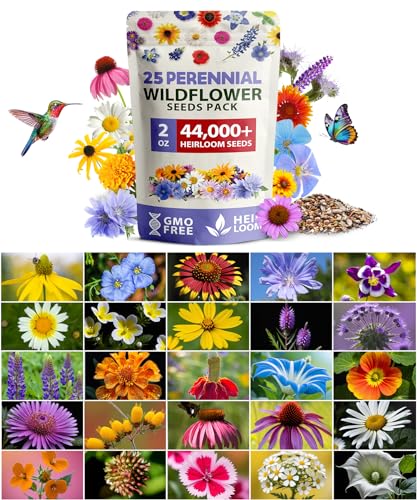
HOME GROWN 19 Wildflower Variety Mix 44,000 Flower Seeds 2 oz | High Germination, Heirloom, Non-GMO | 19 Varieties | Perennial Wildflowers | Full Sun & Shade | Butterfly & Pollinator Garden
Check price on Amazon
1000 PCS Cosmos Flower Seeds for Outdoor Planting – Heirloom Non-GMO Annuals, Vibrant Mixed Colors, Long Bloom Season, Full Sun Loving, Great for Garden Beds, Containers & Cut Flower Arrangements
Check price on Amazon
Blue Daze | 1 Large Trade Gallon Size Plant | Evolvulus Glomerata | Ground Cover, Heat Tolerant, Drought Tolerant, Low Maintenance, Full Sun, Perennial Blooms, Garden Border, Summer Flowers, Easy Care
Check price on Amazon
5 Taffy Yarrow Live Plant Plugs | Sassy Summer Achillea Perennial Plants
Check price on Amazon
5 Sunstruck False Sunflower Live Plugs – Variegated Heliopsis Perennials
Check price on Amazon