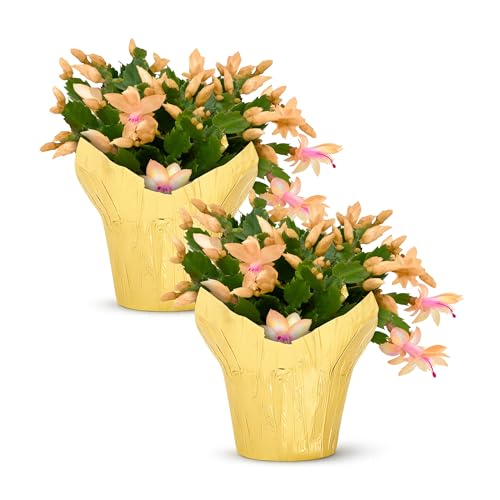
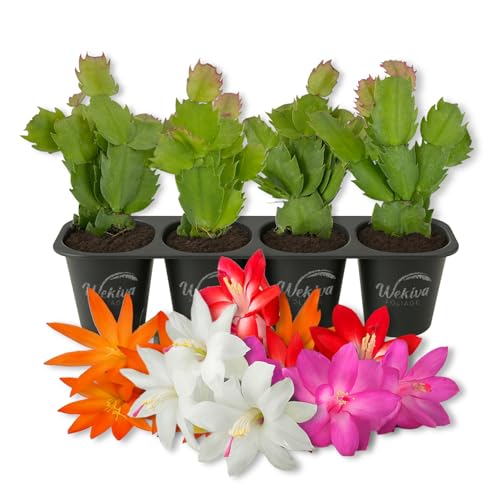
How to Get a Christmas Cactus to Rebloom: Expert Guide for Stunning Holiday Flowers
Unlock the secret to spectacular Christmas cactus blooms year after year. Follow our proven step-by-step care routine to trigger reblooming and enjoy vibrant flowers every holiday season.
JUMP TO THE REBLOOM GUIDE ↓Let Gardening show you how! Getting a Christmas cactus to rebloom is easier than you think — it's all about mimicking its natural tropical habitat. With the right balance of light, temperature, and water, you can coax this stunning succulent into producing a spectacular display of blooms year after year. Read on for the complete care roadmap.
Why Won't My Christmas Cactus Bloom?
Christmas cacti (Schlumbergera bridgesii) are tropical succulents that bloom in response to shorter days and cooler nights. If your plant isn't flowering, it's likely missing one of these key triggers. Unlike many houseplants, they require a period of dormancy and specific environmental cues to initiate bud formation. Understanding these needs is the first step to a successful rebloom.
This guide covers everything from light and temperature manipulation to watering and fertilizer schedules that encourage your Christmas cactus to bloom profusely. Follow these steps, and you'll have a plant that puts on a show every winter.
Step-by-Step: How to Get Your Christmas Cactus to Rebloom
🌡️ Cool Temperatures
Keep your cactus in a cool room (50–60°F / 10–15°C) for 6–8 weeks before you want it to bloom. Cool nights trigger bud formation.
🌑 Long, Dark Nights
Give your plant 12–14 hours of uninterrupted darkness each night. Cover it or move it to a dark closet from 8 PM to 8 AM.
💧 Reduced Watering
Cut back watering during the dormancy period. Allow the top 1–2 inches of soil to dry out before giving a light drink. Overwatering is a common mistake.
🌱 Balanced Fertilizer
Stop fertilizing 6–8 weeks before you start the dormancy period. Resume with a low-nitrogen, high-phosphorus fertilizer (like 0-10-10) when buds appear.
1. Master the Light and Dark Cycle
Christmas cacti are short-day plants. They need long, uninterrupted dark periods (12–14 hours) for at least 6 weeks to set buds. Starting in mid-September through October, place your plant in a location where it receives bright, indirect light during the day, but is exposed to total darkness at night. Even a brief exposure to light during the dark period can disrupt the budding process. A spare room, closet, or cardboard box can work wonders.
For more general indoor plant care tips, explore our indoor gardening guide. And if you're curious about other holiday cacti, check out our article on how to take care of a Thanksgiving cactus.
2. Cool Temperatures Are Key
Temperature plays a crucial role. During the bud-setting period, keep your Christmas cactus in a cool spot with nighttime temperatures between 50–60°F (10–15°C). Daytime temperatures should be around 65–70°F (18–21°C). A cool, unheated room or a spot near a drafty window (but not in direct cold drafts) is ideal. This temperature drop mimics the conditions in its native Brazilian rainforests during the late autumn.
If you're unsure about your plant's health during this time, learn more about how to take care of my Christmas cactus to ensure it's in good shape before the rebloom challenge.
3. Adjust Your Watering Routine
During the dormancy period (about 6–8 weeks), reduce watering. The soil should be slightly drier than usual. Water only when the top 1–2 inches of soil feel dry to the touch. Overwatering during this phase can cause root rot and prevent blooming. When you do water, use lukewarm water and let it drain completely. Never let the plant sit in standing water.
For more detailed watering advice, see our complete watering guide. Also, find out how often you should water your Christmas cactus to keep it healthy all year.
4. Fertilizing for Flowers
Stop fertilizing your Christmas cactus about 8 weeks before you begin the dormancy period. Once you see tiny buds forming (usually after 6–8 weeks of cool, dark treatment), switch to a fertilizer formulated for blooming plants — one with a higher phosphorus content (the middle number in N-P-K, like 0-10-10 or 2-7-7). Fertilize every 2–3 weeks at half-strength until the flowers open. This gives the plant the nutrients it needs for a spectacular floral display.
For other flowering plants, you might also be interested in our plant fertilizers guide.
5. Post-Bloom Care
After your Christmas cactus finishes blooming, it needs a rest period. Remove spent flowers and place the plant in its normal growing location with bright, indirect light. Reduce watering slightly and don't fertilize for about a month. Then, you can resume regular care — watering when the top inch of soil is dry and using a balanced houseplant fertilizer through the spring and summer.
If you notice the plant becoming leggy, you can prune it back in early spring. Learn more about pruning tips to keep your plant in shape.
✅ Quick Rebloom Checklist
- Start early: Begin the process in mid-September for Christmas blooms.
- Darkness: Provide 12–14 hours of total darkness daily for 6–8 weeks.
- Cool nights: Keep nighttime temps between 50–60°F (10–15°C).
- Less water: Water sparingly; let the top inch of soil dry out.
- Hold fertilizer: Stop feeding during dormancy.
- Watch for buds: After 6–8 weeks, resume regular watering and feeding with a bloom booster fertilizer.
- Patience: Buds can take 4–6 weeks to open fully.
What to Do If Buds Fall Off (Bud Drop)
Sometimes, a Christmas cactus will form buds that suddenly drop off. This is frustrating, but it's usually a sign of stress. Common culprits include:
- Drafts: Cold or hot drafts from windows, doors, or heating vents.
- Temperature swings: Fluctuations in temperature, especially below 50°F (10°C) or above 80°F (27°C).
- Inconsistent watering: Soil that's too dry or too wet.
- Too much light: Direct sunlight during the bud-setting period.
- Low humidity: Dry indoor air can cause bud drop. Mist the plant lightly or place it near a humidity tray.
To prevent bud drop, be consistent with your care and keep your plant in a stable environment. If you're struggling with bud drop, read our detailed guide on how to get your Christmas cactus to bloom for targeted advice.
Why the Christmas Cactus is Unique
Unlike most cacti, the Christmas cactus is an epiphyte that grows in the shady branches of trees in Brazil. It doesn't thrive in desert conditions. Instead, it prefers humidity, well-aerated soil, and filtered light. Understanding its native habitat helps you replicate the conditions it needs to bloom. This unique plant is also a great conversation starter — and a rewarding challenge for any plant lover.
If you're looking for other low-maintenance houseplants, check out our suggestions for plants that don't require a lot of maintenance.
Frequently Asked Questions
How long does it take for a Christmas cactus to rebloom?
From the start of the dormancy period, it takes about 6–8 weeks for buds to form. After that, it can take another 4–6 weeks for the flowers to open fully. So, expect blooms about 10–14 weeks after you begin the process.
Can I make my Christmas cactus rebloom more than once a year?
While it's possible, it's not typical. With optimal care and a second dormancy period, some plants may bloom again in spring. However, forcing multiple blooms can stress the plant. It's best to aim for one spectacular winter bloom and provide a good rest period afterward.
Learn more about how often Christmas cacti bloom to manage your expectations.
What is the difference between a Christmas cactus and a Thanksgiving cactus?
They are closely related but have different bloom times and leaf shapes. The Thanksgiving cactus (Schlumbergera truncata) has pointed, claw-like leaf edges and typically blooms in November. The Christmas cactus (S. bridgesii) has rounded, scalloped edges and blooms in December. Both respond to the same reblooming techniques.
Does my Christmas cactus need repotting?
Christmas cacti actually bloom best when slightly root-bound. Repotting too often can stress the plant and reduce blooming. Only repot every 2–3 years, or when the plant is severely pot-bound and pushing out roots. Use a well-draining potting mix and a pot with good drainage.
What do I do if my Christmas cactus looks limp or wrinkled?
This is often a sign of underwatering or, counterintuitively, root rot from overwatering. Check the soil moisture. If it's bone dry, water it thoroughly (and maybe consider a soil mix that retains more moisture). If the soil is wet and the plant is limp, you likely have root rot, which requires immediate repotting into fresh, dry soil.
For more on Christmas cactus care, see our guide on best way to take care of a Christmas cactus.
Still having trouble? Check out these related guides for more specific advice: should I water my Christmas cactus when it has buds, how often do Christmas cactus need to be watered, and how do I get my Christmas cactus to bloom again.