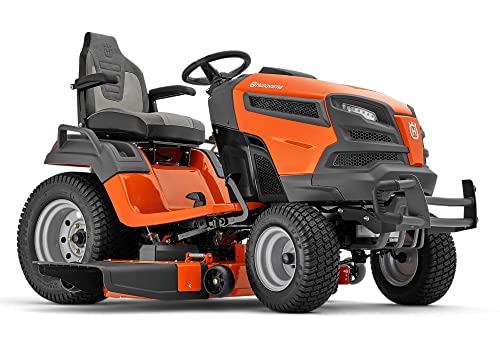
Riding Lawn Mowers With Locking Rear Differential
Master any terrain — from steep slopes to uneven ground — with the superior traction and control of a locking rear differential. Discover how this feature transforms your mowing experience.
What Is a Locking Rear Differential on a Riding Mower?
A locking rear differential is a mechanism that forces both rear wheels to rotate at the same speed, regardless of the terrain. On standard mowers, an open differential allows wheels to spin at different speeds, which is great for turning but can cause one wheel to lose traction on slopes, wet grass, or loose soil. When engaged, the differential locks both wheels together, ensuring that power is distributed evenly to the ground for maximum grip.
This feature is especially valuable for homeowners with hilly or uneven lawns, as it prevents wheel spin and keeps the mower moving forward smoothly. Whether you're tackling a steep incline or navigating muddy patches, a locking rear differential gives you the confidence to mow safely and efficiently.
Why Choose a Mower With a Locking Differential?
Superior Traction
Locking the rear differential delivers power to both drive wheels, eliminating slip on slopes, wet grass, and soft ground. This is a game-changer for properties with challenging terrain.
Better Hill-Climbing
When both wheels pull together, your mower climbs steep hills with ease. You won't experience the frustrating "one-wheel spin" that leaves you stuck halfway up a slope.
Enhanced Stability
By providing consistent power to both rear wheels, the mower feels more planted and stable. This reduces the risk of sliding or losing control on uneven ground.
Versatility Across Surfaces
From thick, damp grass to dry, uneven soil, a locking differential adapts to the conditions. You can mow with confidence whether the ground is dry or slightly damp after rain.
Key Benefits of a Locking Rear Differential
- Prevents Wheel Spin — Stops one wheel from losing grip while the other spins.
- Improves Mowing Consistency — Delivers even cutting across the entire lawn.
- Reduces Soil Damage — Less wheel spin means less tearing up of turf.
- Increases Operator Confidence — Feel secure when mowing tricky areas.
- Extends Tire Life — Even wear on rear tires due to balanced power delivery.
- Better Performance in Mud — Keeps moving where open differentials would get stuck.
How Does a Locking Differential Work on a Mower?
A riding lawn mower with a locking rear differential typically features a lever or switch on the dashboard or fender that engages the lock. When activated, a mechanism inside the differential housing pinions both axles together, forcing them to rotate as one unit.
Most models use a mechanical or electronic actuator to engage the lock. Mechanical systems are often spring-loaded and can be engaged manually, while electronic systems may be controlled by a button or automatically engage based on wheel slip detection.
When to use it: Engage the locking differential when mowing on inclines, in wet conditions, or on loose surfaces. Disengage it when making sharp turns to prevent unnecessary tire scuffing and wear. On flat, dry lawns, an open differential is perfectly adequate and allows for smooth turning.
To learn more about riding lawn mower clearance and how it impacts your mowing performance, check our in-depth guide.
Locking Differential vs. Standard Differential
| Feature | Locking Rear Differential | Standard Open Differential |
|---|---|---|
| Traction on Hills | Excellent — Both wheels pull equally | Poor — One wheel may spin, losing grip |
| Performance in Wet Grass | Superior — Maintains forward momentum | Frequent wheel slip, reduced control |
| Turning Radius | Wider when locked, normal when unlocked | Excellent — Wheels rotate at different speeds |
| Soil/Turf Damage | Minimal — Less wheel spin | More prone to tearing up grass |
| Best Use Case | Sloped, uneven, or soft terrain | Flat, dry, and open areas |
What to Look for in a Mower With a Locking Differential
Engagement Type
Manual (lever or knob) vs. automatic (sensor-based). Manual gives you full control, while automatic engages when slip is detected. Choose based on your preference and typical terrain.
Durability & Build Quality
Look for a heavy-duty differential housing and strong axles. Brands like John Deere and Husqvarna are known for rugged construction.
Engine Power & Transmission
A locking differential works best with sufficient power. 20+ HP engines and hydrostatic transmissions provide the torque needed to maximize traction benefits.
Tire Type
Combine with aggressive tread tires for the best results. Turf tires are fine for most lawns, but if you have steep slopes, consider bar-tread or knobby tires for extra grip.
Frequently Asked Questions
Is a locking rear differential worth the extra cost?
Absolutely — if your property has slopes, uneven ground, or areas prone to being wet. It can save you from frustrating mowing experiences and potential damage to your lawn. For flat, dry lawns, a standard differential is sufficient.
Can I add a locking differential to my existing mower?
In most cases, no. Locking differentials are integrated into the mower's design. Aftermarket conversions are complex and costly, making it more practical to purchase a mower equipped with this feature from the start.
Does a locking differential affect turning ability?
Yes — when engaged, the turning radius is wider because both rear wheels rotate at the same speed. That's why most mowers allow you to disengage the lock for normal operation and re-engage it only when you need extra traction.
Are zero-turn mowers available with locking differentials?
Yes, some premium zero-turn models offer locking differentials. They are particularly popular on rough-terrain or slope-rated zero-turn mowers. However, many traditional garden tractors and lawn tractors also feature this option.
If you're considering a riding lawn mower for your property, the locking differential is one of the best upgrades you can choose for handling challenging terrain.
Ready to Find Your Perfect Mower?
Browse our curated selection of riding lawn mowers with locking rear differentials. Compare models, read reviews, and choose the one that fits your yard and budget.
Shop Mowers With Locking Differential