
Best Soil for Fiddle Leaf Fig Trees in Pots
Everything you need to know about choosing, mixing, and maintaining the ideal potting medium for a healthy, thriving fiddle leaf fig — so your investment grows strong roots and glossy leaves for years to come.
Quick answer: The best soil for fiddle leaf fig trees in pots is a chunky, well-draining, aerated mix — typically three parts quality potting soil, one part perlite, and one part orchid bark. This blend mimics the fig's native tropical environment, prevents root rot, and gives roots the oxygen they need. Fiddle leaf figs are sensitive to soggy soil, so drainage matters far more than richness.
Why the Right Soil Matters So Much for Fiddle Leaf Figs
Fiddle leaf figs (Ficus lyrata) are native to the lowland tropical rainforests of West Africa, where they grow as large canopy trees in loose, organic-rich forest litter. Their roots are adapted to fast-draining, oxygen-rich conditions — not the dense, water-retentive potting soil that many houseplants tolerate.
When fiddle leaf figs sit in heavy or compacted soil, several problems follow quickly:
- Root rot — the most common cause of fiddle leaf fig decline, triggered by waterlogged soil that suffocates roots.
- Yellowing, dropping leaves — often a stress response to poor drainage or inconsistent moisture.
- Brown leaf spots — frequently linked to fungal issues that develop in overly wet root zones.
- Stunted growth — roots that cannot breathe cannot efficiently absorb nutrients.
Choosing the right potting mix is the single most impactful decision you can make for the long-term health of your fig. If you're also selecting a container, consider how pot size and material interact with soil moisture — the relationship between pot and mix is just as important as the mix itself.
Key Characteristics of the Ideal Fiddle Leaf Fig Soil
Before comparing specific mixes, understand the four traits every good fiddle leaf fig medium should have:
1. Excellent Drainage
Water should flow through the pot quickly and exit the drainage holes within seconds. If water pools on the surface or drains sluggishly, the mix is too dense. Perlite, pumice, and orchid bark are the primary tools for improving drainage.
2. Strong Aeration
Roots need oxygen. A chunky, porous texture creates air pockets throughout the root zone, which is essential for respiration and prevents the anaerobic conditions that cause rot.
3. Moderate Moisture Retention
While drainage is critical, the mix should still hold enough moisture to keep roots hydrated between waterings. The goal is moist but never soggy — think wrung-out sponge, not wet sponge.
4. Slightly Acidic to Neutral pH
Fiddle leaf figs prefer a pH between 6.0 and 7.0. Most quality potting mixes fall in this range, but if you're blending your own, keep this in mind. Excessively alkaline soil can lock out nutrients like iron, leading to yellowing between leaf veins.
The squeeze test
Grab a handful of moistened mix and squeeze it. It should hold its shape briefly but crumble apart when you poke it. If it stays a compact ball, it retains too much water. If it falls apart instantly, it may drain too fast and need more organic matter.
Types of Soil and Mixes Compared
Not all potting media are created equal. Here's how the most common options perform for fiddle leaf figs, using a consistent tier system to describe relative quality and positioning.
| Soil / Mix Type | Drainage | Aeration | Best For | Tier |
|---|---|---|---|---|
| Chunky aroid / fig mix | Excellent | Excellent | Fiddle leaf figs, monsteras, philodendrons | premium |
| DIY blend (potting soil + perlite + orchid bark) | Excellent | Excellent | Custom moisture control, budget-conscious growers | mid-range |
| Cactus / succulent mix | Very good | Good | Drought-tolerant plants; can work for figs with added organics | mid-range |
| Standard indoor potting soil | Moderate | Moderate | General houseplants; needs amendment for figs | entry-level |
| Garden soil / topsoil | Poor | Poor | Outdoor garden beds only — never for pots | not recommended |
| Moisture-control potting mix | Low | Low | Thirsty annuals; risky for fiddle leaf figs | not recommended |
Chunky Aroid or Fig Mixes (Premium Tier)
Specialty mixes formulated for aroids and figs are the gold standard. They typically contain coco coir, perlite, orchid bark, and sometimes charcoal or pumice. These mixes are light, airy, and forgiving — ideal for growers who want a ready-to-use solution without blending. They are the top-tier choice for fiddle leaf figs, though they cost more per volume than DIY blends.
If you're also growing other tropical houseplants, a quality aroid mix can serve double duty — check out our guide to the best indoor plants for air quality and low light for more plants that thrive in similar conditions.
DIY Blends (Mid-Range Tier)
A homemade mix gives you full control over texture and moisture retention. The classic fiddle leaf fig recipe is three parts potting soil, one part perlite, and one part orchid bark. This mid-range approach balances cost, performance, and customization. You can adjust ratios based on your home's humidity and your watering habits — more perlite for humid rooms, more bark for arid climates.
When selecting the base potting soil, avoid mixes with heavy moisture-retention crystals or dense peat. A simple, quality all-purpose mix works best as the foundation. For related container-growing guidance, see our article on the best potting soil for indoor plants without gnats.
Cactus and Succulent Mixes (Mid-Range Tier)
Cactus mixes drain well, which is a plus, but they are often too lean and gritty for a fiddle leaf fig's nutritional needs. They can work as a base if you add organic matter such as compost or coco coir, plus a handful of orchid bark. Think of them as a starting point rather than a complete solution.
Standard Potting Soil (Entry-Level Tier)
Most bagged indoor potting soils are too dense straight out of the bag. They hold moisture for too long and compact over time, which is the opposite of what fiddle leaf figs need. However, they are an affordable base for DIY blends — just never use them unamended in a fig pot.
What to Avoid Entirely
- Garden soil or topsoil — too heavy, poor drainage, may contain pests and weed seeds.
- Moisture-control mixes with water-absorbing crystals — these keep soil wet far too long for figs.
- Compacted, old, or reused soil — structure breaks down and drainage suffers.
DIY Fiddle Leaf Fig Potting Mix Recipes
If you prefer to blend your own mix, here are three proven recipes scaled to different environments and watering styles. All measurements are by volume, not weight.
Recipe 1: The Classic All-Purpose Fig Blend
- 3 parts quality potting soil
- 1 part perlite
- 1 part orchid bark (medium grade)
Best for: Most homes with average humidity. This is the safest starting point for beginners and works well for fiddle leaf figs in standard indoor conditions.
Recipe 2: The High-Drainage Blend for Humid Homes
- 2 parts potting soil
- 1.5 parts perlite
- 1.5 parts orchid bark
- Handful of horticultural charcoal (optional)
Best for: Bathrooms, sunrooms, or climates with high ambient humidity where soil dries slowly. The extra perlite and bark keep roots breathing even when the air is moist.
Recipe 3: The Moisture-Retentive Blend for Dry Climates
- 3.5 parts potting soil
- 1 part perlite
- 0.5 part orchid bark
- 0.5 part coco coir or peat moss
Best for: Arid homes with forced-air heating or very dry air. Slightly more organic matter helps hold moisture between waterings without becoming soggy.
Mix tip
Moisten your blend lightly before potting — just enough that it clumps slightly when squeezed. Dry mixes can be hydrophobic and resist water initially, while overly wet mixes compact and lose aeration.
Pot Selection and Drainage: The Other Half of the Equation
Even the best soil fails in the wrong pot. Fiddle leaf figs need containers with generous drainage holes and a size that matches their root system. Here's what to keep in mind:
- Always use a pot with drainage holes. Decorative cachepots are fine as outer shells, but the inner pot must drain freely.
- Choose a pot only 1–2 inches wider than the root ball. Oversized pots hold excess soil that stays wet and invites rot.
- Consider pot material. Terracotta breathes and wicks moisture, which helps in humid conditions. Glazed ceramic and plastic retain more moisture, which suits dry climates.
- Elevate the pot slightly with pot feet or a saucer with pebbles so water can escape and air can circulate beneath.
If you're also outfitting your indoor garden, our guide to the best indoor plants for low light and high humidity pairs well with fiddle leaf fig care — many of those plants share similar soil and watering needs.
Watering and Soil Maintenance for Long-Term Health
Great soil is only half the story. How you water and maintain that soil determines whether your fiddle leaf fig thrives or struggles.
Watering Rhythm
Water thoroughly until it drains from the bottom, then let the top 2–3 inches of soil dry out before watering again. In practice, that's usually every 7–10 days in summer and every 10–14 days in winter, but always check the soil rather than following a fixed schedule. Stick your finger in or use a moisture meter.
Fertilizing
Feed with a balanced liquid fertilizer diluted to half strength during the growing season (spring through early fall). Well-draining mixes leach nutrients faster than dense ones, so regular feeding matters. Avoid fertilizing in winter when growth slows.
Repotting
Repot every 2–3 years, or when roots circle the drainage holes or emerge from the surface. Spring is the best time — the plant is actively growing and recovers quickly. When repotting, gently loosen the root ball and refresh the mix rather than simply adding soil on top. For more container-gardening guidance, see our article on the best organic potting soil for container vegetables — many of the same principles about drainage and aeration apply.
Signs Your Soil Is Wrong
- Water pools on the surface — mix is too dense or compacted.
- Soil stays wet for a week or more — poor drainage or oversized pot.
- White fuzzy mold on the surface — excess moisture and poor airflow.
- Roots visible at the surface and circling — plant is root-bound and needs repotting.
- Sour or swampy smell — anaerobic conditions, likely root rot developing.
Our Recommended Soils and Supplies for Fiddle Leaf Figs
Ready to put this knowledge into practice? The products below represent the best options across tiers — from premium specialty mixes to budget-friendly DIY components. Each is selected for quality, reliability, and suitability for fiddle leaf figs in containers.
Best Soil and Supplies for Fiddle Leaf Figs in Pots
⚠️ AFFILIATE DISCLOSURE: This website contains affiliate links. As an Amazon Associate, we earn from qualifying purchases. If you make a purchase through these links, we may receive a small commission at no additional cost to you. Read our full affiliate policy.

Perfect Plants Fiddle Leaf Fig Soil, 8 qt, Coconut Coir Potting Mix | Blend of pine bark, perlite and sand for Ficus trees and indoor houseplants, drains excess water, feeds foliage 6 months
Check price on Amazon
Soil Sunrise Premium Fiddle Leaf Fig Tree Soil (12 Quarts) - Expert Formula for Vibrant Growth - Nutrient-Rich Potting Mix,Specifically Designed for Healthy Indoor,Outdoor,& Potted Fiddle Fig Plants
Check price on Amazon
DUSPRO Fiddle Leaf Fig Soil, 5-in-1 Pre-Mixed & Ready to Use, 6 Quarts | Potting Mix with Coco Coir, Coconut Fiber, Perlite, Pumice & Pine Bark for Balanced Moisture, Drainage & Airflow
Check price on Amazon
DUSPRO Fiddle Leaf Fig Soil, 5-in-1 Pre-Mixed & Ready to Use, 10 Quarts | Potting Mix with Coco Coir, Coconut Fiber, Perlite, Pumice & Pine Bark for Balanced Moisture, Drainage & Airflow
Check price on Amazon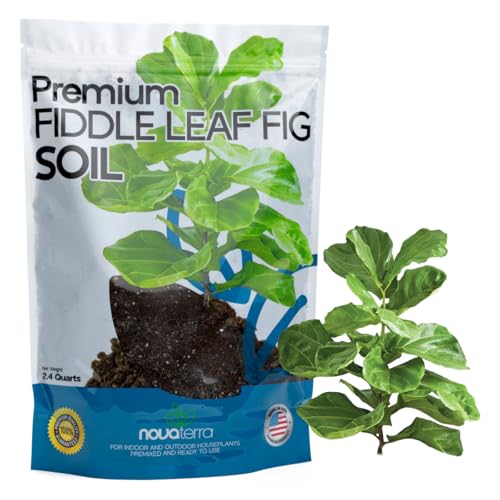
Novaterra Fiddle Leaf Fig Potting Soil Mix for Ficus Lyrata, 2.4 Quarts | Premixed, Ready-To-Use Blend With Coco Coir, Peat Moss, Perlite and Dolomite for Healthy Fiddle Leaf Fig Growth
Check price on Amazon
Fiddle Leaf Fig Plant Food, 3-1-2 NPK Liquid Fertilizer for Ficus, 8 oz
Check price on Amazon
Doter Organic Fiddle Leaf Fig Potting Mix 10qt, Indoor Plants Potting Mix for All Potted Ficus Lyrata Plant, Grow Healthy houseplants Indoors
Check price on Amazon
Doter Organic Fiddle Leaf Fig Potting Mix 1qt, Indoor Plants Potting Mix for All Potted Ficus Lyrata Plant, Grow Healthy houseplants Indoors
Check price on AmazonFrequently Asked Questions
Can I use regular potting soil for a fiddle leaf fig?
Regular potting soil alone is usually too dense and retains too much moisture. It's best used as a base, amended with perlite and orchid bark to improve drainage and aeration. Unamended potting soil is a common reason fiddle leaf figs develop root rot.
How often should I repot my fiddle leaf fig?
Every two to three years is typical, or whenever roots begin circling the drainage holes or emerging from the soil surface. Spring is the ideal time to repot, as the plant is actively growing and will recover faster.
Does fiddle leaf fig need acidic soil?
Fiddle leaf figs prefer slightly acidic to neutral soil — a pH between 6.0 and 7.0. Most quality potting mixes already fall within this range, so pH adjustments are rarely necessary unless your water is unusually alkaline.
Why is my fiddle leaf fig soil staying wet for too long?
Persistently wet soil usually points to poor drainage, an oversized pot, or insufficient light slowing evaporation. Ensure the mix contains perlite and bark, use a pot with drainage holes, and let the top few inches dry between waterings. If the problem persists, repot into a chunkier mix.
Can I make my own fiddle leaf fig potting mix?
Absolutely. The classic recipe is three parts quality potting soil, one part perlite, and one part orchid bark. This creates a chunky, well-draining, aerated mix that closely mimics the fig's natural environment and gives you full control over moisture retention.
Can I reuse old potting soil for a fiddle leaf fig?
It's not recommended. Reused soil has often lost its structure, may harbor pests or pathogens, and has depleted nutrients. If you must reuse it, sterilize it and blend it heavily with fresh perlite and bark, but fresh mix is always safer for a sensitive plant like the fiddle leaf fig.
Give Your Fiddle Leaf Fig the Foundation It Deserves
The right soil is the foundation of every healthy fiddle leaf fig. Whether you choose a premium specialty mix or blend your own, prioritize drainage, aeration, and a slightly acidic pH. Your fig will reward you with glossy leaves and strong growth for years to come.