Hummingbird Vine (Campsis radicans): The Ultimate Guide
Attract hummingbirds and add vibrant color with this fast-growing, low-maintenance trumpet vine. Learn everything from planting to pruning.
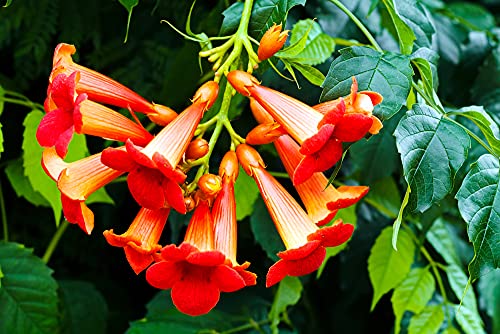
Hummingbird Vine (Campsis radicans), also known as Trumpet Vine or Trumpet Creeper, is a vigorous, woody vine native to the eastern United States. It's celebrated for its clusters of trumpet-shaped, orange to red flowers that bloom from summer to fall. This vine is a magnet for hummingbirds, butterflies, and other pollinators, making it a favorite for gardeners looking to create a lively, wildlife-friendly landscape. Its rapid growth and hardiness make it an excellent choice for covering fences, arbors, trellises, and walls.
🌿 Quick Facts
- Botanical Name: Campsis radicans
- Common Names: Hummingbird Vine, Trumpet Vine, Trumpet Creeper
- Plant Type: Perennial, Woody Vine
- Hardiness Zones: 4–9 (USDA)
- Mature Size: 25–40 ft. tall, 5–10 ft. wide
- Sun Exposure: Full sun to partial shade
- Soil Type: Well-drained, adaptable to many soil types
- Bloom Time: Summer to Fall (June–September)
- Flower Colors: Orange, red, yellow
✨ Benefits & Uses
- Attracts Pollinators: Hummingbirds and butterflies love the nectar-rich flowers.
- Fast-Growing Cover: Ideal for covering unsightly fences, walls, or pergolas quickly.
- Drought Tolerant: Once established, it requires minimal watering.
- Low Maintenance: Resistant to pests and diseases.
- Erosion Control: Its root system helps stabilize slopes and banks.
- Beautiful Fall Color: Foliage turns yellow in autumn before dropping.
How to Plant Hummingbird Vine
📍 Best Location
Choose a spot with full sun to partial shade (at least 6 hours of direct sunlight for best flowering). The vine needs a sturdy support structure like a garden arbor, trellis, or fence. Avoid planting near buildings with wood siding or shingles, as the vine's aerial rootlets can cling and cause damage over time.
🌱 When to Plant
Plant in early spring or fall when temperatures are mild. In cooler zones (4-6), spring planting is preferred to allow the vine to establish before winter.
🧪 Soil Preparation
Hummingbird vine is adaptable but prefers well-drained soil. Loosen the soil to a depth of 12–18 inches and mix in compost or aged manure to improve fertility and drainage. The ideal pH is slightly acidic to neutral (6.0–7.5).
📏 Planting Steps
- Dig a hole twice as wide and the same depth as the root ball.
- Place the plant in the hole, ensuring the top of the root ball is level with the soil surface.
- Backfill with native soil mixed with compost, and gently tamp down.
- Water deeply immediately after planting.
- Apply a 2-3 inch layer of mulch around the base (keep away from stem) to retain moisture.
Caring for Your Campsis Radicans
💧 Watering
Water regularly during the first growing season to establish a deep root system. Once established (after 1-2 years), the vine is drought-tolerant and only needs supplemental watering during prolonged dry spells. Overwatering can lead to root rot.
🌿 Fertilizing
Apply a balanced, slow-release plant fertilizer (e.g., 10-10-10) in early spring as new growth appears. Avoid high-nitrogen fertilizers, as they can promote excessive leafy growth at the expense of flowers. A top dressing of compost in spring is also beneficial.
✂️ Pruning & Training
Prune in late winter or early spring before new growth begins. Remove dead, damaged, or overcrowded branches. To encourage more blooms, cut back side shoots to 2-3 buds. Regular pruning is essential to keep the vine in bounds and prevent it from becoming invasive.
🪴 Support & Trellising
Because it climbs via aerial rootlets, the vine will attach itself to most surfaces. For walls, ensure the structure is strong. For freestanding structures like a pergola or trellis, guide young shoots and tie them loosely until they attach.
Common Issues & How to Solve Them
🐛 Pests & Diseases
- Powdery Mildew: Common in humid conditions. Improve air circulation and use a fungicide for powdery mildew if needed.
- Aphids: Can cluster on new growth. Blast off with water or use insecticidal soap.
- Leaf Spot: Remove affected leaves and ensure proper spacing.
💡 Troubleshooting
- No Blooms? Could be due to too much shade, over-fertilization (too much nitrogen), or incorrect pruning (pruning in spring removes flower buds).
- Yellow Leaves: Often a sign of overwatering or poor drainage.
- Leggy Growth: Usually caused by insufficient sunlight.
How to Propagate Hummingbird Vine
Propagating hummingbird vine is easy and can be done through cuttings, layering, or division.
🌱 Softwood Cuttings
Take 4-6 inch cuttings from new growth in early summer. Remove lower leaves, dip in rooting hormone, and plant in moist potting mix. Keep in a warm, bright location until roots develop.
🌿 Layering
In spring, bend a low-growing stem to the ground, bury a section (keeping the tip exposed), and secure it with a rock or wire. Roots will form at the buried node. Sever from the parent plant the following spring.
🔪 Division
In early spring, dig up the plant and separate the root clumps, ensuring each division has several shoots and a healthy root system. Replant immediately.
Where to Buy & What to Look For
You can find Hummingbird Vine (Campsis radicans) at local nurseries, garden centers, or online. When purchasing, look for:
- Healthy foliage: Leaves should be green and free from spots or discoloration.
- Strong root system: If buying bare-root, roots should be firm and moist.
- Disease-free: Check for any signs of pests or disease.
- Varieties: Look for cultivars like 'Flava' (yellow flowers) or 'Madame Galen' (large, salmon-red blooms) for interesting variations.
Ensure you have the right space and support structure before planting. For a beautiful display, consider pairing it with other plants for sale near me that thrive in similar conditions.
Transform Your Garden with Hummingbird Vine
Hummingbird Vine (Campsis radicans) is a show-stopping addition to any garden. Its vibrant flowers will not only add a splash of color but also turn your garden into a hummingbird haven. With the right care and management, this vigorous vine will reward you with years of beauty and wildlife activity. Ready to get started? Find the best plants and supplies below.