Power Washer Spray Nozzle & Water Hose Wand Attachment Guide
Everything you need to know about choosing the right spray nozzle and wand attachment for your pressure washer or garden hose — compatibility, spray patterns, materials, and expert buying advice.
EXPLORE NOZZLE TYPESWhy the Right Nozzle Matters: The spray nozzle is the single most impactful accessory on any pressure washer. It controls the spray angle, pressure intensity, and water flow — which directly affect cleaning efficiency, surface safety, and water consumption. Whether you are blasting grime off a concrete driveway or gently rinsing garden furniture, pairing the correct nozzle with a compatible wand attachment transforms a good pressure washer into a precision cleaning tool. This guide breaks down every option so you can buy with confidence.
Understanding Power Washer Spray Nozzles & Wand Attachments
Before comparing individual products, it helps to understand the two categories of accessories covered here. A power washer spray nozzle is engineered for high-pressure machines — typically rated between 1,000 and 4,000+ PSI. It attaches to a pressure washer wand via a quick-connect or threaded fitting and determines how aggressively water hits a surface.
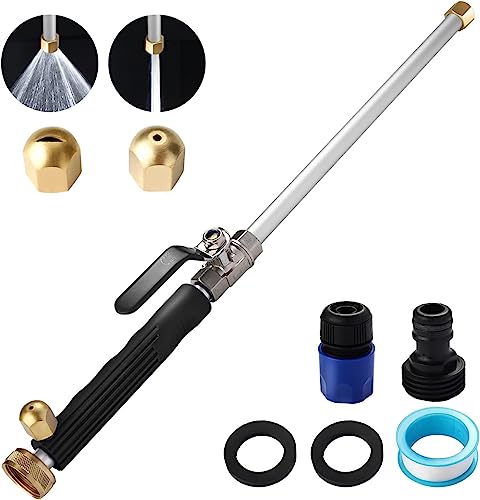
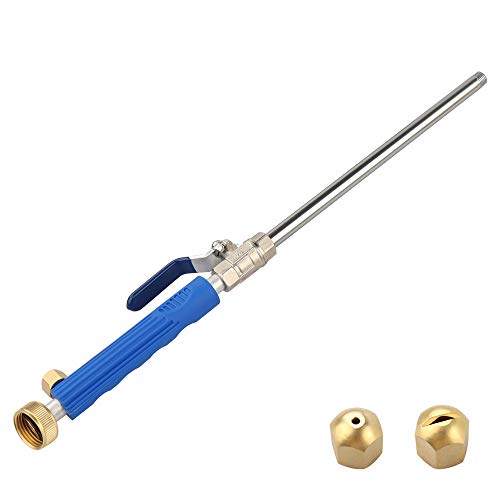
A water hose wand attachment, by contrast, is designed for standard garden hoses. These attachments add reach, directional control, and sometimes a mild boost in pressure without requiring a powered machine. They are ideal for washing cars, watering hanging baskets, rinsing patio furniture, or reaching gutters. Understanding which category fits your cleaning task is the first step toward a smart purchase. If you also maintain a lawn, you may find our guides on organic weed killer and post-emergent weed killer that won't kill grass useful for keeping your outdoor spaces pristine between washes.
Types of Power Washer Spray Nozzles
Nozzles are classified by spray angle and color code. The most common system uses colored quick-connect tips, each representing a specific spray pattern. Below are the primary categories you will encounter when shopping, along with their typical quality tiers so you can match a nozzle to your needs without overspending.
0° Red Nozzle — Pencil Point
The most aggressive spray pattern. Concentrates full pressure into a tiny point for stripping paint, removing rust, or blasting stubborn stains from concrete.
- Highest pressure intensity
- Use with extreme caution on wood and siding
- Best for hard, unyielding surfaces only
15° Yellow Nozzle — Narrow Fan
A tight fan spray that delivers strong cleaning power across a slightly wider area. Ideal for heavy-duty degreasing, stripping, and cleaning brick or stone.
- Strong concentrated fan pattern
- Can etch soft surfaces if held too close
- Great for driveways and concrete paths
25° Green Nozzle — General Purpose
The most versatile everyday nozzle. Balanced pressure and coverage make it suitable for washing cars, siding, patio furniture, and most exterior surfaces.
- All-purpose cleaning angle
- Safe for most painted surfaces at distance
- Recommended as a first upgrade
40° White Nozzle — Wide Fan
A gentle, broad spray for rinsing and light cleaning. Perfect for delicate surfaces, windows, and final rinse passes after washing.
- Low-impact wide coverage
- Ideal for rinsing soap and debris
- Safe for most delicate outdoor surfaces
Turbo / Rotating Nozzle
Spins a pencil jet in a circular pattern to combine high impact with wide coverage. Delivers cleaning power similar to a 0° nozzle but with the coverage of a 25° tip.
- Excellent for concrete and masonry
- Covers more area faster
- Premium models offer smoother rotation
Adjustable / Multi-Pattern Nozzle
Twist the tip to cycle through multiple spray angles. A convenient all-in-one solution that eliminates the need to swap tips mid-task.
- Multiple patterns in one unit
- High-end versions hold patterns precisely
- Ideal for users who want simplicity
Water Hose Wand Attachments for Garden Hoses
Not every cleaning job calls for a pressure washer. Water hose wand attachments extend your reach, direct the spray precisely, and add convenience for everyday outdoor tasks. These attachments connect to a standard garden hose and come in several styles:
| Attachment Type | Best For | Typical Tier | Key Consideration |
|---|---|---|---|
| Straight wand with adjustable tip | Watering hanging baskets, reaching gutters | Entry-level to mid-tier | Check that the grip is comfortable for extended use |
| Telescoping wand | High reach, second-story windows, roofs | Mid-tier to premium | Look for locking collars that hold extension firmly |
| Pistol-grip wand | Car washing, patio rinsing | Entry-level to mid-tier | Trigger should return smoothly and seal without drips |
| Fan-spray wand attachment | Broad rinsing, light watering | Entry-level | Confirm the fan width suits your watering style |
| Jet-spray wand | Cleaning cracks, blasting loose dirt | Mid-tier | Jet strength depends on household water pressure |
When selecting a wand attachment, pay attention to the coupling type — most garden hoses use a standard 3/4-inch threaded fitting, but some quick-connect systems differ. Also consider the material: brass couplings outlast plastic ones, while aluminum wands are lightweight but can bend under heavy use. A high-end wand attachment will typically feature solid brass fittings, reinforced hoses, and ergonomic grips that reduce hand fatigue. If your outdoor space includes water features, you might also explore ponds and fountains to complement your garden's aesthetic.
Compatibility: Matching Nozzles and Wands to Your Equipment
The most common frustration among buyers is discovering that a nozzle or wand does not fit their machine. Use this checklist before ordering:
- Connection type: Most modern pressure washers use 1/4-inch quick-connect fittings. Older or commercial units may use M22 threaded connections or proprietary fittings.
- Pressure rating: Ensure the nozzle is rated for at least your machine's maximum PSI. Using an under-rated nozzle can cause it to fail or burst.
- Flow rate (GPM): Nozzle orifice size should match your machine's flow rate. A mismatched orifice can reduce cleaning power or strain the pump.
- Wand length and thread: For hose wand attachments, confirm the thread matches your garden hose (typically 3/4-inch GHT in North America).
- Brand-specific adapters: Some manufacturers (e.g., certain electric pressure washer brands) use proprietary connections that require an adapter.
If you are unsure, consult your pressure washer manual or measure the fitting diameter with calipers. Buying an adapter is far cheaper than replacing an incompatible nozzle set. For other outdoor equipment needs, see our resources on riding lawn mowers and pruning shears to round out your tool collection.
What to Look For When Buying
Beyond compatibility, these factors separate a good purchase from a regrettable one:
Brass vs. Stainless vs. Plastic
Brass and stainless-steel nozzles resist corrosion and hold their shape under pressure. Plastic nozzles are budget-friendly but wear faster. For frequent use, choose metal.
O-Ring Quality
O-rings prevent leaks at the connection point. Premium nozzles use durable Viton or EPDM seals that withstand heat and chemicals better than basic rubber.
Grip & Weight
A comfortable grip reduces fatigue during long cleaning sessions. Aluminum wands are light; steel wands are heavier but more durable. Try before you commit if possible.
Nozzle Sets vs. Single Tips
Sets with multiple color-coded tips cover more tasks. Single adjustable nozzles offer convenience but may not match the precision of dedicated tips.
Safety and Maintenance Tips
Pressure washing is powerful — and that power can damage surfaces or cause injury if misused. Follow these guidelines:
- Never point a pressure washer at people or pets. Even a 40° nozzle can cause injury at close range.
- Test on an inconspicuous area first before blasting a full surface, especially wood, painted siding, or vehicle paint.
- Keep the nozzle moving. Holding a high-pressure tip in one spot can etch concrete or strip paint.
- Flush the wand after use to prevent mineral buildup and debris from clogging the nozzle orifice.
- Inspect O-rings regularly. Worn seals cause leaks that reduce pressure and waste water.
- Store nozzles in a dry place to prevent corrosion, especially brass and steel components.
If you use well water or hard water, mineral deposits can clog small nozzle orifices quickly. A simple rinse and occasional soak in white vinegar keeps them flowing freely. For maintaining your broader garden, see guides on soil testers and compost bins to keep your plants thriving alongside your clean outdoor surfaces.
Frequently Asked Questions
What is the difference between a power washer spray nozzle and a water hose wand attachment?
How do I know which nozzle fits my pressure washer?
Can I use a pressure washer nozzle on a regular garden hose?
What color nozzle is best for washing a car?
How often should I replace my spray nozzle?
Ready to Upgrade Your Cleaning Setup?
Choosing the right spray nozzle and wand attachment comes down to compatibility, material quality, and matching the tool to your task. Use the guidance above to shop with confidence — and browse our recommended products below to find top-rated options that fit your pressure washer or garden hose.
VIEW RECOMMENDED PRODUCTS