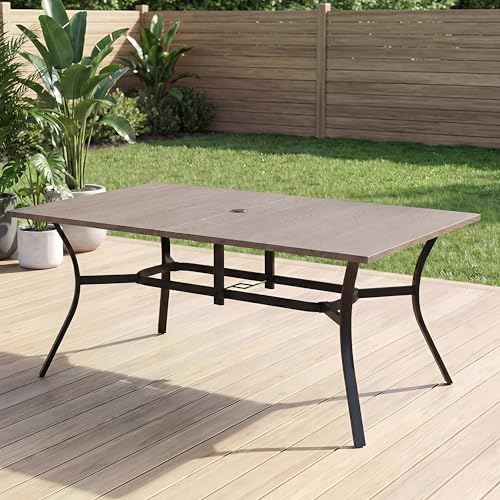
Rectangular Outdoor Dining Table with Umbrella Hole: The Complete Buyer's Guide
Why a rectangular outdoor dining table with umbrella hole is worth considering: A rectangular table maximizes seating along its long edges, making it ideal for patios, decks, and narrow lawns. The built-in umbrella hole lets you add shade without sacrificing table space — a practical advantage that round tables often struggle to match. This guide walks you through the sizes, materials, and features that matter most, so you can choose with confidence.
Why Choose a Rectangular Table with an Umbrella Hole?
Rectangular patio dining tables offer more usable surface area than round tables of similar footprint. When the table includes an umbrella hole, the umbrella pole runs through the center, freeing the tabletop for plates, drinks, and serving platters. This combination is especially useful for families who dine outdoors regularly and want shade without moving furniture. For homeowners planning a complete patio refresh, pairing this table with complementary pieces such as a rectangular outdoor coffee table with umbrella hole creates a cohesive lounging area.
The rectangular shape also fits neatly against walls or railings, which makes it a smart choice for small decks and balconies. If space is tight, a compact model may be a better fit than a sprawling eight-seater — see our notes on small outdoor table options for alternative configurations.
Sizing Your Table: Seating Capacity and Clearance
The right size depends on how many people you typically host and how much room your patio allows. Use the table below as a starting reference. These are general guidelines, since exact dimensions vary by manufacturer.
| Seating Capacity | Typical Table Length | Typical Table Width | Best For |
|---|---|---|---|
| 4 people | 48–60 inches | 32–36 inches | Balconies, small patios, couples |
| 6 people | 60–72 inches | 36–40 inches | Family dining, everyday use |
| 8 people | 84–96 inches | 38–40 inches | Large families, entertaining |
| 10+ people | 96+ inches | 40+ inches | Extended gatherings, event hosting |
Beyond table dimensions, plan for at least 36 inches of clearance on all sides so chairs can slide out and guests can walk behind them. On a deck or patio, measure the umbrella's open canopy too — a large cantilever or market umbrella can overhang walkways and block sightlines. If your space is unusually shaped, our guide to rectangular outdoor tables with umbrella holes covers related layout considerations.
Tabletop Materials Compared
The material you choose affects durability, maintenance, and how the table feels in your outdoor space. Here's how the most common options compare across quality tiers:
Powder-Coated Aluminum Mid-range
Lightweight, rust-resistant, and easy to move. Powder coating resists fading and scratches. Best for homeowners who want low maintenance and frequent reconfiguration. Entry-level aluminum may feel thinner; mid-range and premium frames use heavier gauge metal.
Teak & Acacia Wood Premium
Naturally weather-resistant and warm in appearance. Teak ages to a silver-gray patina; acacia needs occasional sealing. Both are heavy and sturdy, making them a good anchor for windy patios. Expect higher care requirements than metal or resin.
High-Density Polyethylene (HDPE) Entry-level
All-weather resin that resists moisture, insects, and UV damage. Budget-friendly and virtually maintenance-free. The trade-off is a lighter, more plasticky feel compared to wood or metal. Ideal for rental properties and low-maintenance setups.
Wrought Iron & Steel Premium
Heavy and stable, with a classic look. Steel requires rust protection; wrought iron is durable but can be heavy to reposition. Premium finishes extend lifespan considerably. Best for permanent installations on covered patios.
If you're pairing the table with existing furniture, match the frame material and finish to avoid a mismatched look. Homeowners refreshing a wicker seating area may also want to explore replacement cushions for wicker chairs to tie the whole patio together.
Umbrella Hole Details That Matter
The umbrella hole is a small feature with a big impact on usability. Keep these points in mind:
Umbrella Hole Checklist
- Hole diameter: Most tables use a 1.5-inch to 2-inch opening. Verify it matches your umbrella pole before purchasing.
- Stabilizer ring: A built-in ring or collar keeps the pole upright and reduces wobble. Some tables include one; others require a separate base.
- Weighted base: Essential for windy locations. The table's hole alone does not anchor the umbrella.
- Hole placement: Centered holes suit standard market umbrellas. Offset holes allow more flexible seating but are less common on rectangular tables.
- Drainage: Ensure water can escape the hole area so the tabletop doesn't pool after rain.
For a broader look at outdoor shade options, including umbrellas, sails, and awnings, browse our shade sail guide and related outdoor living resources.
Frame Construction and Stability
A table is only as good as its frame. Look for welded joints rather than bolted connections where possible, and check that legs have adjustable glides to level the table on uneven patios. Leg placement matters too: corner legs maximize legroom, while trestle-style bases offer a more open feel. For sloped yards or uneven decks, our sloped yard solutions guide covers leveling strategies that apply to furniture placement as well.
If you're building out a full outdoor dining zone, coordinate the table with a matching seating set. Our article on round outdoor dining tables with swivel chairs explains how chair style affects table choice.
Maintenance and Weather Protection
Every material needs some care to last through seasons of sun and rain. Aluminum benefits from occasional washing with mild soap. Wood needs periodic sealing or oiling, especially in humid climates. Resin tables wipe clean with a damp cloth. Regardless of material, a fitted cover extends lifespan during off-season storage, and storing cushions indoors prevents mildew. For a complete patio care routine, see our tips on pruning and seasonal maintenance — the same seasonal discipline applies to outdoor furniture.
Matching Your Table to the Rest of Your Patio
A dining table rarely stands alone. Think about how it relates to your fire feature, seating area, and shade structure. A rectangular table pairs naturally with linear layouts — for example, a table alongside a rectangular fire pit table with propane tank inside creates a balanced, modern patio. Poolside setups may benefit from a poolside table that complements the dining area without duplicating function.
For patios with limited shade, combining the table umbrella with a retractable patio awning offers flexible coverage throughout the day. And if privacy is a concern, consider portable folding privacy screens to define the dining zone.
Common Mistakes to Avoid
Buyers often overlook clearance, umbrella base weight, and material care requirements. Measure your space twice, confirm the umbrella hole size, and budget for a weighted base if one isn't included. Avoid placing a wood table in a spot with constant sprinkler overspray, and don't assume a powder-coated finish is indestructible — chips should be touched up promptly to prevent corrosion. For more general outdoor setup advice, our soil and site preparation guides offer useful context on grading and drainage near patios.
Frequently Asked Questions
What size rectangular outdoor dining table with umbrella hole should I choose?
For four to six people, a table measuring roughly 60 to 72 inches long and 36 to 40 inches wide works well. Larger families or frequent entertainers should consider 84-inch or longer tables that seat eight. Always leave at least 36 inches of clearance around the table for chairs and walkways.
What is the standard umbrella hole size on a patio dining table?
Most outdoor dining tables use a 1.5-inch to 2-inch umbrella hole. Confirm the hole diameter matches your umbrella pole, and check whether the table includes a stabilizer ring or weighted base for added support.
Which tabletop material is best for an outdoor dining table?
Powder-coated aluminum is lightweight and rust-resistant, teak and acacia offer natural warmth with proper sealing, and high-density polyethylene (HDPE) delivers low-maintenance durability. Each material suits a different climate and care routine.
Do I need a table umbrella base if the table has an umbrella hole?
Yes. The hole only guides the pole; a weighted base or stabilizer is essential to keep the umbrella secure in wind. Some tables include a built-in stabilizer, but a standalone weighted base is the safest option.