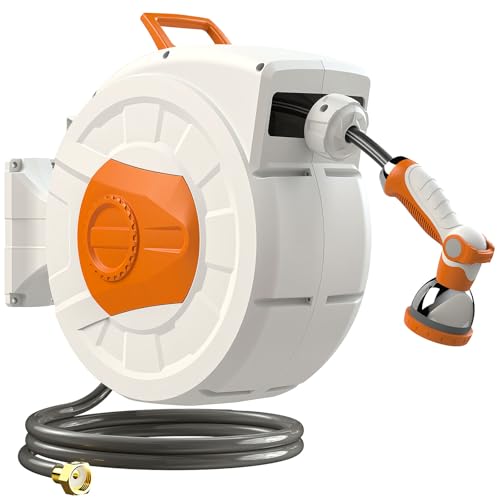
100 ft Retractable Water Hose Reel with Auto Rewind: The Complete Buyer's Guide
A 100 ft retractable water hose reel with auto rewind can transform the way you water your garden — no more tangled coils, no more dragging heavy hoses. This guide explains what to look for, how these reels work, and how to choose the right model for your outdoor space.
Watering a large garden or lawn without a proper hose management system quickly becomes a chore. A 100 ft retractable water hose reel with auto rewind solves that problem by storing the hose neatly and retracting it with minimal effort. For homeowners with expansive yards, long driveways, or multiple planting beds, the extra reach of a 100-foot hose is often the difference between convenient watering and constant repositioning.
This guide is written for gardeners who already know they want a retractable reel and are now evaluating specific models. We'll cover the mechanics, the features that matter most, and the practical considerations that determine whether a reel performs well for years or becomes a source of frustration. If you're also considering alternative hose formats, you may find our overview of a 100 ft 5/8 in retractable garden hose reel useful for comparing hose diameters and flow rates.
Why Choose a 100 ft Retractable Hose Reel
The primary advantage of a 100-foot retractable reel is reach combined with tidy storage. A hose of this length can serve a large front yard, a backyard with distant beds, or a side garden that a shorter hose would never reach. Without a reel, a 100-foot hose is cumbersome to coil, prone to kinking, and difficult to store without clutter.
Auto rewind adds a layer of convenience. Instead of manually cranking a handle, you simply guide the hose back and let the spring-loaded mechanism do the work. This is especially helpful for gardeners with limited hand strength or anyone who wants to minimize time spent on setup and cleanup.
Practical tip: A 100 ft hose loses some water pressure due to friction over distance. Choosing a reel with a 5/8-inch hose diameter helps maintain stronger flow compared to a 1/2-inch hose of the same length.
How Auto Rewind Systems Work
Auto rewind reels use a coiled spring mechanism inside the housing. When you pull the hose out, the spring winds tighter. A locking mechanism holds the hose at the desired length. When you're finished, a slight tug releases the lock, and the spring retracts the hose onto the spool.
There are two common configurations:
- Spring-loaded rewind: The most common design for residential retractable reels. Reliable and simple, though the spring tension can weaken over many years of use.
- Motorized rewind: Found on premium models. A small electric motor retracts the hose at the push of a button. These are heavier and require a power source but offer effortless operation.
Understanding the rewind mechanism helps you set realistic expectations. Spring-loaded reels require you to guide the hose back evenly; if you let it snap back freely, the hose can tangle or whip. Motorized reels are more forgiving but cost more and add complexity. For a related comparison on air hose reels, see our guide to a 100 ft retractable air hose reel with auto rewind.
Key Features to Evaluate
Not all retractable reels are built to the same standard. The following features have the biggest impact on day-to-day usability and long-term durability.
Hose Diameter and Material
5/8-inch hoses deliver better flow than 1/2-inch. Look for hybrid polymer or reinforced PVC that resists kinking and UV damage.
Housing and Mounting
Wall-mounted or ground-standing options exist. Check that the mounting bracket is sturdy and that the housing resists rust and fading.
Rewind Mechanism Quality
Mid-range and premium reels use smoother spring assemblies with better locking systems, reducing the chance of sudden retraction.
Swivel and Connectors
Brass fittings and a reliable swivel prevent leaks at the connection points and make attaching accessories easier.
Spray Nozzle Included
Many reels ship with a multi-pattern nozzle. A quality nozzle saves an immediate accessory purchase.
Weight and Portability
If you plan to move the reel seasonally, a lighter housing is easier to handle. Wall-mounted units are best left in place.
When comparing tiers, entry-level reels typically use thinner housings and basic spring assemblies. Mid-range models often improve the swivel quality and hose material. Premium and high-end reels add reinforced housings, better locking mechanisms, and sometimes motorized rewind. For gardeners who water frequently, investing in a mid-range or premium model usually pays off in smoother operation and fewer replacements.
If you're also setting up a broader watering system, our guide to adding a drip line to an existing irrigation system can help you integrate a hose reel with more permanent watering solutions.
Installation and Placement Tips
Proper installation extends the life of your reel and makes daily use more pleasant. Consider these guidelines:
- Choose a central location: Position the reel where a 100-foot hose can reach the majority of your watering zones without dragging around corners.
- Mount at the right height: Wall-mounted reels should sit roughly waist-high to reduce strain when pulling and guiding the hose.
- Secure the mounting surface: Use appropriate anchors for brick, siding, or wood. A 100-foot hose filled with water is heavy, so the bracket must be solid.
- Keep the path clear: Ensure the hose retracts over smooth ground without snagging on rocks, planters, or sharp edges.
- Protect from direct sun: While most hoses resist UV, housing in partial shade or using a UV-resistant model extends the lifespan.
For households with automated sprinklers, a hose reel complements rather than replaces the system. If you're expanding your irrigation setup, see adding drip irrigation to an existing sprinkler system.
Maintenance and Longevity
A retractable hose reel is a mechanical device, and a small amount of maintenance keeps it working smoothly:
- Drain the hose before retracting: Water left inside adds weight and strain on the spring. Shut off the supply and let the hose empty before rewinding.
- Clean the hose periodically: Wipe down the hose to remove dirt and mildew, especially before storing for winter.
- Check the swivel and connectors: Inspect for leaks and tighten or replace washers as needed.
- Store indoors in freezing climates: If temperatures drop below freezing, disconnect and store the reel indoors or in a protected area to prevent cracked housings and hoses.
- Don't force the rewind: If the hose resists, check for kinks or obstructions rather than pulling harder.
Reels that include a sturdy storage box or protective housing require less cleaning. If you also maintain outdoor furniture and patio gear, our article on a 180-gallon water-resistant plastic lockable deck box covers similar durability considerations.
Comparing Reel Types
Understanding the differences between reel types helps you match the product to your needs. The table below summarizes common configurations.
| Type | Best For | Considerations |
|---|---|---|
| Wall-mounted retractable | Permanent placement near a spigot | Requires a solid mounting surface; less portable |
| Ground-standing retractable | Renters or gardeners who move the reel | May tip if bumped; check base stability |
| Spring-loaded rewind | Most residential gardens | Simple and reliable; guide the hose during retraction |
| Motorized rewind | Large properties or users with limited mobility | Premium tier; requires power access |
If you prefer a lightweight, portable hose over a fixed reel, our review of a 100 ft expandable garden hose with brass fittings covers an alternative approach to long-reach watering.
Frequently Asked Questions
Is a 100 ft hose reel suitable for a small yard?
Yes, though the extra length may be more than you need. A 100-foot reel works well if the spigot is far from the watering zones or if you water multiple areas from a single location.
How do I prevent the hose from tangling during rewind?
Guide the hose back evenly and avoid letting it snap back freely. Walking the hose back to the reel is the most reliable method.
Can a retractable reel be left outside year-round?
Many models are designed for outdoor use, but freezing temperatures can damage hoses and housings. In cold climates, bring the reel indoors or use a model rated for winter conditions.
What hose diameter works best with a 100 ft reel?
5/8-inch is the most common choice for balancing flow and weight. 1/2-inch hoses are lighter but deliver less pressure at long distances.
Do I need a separate spray nozzle?
Many retractable reels include a nozzle. If yours doesn't, or if you need specialized patterns, look for a nozzle compatible with your hose connector type.
For larger landscape projects, a hose reel pairs well with thoughtful planting choices. Our guides to shrubs for full sun in front of house and small bushes to plant in front of house can help you plan garden beds that are easy to water.