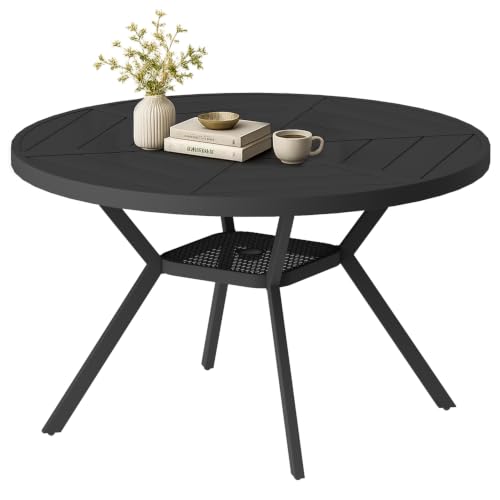
48 Inch Round Glass Patio Table with Umbrella Hole: The Complete Buyer's Guide
Everything you need to know before choosing a round glass patio dining table — frame materials, tempered glass safety, umbrella pairing, seating capacity, and long-term care — so you can buy with confidence.
Why this size works so well: A 48 inch round glass patio table with umbrella hole hits a sweet spot in outdoor dining. It is large enough for four adults to eat comfortably, compact enough for a modest deck or balcony, and the central umbrella hole lets you add shade exactly where you need it — right over the middle of the table.
If you have already decided that a round glass patio table is the right fit for your outdoor space, you are in the research phase where the details matter. Glass tops look bright and modern, round shapes encourage conversation, and an umbrella hole turns a simple dining surface into a shaded gathering spot. This guide walks through the practical questions buyers ask most often: how big the table really is in use, what frame materials to expect at each quality tier, how tempered glass behaves, what umbrella size pairs best, and how to keep the table looking good season after season.
What a 48 Inch Round Table Actually Feels Like in Use
Dimensions on a product page can be misleading, so it helps to picture the table in real life. A 48 inch diameter gives you a surface roughly four feet across. That is enough room for four place settings with serving dishes in the center, or a relaxed game night with drinks and snacks. For everyday family meals it feels generous without dominating a small patio. If you regularly host six or more people, a larger option such as an 8 person outdoor dining table with umbrella hole will be more comfortable, but for most households the 48 inch round is the practical middle ground.
Round tables also solve a common patio problem: corners. A circular top lets people slide in and out without bumping knees on a table leg or catching a hip on a sharp edge. On a compact deck, that smooth traffic flow matters more than raw surface area. Pair the table with a set of modular wicker conversation seating nearby and you create two distinct zones — one for dining, one for lounging — without crowding the space.
Frame Materials: What to Expect at Each Quality Tier
The glass top gets the attention, but the frame determines how stable the table feels, how long it lasts, and how much maintenance it needs. Most 48 inch round glass patio tables fall into three broad tiers, and knowing what each one typically offers helps you match the product to your climate and usage.
| Frame Type | Quality Tier | What You Typically Get | Best For |
|---|---|---|---|
| Powder-coated steel | Entry-Level | Solid everyday stability, welded joints, basic rust protection. Heavier than aluminum and can develop rust at scratches over time. | Covered patios, seasonal use, budget-conscious buyers |
| Powder-coated aluminum | Mid-Range | Lighter weight, good rust resistance, easier to move for cleaning or rearranging. Joints and welds are usually cleaner than entry-level steel. | Decks, balconies, humid climates, frequent rearranging |
| Cast aluminum or tubular stainless steel | Premium | Superior rigidity, refined finishes, better wind stability. Cast aluminum allows decorative detailing; stainless steel offers the highest corrosion resistance. | Exposed patios, coastal areas, long-term investment |
A mid-range aluminum frame is the most versatile choice for most homeowners. It balances weight and durability, and it resists rust far better than steel in humid or coastal conditions. If your table will sit in a fully exposed spot with strong wind, stepping up to a premium cast aluminum or stainless frame is worth considering — the extra mass keeps the table planted and reduces wobble when the umbrella catches a gust.
Tempered Glass: The Safety Detail That Matters Most
Every reputable glass patio table uses tempered glass, and it is worth understanding why. Tempered glass is heat-treated to be several times stronger than ordinary annealed glass. More importantly, if it does break, it shatters into small, blunt-edged fragments rather than long sharp shards. That behavior is what makes glass tops acceptable around children, pets, and bare feet.
When comparing products, look for explicit "tempered glass" labeling and a visible safety edge or bevel. A quality glass top should sit flush in the frame with no rocking, and the underside should have a protective coating or mesh in some designs to contain fragments if breakage occurs. Avoid any table where the glass rests loosely on the frame without clips or suction pads — those can shift and crack under uneven pressure.
Cleaning tempered glass is simple: mild soap, water, and a soft cloth. Skip abrasive pads and ammonia-heavy cleaners, which can cloud the surface over time. A glass top also reflects light beautifully, which makes it a natural partner to outdoor lighting and helps a small patio feel brighter in the evening.
Pairing the Umbrella Hole with the Right Canopy and Base
The umbrella hole is the feature that makes this table genuinely useful in summer. But the hole itself does not hold the umbrella steady — it only centers the pole. Stability comes from a weighted base, and the canopy size determines how much shade you actually get.
- Canopy size: A 48 inch round table pairs best with a 7.5 to 9 foot umbrella. A 7.5 foot canopy shades the tabletop and seated guests; a 9 foot canopy provides broader coverage but needs a heavier base to stay stable.
- Base weight: Use a base rated for your canopy size and your local wind conditions. Water-filled bases are easier to move; solid cast bases resist wind better.
- Pole diameter: Check that the table's hole accommodates your umbrella pole — most holes fit standard 1.5 inch poles, but larger market umbrellas may need a wider opening.
- Crank and tilt: If the table sits in full sun, a crank-and-tilt umbrella lets you adjust shade through the day without lifting the canopy out.
If you prefer a cantilever style that keeps the pole out of the table center, you can still use the umbrella hole for a standard market umbrella and add a cantilever nearby. Many buyers combine a round dining table with a cantilever umbrella canopy over a separate seating area, keeping the dining table clean and open.
Stability, Wind, and Placement Tips
A round glass table is more susceptible to wind than a heavy rectangular table because the glass top acts like a sail when the umbrella is up. A few practical steps keep it secure:
- Place the table on a level, solid surface. Pavers and composite decking are ideal; loose gravel or soft grass lets legs sink and the table rock.
- Use an umbrella base that weighs enough for the canopy size, and consider taking the umbrella down during storms or high-wind forecasts.
- If the table wobbles, check the leg levelers or add rubber shims rather than overtightening bolts, which can stress the glass.
- On exposed decks, position the table where a wall or railing blocks the prevailing wind.
For larger gatherings, a rectangular option like a 6 person outdoor dining table with umbrella hole may suit a long patio better, but the round table's compact footprint makes it easier to anchor and less likely to catch wind at the corners.
Care and Maintenance Through the Seasons
Glass patio tables are low maintenance, but a little routine care extends their life significantly. Wipe the glass weekly during pollen season, rinse the frame after rain if you live near the coast, and check bolts and clips at the start of each season. During winter, cover the table or store the glass top indoors if your climate sees hard freezes — freeze-thaw cycles can stress glass edges over time.
If you plan to add greenery around the dining area, consider drought-tolerant plants in nearby containers so watering does not splash onto the glass and leave mineral spots. A self-watering system for outdoor potted plants keeps surrounding containers healthy without frequent hand watering.
How to Choose the Right Table for Your Space
Before you buy, measure your patio and walk the space. You want at least 24 to 30 inches of clearance around the table for chairs to pull out comfortably. On a small balcony, a 48 inch round table with four slim chairs fits well; on a larger deck, you might prefer a rectangular table with more seating. Also consider how you will move the table for cleaning — aluminum frames are noticeably easier to shift than steel.
Finally, think about the surrounding design. A glass top pairs naturally with wicker, metal, and wood seating, and it works with both modern and traditional landscaping. If your patio already has strong hardscaping, a glass table keeps the look open and airy rather than adding visual weight.
Frequently Asked Questions
What size umbrella fits a 48 inch round patio table?
A 48 inch round table generally pairs well with an umbrella canopy between 7.5 and 9 feet in diameter. The canopy should overhang the tabletop enough to shade seated guests without being so large that it becomes unstable in wind.
Is tempered glass safe for an outdoor patio table?
Tempered glass is the standard for outdoor glass tabletops because it is heat-treated to be far stronger than annealed glass. If it does break, it shatters into small, blunt fragments instead of sharp shards, which is much safer around pets and children.
How many people can sit at a 48 inch round table?
A 48 inch round table comfortably seats four adults. In tighter arrangements you can squeeze in five or six, but four is the realistic number for a relaxed meal with elbow room.
Do I need an umbrella base if my table has an umbrella hole?
Yes. The umbrella hole centers and stabilizes the pole, but it does not anchor the umbrella. Always use a weighted base rated for your canopy size, especially in windy or exposed locations.
Ready to Compare Models?
Browse our recommended 48 inch round glass patio tables with umbrella holes below, selected for frame quality, tempered glass safety, and real-world stability.