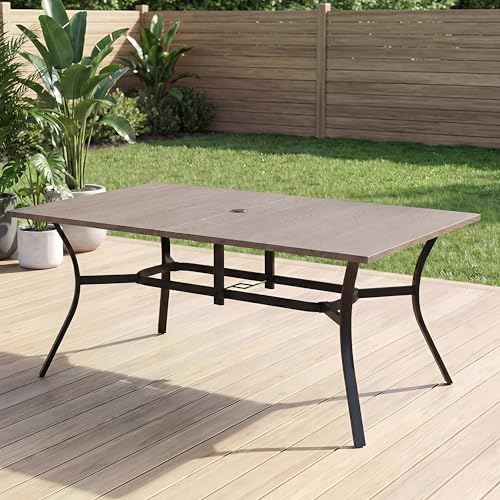
6 Person Outdoor Dining Table with Umbrella Hole: The Complete Buyer's Guide
Everything you need to know before choosing a six-seater patio dining table with a built-in umbrella hole — sizes, materials, umbrella compatibility, durability, and the features that matter most for your outdoor space.
Browse Top PicksWhy a 6-Person Outdoor Dining Table Is the Sweet Spot for Most Patios
A six-person outdoor dining table with an umbrella hole hits the ideal balance between generous seating and practical footprint. It comfortably hosts family dinners, weekend barbecues, and casual gatherings of friends without overwhelming a typical patio or deck. For households that regularly entertain four to six guests, this size offers enough room for platters, tableware, and drinks while leaving walking space around the table.
Compared to four-seat tables, a six-seater provides noticeably more elbow room and allows a proper centerpiece arrangement. Compared to eight-seat tables, it remains manageable for smaller yards and is easier to reposition when you need to reconfigure your outdoor layout. If you are still mapping out your patio zones, our guide on round patio tables with umbrella holes can help you compare footprint options before committing to a shape.
The umbrella hole is the feature that turns a dining table into a true outdoor living hub. Instead of relying on separate freestanding umbrellas that crowd the perimeter, a center-mounted umbrella provides even shade across the tabletop and keeps the surrounding area uncluttered. This is especially valuable on south- and west-facing patios where afternoon sun can make outdoor meals uncomfortable.
Dimensions and Seating Space: What to Expect
Most six-person outdoor dining tables fall into a few standard dimensions. Rectangular tables commonly measure around 60 to 72 inches in length and 36 to 40 inches in width. Oval tables follow similar length ranges with softer corners. Round tables sized for six typically measure around 54 to 60 inches in diameter. These dimensions allow each diner roughly 24 inches of table edge, which is the accepted minimum for comfortable place settings.
Seating configuration matters as much as raw dimensions. Rectangular and oval tables typically seat two people on each long side and one at each end. Round tables distribute six chairs evenly around the perimeter, which can feel more sociable for conversation but requires a slightly larger clear floor area. If your patio is narrow, a rectangular table aligned with the long axis often works best; if your space is square or you prefer a more organic flow, a round or oval model may suit you better.
| Table Shape | Typical Dimensions | Best For | Space Consideration |
|---|---|---|---|
| Rectangular | 60–72 in L × 36–40 in W | Narrow patios, formal dining feel | Efficient use of linear space |
| Oval | 60–72 in L × 38–42 in W | Softened edges, family-friendly | Slightly more footprint than rectangular |
| Round | 54–60 in diameter | Conversation-focused gatherings | Needs generous clearance all around |
Chair style also influences perceived space. Armchairs require more room to pull out than armless chairs, and swivel or rocking chairs need additional clearance behind them. When planning, account for the full extension of your chosen chairs plus a comfortable walking path. If your patio is on the compact side, you may find useful layout ideas in our overview of acacia wood dining tables with umbrella holes, which often pair well with space-conscious designs.
How the Umbrella Hole Works — and What to Check
The umbrella hole is a pre-drilled opening in the center of the tabletop, usually between 1.5 and 2 inches in diameter, designed to accept a standard patio umbrella pole. Most umbrellas use poles in the 1.5-inch range, but it is worth confirming both the hole diameter and the pole diameter before purchase. Some tables include a reducer ring or adapter to accommodate slightly narrower poles, which adds flexibility.
There are two common umbrella configurations. A through-table umbrella passes the pole through the hole and continues to a base on the ground beneath the table. A table-mounted umbrella uses a weighted base that sits on the tabletop or clamps to the table frame. Through-table setups generally provide greater stability and are the preferred choice for larger umbrellas, especially in breezy locations. Whichever style you choose, make sure the table's hole position aligns with your intended umbrella base location.
Beyond the hole itself, check whether the table includes a stabilizer or support ring underneath. This small component keeps the umbrella pole centered and reduces wobble. Also consider the table's weight and frame rigidity — a heavier, well-braced table resists tipping better when an umbrella catches the wind. If you plan to use a cantilever umbrella instead, the table hole becomes optional, and you may prefer a model with a smooth, uninterrupted surface. Our guide to all-weather dining tables with umbrella holes explores both configurations in more detail.
Material Comparison: Which Tabletop and Frame Suits Your Climate?
Material choice is the single biggest factor in how your table looks and performs over time. Each material brings distinct strengths and trade-offs, and the right pick depends on your climate, maintenance preferences, and design taste.
Wood (Acacia, Teak, Eucalyptus)
Wood remains a favorite for its warmth and natural beauty. Acacia is a popular mid-range choice with good density and attractive grain. Teak sits at the premium end, prized for its natural oils and exceptional weather resistance. Eucalyptus offers a budget-friendly alternative with respectable durability. All wood tables benefit from periodic sealing or oiling, especially in humid or rainy climates, and should be covered or stored during harsh winters.
Metal (Aluminum, Steel, Iron)
Powder-coated aluminum is lightweight, rust-resistant, and easy to move — an excellent choice for households that reconfigure their patio often. Steel and wrought iron are heavier and very stable, but require more attention to prevent rust, particularly in coastal areas. Metal tables often pair well with glass or slat tops and tend to have a clean, modern or classic look depending on the frame design.
Glass Tops
Tempered glass tabletops are easy to wipe clean and visually lighten a space. They pair naturally with metal frames and umbrella holes because the hole can be cleanly cut and finished. Glass does show smudges and water spots more readily than other surfaces, so it favors households that don't mind a quick wipe-down after meals. For a deeper look at glass-top options, see our page on round glass patio tables with umbrella holes.
Composite and HDPE
Composite materials and high-density polyethylene (HDPE) are engineered to resist moisture, insects, and fading. They require minimal maintenance and are a strong fit for coastal or humid climates. Many composite tables mimic the look of wood while offering superior weather resilience, though they can feel heavier and may carry a mid-tier to premium positioning depending on construction quality.
Shape, Style, and Aesthetic Considerations
Shape affects both function and the visual character of your patio. Rectangular tables create a structured, formal feel and make efficient use of long, narrow spaces. Oval tables soften the same footprint and reduce sharp corners, which is helpful in family settings with young children. Round tables encourage conversation and pair beautifully with circular patios or umbrella-centered layouts.
Style should harmonize with your existing outdoor furniture and home architecture. Slatted wood tops lean traditional or coastal; smooth glass tops read modern; powder-coated metal frames can span industrial, contemporary, and classic looks. If you are building a cohesive outdoor room, consider how the table relates to your seating and shade elements. Our collection of modular wicker conversation sets shows how dining and lounge zones can complement each other in a unified design.
Also think about chair compatibility. A six-person table pairs best with chairs that match its style and height. Standard dining height is around 28 to 30 inches at the tabletop; confirm that your chosen chairs fit comfortably underneath the apron and that armrests clear the table edge when pulled in.
Durability, Weather Resistance, and Long-Term Care
Outdoor furniture lives under sun, rain, and temperature swings, so construction quality matters. Look for welded or bolted frame joints rather than friction-fit connections, stainless-steel or galvanized hardware, and finishes explicitly rated for outdoor use. A powder-coated finish should be uniform and free of thin spots, and wooden tops should show tight grain and a properly sanded surface.
Care routines extend lifespan significantly. Wood tables benefit from annual cleaning and resealing. Metal frames should be wiped down and inspected for scratches that could lead to rust. Glass tops are best cleaned with non-abrasive products. During off-season or severe weather, a fitted cover protects the table and reduces maintenance. If you are also upgrading your shade setup, our guide to cantilever umbrella replacement canopies can help you keep your shade solution in top condition.
Weight and stability deserve attention too, especially on windy patios. Heavier tables resist movement and tipping, while lighter aluminum tables are easier to reposition but may need extra care in exposed locations. Consider anchoring options and umbrella base weight as part of your overall stability plan.
Buying Checklist: What to Confirm Before You Order
- Table length and width fit your patio with chairs pulled out — allow at least 36 inches of clearance on all sides.
- Umbrella hole diameter matches your umbrella pole, and a stabilizer ring is included or available.
- Frame material and finish are rated for outdoor use in your climate.
- Hardware is stainless steel or galvanized to resist corrosion.
- Table height is compatible with your existing or planned dining chairs.
- Assembly requirements and included tools are clear; check whether two people are recommended.
- Weight and portability suit how often you plan to move the table.
- Care instructions and warranty terms are documented.
Frequently Asked Questions
What size umbrella fits a 6-person dining table?
For most six-person tables, an umbrella canopy between 9 and 11 feet in diameter provides adequate shade coverage. Rectangular tables may benefit from an oval or rectangular canopy that mirrors the table shape. Always confirm the umbrella pole diameter matches the table's hole size and that the base is rated for the canopy size.
Can I use a freestanding umbrella instead of a table-hole umbrella?
Yes. Freestanding and cantilever umbrellas work well if you prefer an uninterrupted tabletop or need offset shade. They require a stable weighted base and enough surrounding space to position the canopy over the table without obstructing walkways.
How much clearance do I need around a six-person outdoor dining table?
Aim for at least 36 inches of clearance from the table edge to walls, railings, or other furniture. This allows chairs to pull out fully and gives guests room to move comfortably. For armchairs or swivel chairs, add a few extra inches behind the seating position.
Is wood or metal better for a patio dining table?
Both can work well. Wood offers warmth and natural beauty but requires periodic sealing. Metal is often lighter and more resistant to moisture, especially powder-coated aluminum, but steel and iron need rust prevention. The best choice depends on your climate, maintenance willingness, and design preferences.
How do I protect the table during winter?
Clean and dry the table thoroughly, apply any recommended sealant for wood, and use a fitted waterproof cover. If possible, store the table in a shed or garage during the harshest months. Remove the umbrella and store it separately to reduce stress on the canopy and pole.