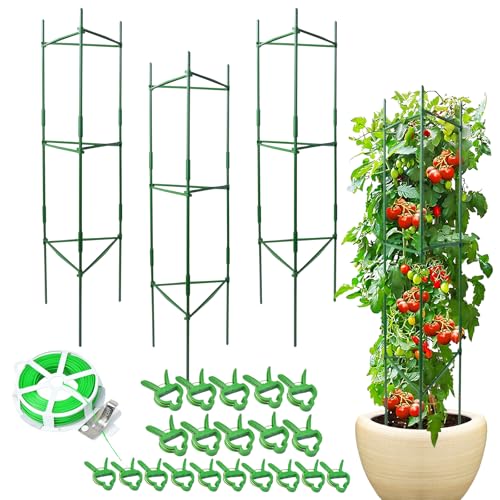
Best Way to Support Tomatoes in a Raised Bed
Learn how to choose and install the right support system for determinate and indeterminate tomatoes so your raised-bed harvest stays healthy, upright, and productive from first fruit to final harvest.
Why support matters in a raised bed: Raised beds dry faster, warm sooner, and often use intensive spacing, which means tomato plants grow vigorously and fruit heavily. Without proper support, vines sprawl, fruit touches wet soil, and airflow drops — inviting disease. The right support keeps foliage off the ground, improves light penetration, and makes harvesting far easier. This guide compares every practical option so you can match the method to your tomato type and bed layout.
Match the Support to Your Tomato Type
Before choosing a method, identify whether your tomatoes are determinate (bush-type, compact, fruit ripens in a concentrated window) or indeterminate (vining, continuous growth, fruit ripens over months). Determinate varieties rarely exceed 3–4 feet and suit cages or single stakes. Indeterminate varieties can reach 6–8 feet or more and demand tall, sturdy systems. If you are still planning your bed layout, see our raised garden bed ideas and DIY garden beds guides.
Top Support Methods Compared
Tomato Cages
Entry-level to mid-rangeConical or square wire cages contain the whole plant without tying. Best for determinate and compact indeterminate varieties in raised beds with limited vertical space.
Single Wooden or Metal Stake
Affordable, mid-tier durabilityDrive an 8-foot stake 18–24 inches into the loosened raised-bed soil and tie the main stem at intervals. Ideal for indeterminate tomatoes trained to one or two leaders.
Trellis or Overhead String System
Mid-range to premium setupA frame above the bed with twine dropped to each plant, or a leaning wooden trellis. The gold standard for indeterminate tomatoes in long raised beds.
Florida Weave
Budget-friendly, high-capacityAlternating T-posts or stakes with twine woven between plants in rows. Popular for raised beds arranged in straight lines.
Ladder Trellis
Mid-range, decorativeA wooden or metal A-frame ladder leaned into the bed. Vines are tied or woven through the rungs. Attractive and effective for indeterminate varieties.
Vertical String on Existing Structures
Entry-level, creativeUse a fence, pergola, or wall behind the bed with twine running down to each plant. Works well for beds placed against a structure.
Comparison at a Glance
| Method | Best For | Height Range | Effort | Reusability |
|---|---|---|---|---|
| Tomato cage | Determinate, compact varieties | 3–5 ft | Low | 3–5 seasons |
| Single stake | Indeterminate, trained vines | 6–8 ft | Medium | 5+ seasons |
| Trellis / string | Indeterminate, long beds | 7–10 ft | Medium–High | 5+ seasons |
| Florida weave | Row plantings, many plants | 4–6 ft | Medium | Posts reusable |
| Ladder trellis | Indeterminate, decorative beds | 5–7 ft | Medium | 5+ seasons |
How to Install Support in a Raised Bed: Step by Step
- Install supports before planting. Drive stakes or anchor trellis frames into the bed while soil is loose and you can still see the layout. Hammering around young plants later risks root damage.
- Drive deep for stability. Sink stakes at least 18–24 inches into the bed. Raised beds hold moisture but also dry quickly, so deep anchorage matters. A garden sprinkler can help settle soil around posts without displacing them.
- Space supports 24–36 inches apart. Give each indeterminate plant its own stake or string. For determinate varieties, space cages about 2 feet apart.
- Tie with soft material. Use garden twine, soft cloth strips, or stretchy tomato ties. Loop in a figure-eight around the stem and support, leaving room for the stem to thicken.
- Tie every 8–12 inches. As the vine grows, add ties at regular intervals. Avoid cinching tightly — support, don't strangle.
- Prune suckers if using stakes or string. Removing lower suckers keeps the plant to one or two leaders and makes tying manageable. Always leave enough foliage to shade fruit and protect against sunscald.
- Check stability after heavy watering. Raised-bed soil can soften around posts. Re-tamp if a stake leans, and use drip irrigation to deliver water without eroding around anchors.
Which Method Is Right for Your Raised Bed?
If your bed holds a single row of indeterminate tomatoes along a fence or wall, an overhead string system is the cleanest, most productive choice. For compact determinate types or a small mixed bed, a sturdy mid-range cage or a single tall stake is the simplest and most practical. For a long bed with many plants, the Florida weave delivers reliable support at the lowest material cost. Whichever method you choose, the key principle is the same: install early, anchor deep, and tie loosely.
Frequently Asked Questions
What is the best way to support tomatoes in a raised bed?
How tall should a tomato support be in a raised bed?
Should I use tomato cages or stakes in a raised bed?
Can I build a DIY tomato trellis for a raised bed?
How often should I tie tomatoes to their support?
Bottom line: The best way to support tomatoes in a raised bed is the method that matches your variety and bed layout. Install supports before planting, anchor them deeply into the loose raised-bed soil, and tie vines loosely at regular intervals. With the right system in place, your tomatoes will stay upright, breathe better, and reward you with a cleaner, more abundant harvest.
If you are still designing your growing space, explore our guides on gardening tools and composting to build a complete, productive raised-bed setup.