Best Weed Killer for Lawns Without Killing Grass
Stop letting weeds steal your lawn's nutrients and curb appeal. This complete guide compares selective herbicides, organic alternatives, and application strategies so you can eliminate weeds while keeping every blade of grass alive and thriving.
SEE TOP RECOMMENDATIONSWhy this guide matters: Choosing the wrong weed killer can turn a small weed problem into a full lawn renovation. The products below are specifically evaluated for their ability to target weeds while preserving desirable turfgrass. Whether you are dealing with dandelions, clover, or crabgrass, you will find a solution matched to your grass type and maintenance philosophy.
Selective vs. Non-Selective: The Critical Difference
The single most important concept when shopping for a weed killer is understanding the difference between selective and non-selective formulas. A selective herbicide is engineered to kill specific categories of plants — usually broadleaf weeds — while leaving grass species unharmed. A non-selective herbicide kills everything it touches, including your lawn, which is why it belongs nowhere near turfgrass unless you are doing a full reset.
For anyone searching for the best weed killer for lawns without killing grass, the answer almost always starts with a selective post-emergent product labeled for your specific grass type. These products contain active ingredients like 2,4-D, dicamba, MCPP, or quinclorac that disrupt weed growth pathways without affecting grass metabolism. Always read the label to confirm your grass species — St. Augustine, Bermuda, Zoysia, and Fescue each have different tolerances.
If you prefer a gentler approach, organic and natural options can work for spot treatment, but they require more precision. Our guide to the best natural weed killer that won't kill grass covers those alternatives in detail, including acetic acid and iron-based products that burn weeds on contact.
Top Weed Killer Categories for Lawns
The products below are organized by tier and use case so you can quickly identify the right fit. Each category reflects a different balance of weed spectrum, grass safety, and application convenience. No prices are listed here — the live product recommendations from our partner feed appear further down the page.
1. Broadleaf Selective Herbicides (Best All-Around)
These are the workhorses for dandelions, clover, plantain, and thistle. A mid-range granular or liquid concentrate with 2,4-D and dicamba will handle most broadleaf problems on Bermuda, Zoysia, and Fescue. For St. Augustine, look for a formula explicitly labeled as safe for that grass — many generic broadleaf products will injure it. If clover is your primary enemy, see our dedicated guide to the best weed and feed to get rid of clover.
2. Crabgrass and Grassy Weed Controls
Crabgrass, foxtail, and goosegrass require a different chemistry — typically quinclorac or fenoxaprop. These are still selective but target grassy weeds rather than broadleaf ones. Timing is everything: apply pre-emergent before soil temperatures hit 55°F, or use a post-emergent while the weeds are young. Our article on the best way to get rid of crabgrass without killing grass walks through the seasonal calendar.
3. Organic and Natural Spot Treatments
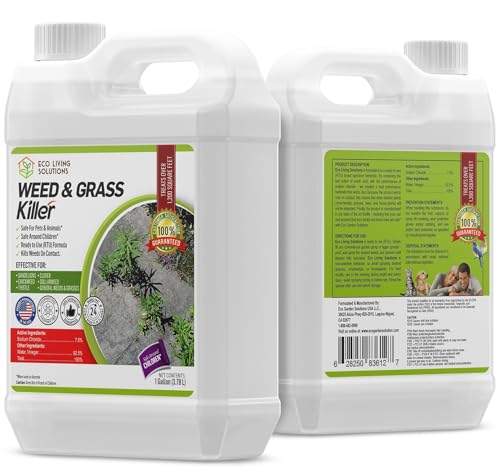
If you want to avoid synthetic chemicals entirely, organic sprays based on concentrated acetic acid, clove oil, or chelated iron can knock down small weeds. The catch is that they are non-selective by nature, so you must apply them as spot treatments with a shield or precision nozzle. They are best for patios, driveways, and isolated weeds rather than blanket lawn application. For a deeper comparison, read our review of the best organic weed killer that won't kill grass.
4. Weed-and-Feed Combos
Weed-and-feed products combine a selective herbicide with fertilizer in a single granule. They are convenient for large lawns and work well when applied with a spreader at the correct rate. However, they are not ideal for spot treatment or for lawns that need a different feeding schedule. If you go this route, choose a formulation matched to your grass type and season. The best weed and feed that is safe for dogs guide is a useful reference if pets share your yard.
Quick Comparison: Which Type Fits Your Lawn?
| Product Type | Best For | Grass Safety | Tier | Application |
|---|---|---|---|---|
| Broadleaf selective herbicide | Dandelions, clover, thistle, plantain | High when labeled for your grass | mid-range | Spray or granular |
| Crabgrass control (quinclorac) | Crabgrass, foxtail, goosegrass | High on tolerant grasses | mid-range | Spray, pre or post-emergent |
| Organic spot spray | Small isolated weeds, hardscape edges | Low — non-selective, spot only | organic | Precision spot spray |
| Weed-and-feed granules | Whole-lawn broadleaf control plus feeding | High when matched to grass | premium | Broadcast spreader |
| Liquid concentrate | Large lawns, variable weed pressure | High when diluted correctly | entry-level | Hose-end or tank sprayer |
How to Apply Weed Killer Without Damaging Grass
Even the best product can injure your lawn if applied incorrectly. Follow these best practices to protect your turf while maximizing weed control.
- Read the label first. Confirm your grass type is listed as tolerant and follow the exact dilution rate. Over-application is the number one cause of lawn damage.
- Apply when weeds are actively growing. Spring and early fall are ideal. Avoid application during drought stress, extreme heat (above 85°F), or right before heavy rain.
- Calibrate your sprayer. A simple jar test or timed output check prevents over-spraying and wasted product.
- Use a surfactant when recommended. It helps the herbicide stick to waxy weed leaves, improving kill rates at lower doses.
- Spot-treat when possible. Targeted spraying reduces total chemical load and protects desirable plants. Use a shield near ornamentals and vegetable beds.
- Wait before mowing. Give the product 24–48 hours to translocate into the weed's root system before mowing.
- Water appropriately. Granular products often need irrigation to activate; liquid products usually need a dry window. Follow the label.
Match the Product to Your Grass Type
Grass species vary widely in their tolerance to herbicides. Here is a quick reference:
Bermuda and Zoysia: Generally tolerant of most broadleaf herbicides, including 2,4-D and dicamba. Avoid products with atrazine, which can injure these grasses.
St. Augustine: Sensitive to many broadleaf herbicides, especially 2,4-D. Look for products containing atrazine or a low concentration of 2,4-D specifically labeled for St. Augustine. Our guide to the best liquid weed and feed for St. Augustine grass is a helpful starting point.
Fescue and Kentucky Bluegrass: Tolerant of most selective broadleaf products. Crabgrass control with quinclorac is generally safe when applied at the labeled rate.
If your lawn is thin or patchy, weeds will keep returning. Addressing soil health and overseeding with the best grass seed for clay soil and full sun or the best grass seed for full sun and sandy soil will reduce weed pressure long-term.
Frequently Asked Questions
Final Takeaway
The best weed killer for lawns without killing grass is the one matched to your turf species, applied at the right rate, and timed to the weed's growth cycle. Selective herbicides give you the widest margin of safety, while organic options work best for precision spot treatment.
Start with a soil test and a clear identification of your weeds. Then choose a product labeled for your grass, follow the label precisely, and combine chemical control with good cultural practices — proper mowing height, adequate watering, and overseeding — to keep weeds from returning.
Browse the recommended products below to find a formulation suited to your lawn, and consult our related guides on weed control for lawns and the best product to get rid of weeds in lawn for deeper dives.
Related Lawn Care Guides
Explore these expert resources to build a complete weed-management plan for your lawn:
- Best weed killer for lawns that won't kill grass — alternative formulations and brand comparisons.
- Best weed killer for lawns that doesn't kill grass — safety-focused buying guide.
- Best spray weed killer that won't kill grass — liquid concentrate options.
- Best organic fertilizer and weed killer for lawn — natural combined approach.
- Best way to get rid of dandelions in your lawn — targeted broadleaf strategy.
- Best way to get rid of clover in your lawn — clover-specific control.
- Best way to get rid of weeds in my lawn — comprehensive weed management.
- Best thing to get rid of weeds in grass — product roundup.
- Best weed and feed to get rid of dandelions — combo product guide.
- Best way to get rid of moss in your lawn — moss and weed overlap.
- Best weed killer for clover and creeping charlie — tough broadleaf weeds.
- Best weed killer for creeping charlie and clover — alternate formulation guide.
- Best weed and feed that is safe for dogs — pet-safe options.
- Best way to water grass without sprinkler system — cultural care support.