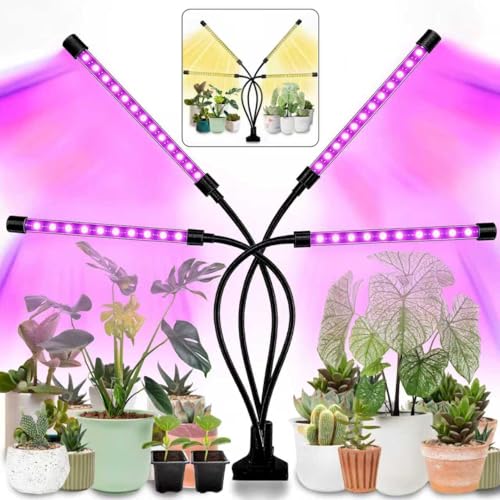
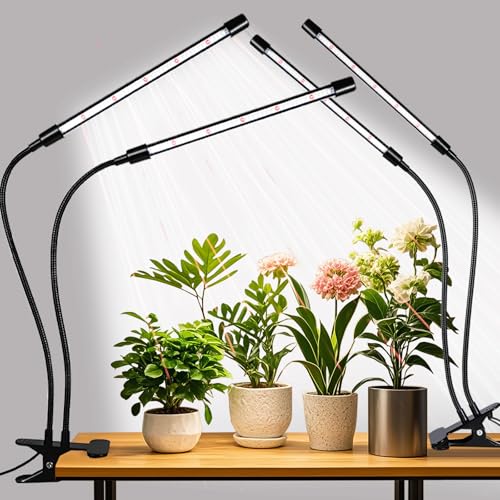
Why Choose an LED Grow Light?
For decades, indoor gardeners relied on high-intensity discharge (HID) or fluorescent lights. While these can work, they come with drawbacks: excessive heat, high energy consumption, and limited spectrum. Modern LED grow lights solve all these issues.
- Energy Efficiency: LEDs consume up to 50% less electricity than HID lights, saving you money on your electricity bill.
- Full-Spectrum Capabilities: The best LED grow lights emit a balanced spectrum of blue, red, and white light, mimicking natural sunlight.
- Low Heat Output: LEDs run cool, allowing you to place them closer to your plants without risking heat stress or leaf burn.
- Long Lifespan: Most quality LED fixtures last 50,000+ hours, meaning you won't need to replace them for years.
- Targeted Wavelengths: Some LEDs offer specific spectrums for vegetative growth (blue-heavy) or flowering/fruiting (red-heavy), maximizing yields.
Understanding Light Spectrum: What Do Plants Actually Need?
Photosynthesis is driven by light in the 400–700 nanometer (nm) range, known as Photosynthetically Active Radiation (PAR). However, not all wavelengths are equally useful. The two most critical regions are:
- Blue Light (400–500 nm): Essential for vegetative growth, promoting strong stems, dense foliage, and healthy root development. This is the spectrum you want for young plants or leafy greens.
- Red Light (600–700 nm): Crucial for flowering, fruiting, and triggering photoperiod responses. Red light encourages budding and blooming in mature plants.
High-quality LED grow lights provide a balanced "full spectrum" that includes both blue and red, along with white light for better color rendering. This is ideal for indoor air-purifying plants and flowering houseplants alike. Many modern fixtures also include a "dimming" feature, allowing you to adjust intensity as your plants grow.
PPFD and Coverage: How Much Light Do Your Plants Need?
PPFD (Photosynthetic Photon Flux Density) measures the amount of light (in micromoles per square meter per second) that reaches your plants. Different plants have different requirements:
| Plant Type |
Recommended PPFD (µmol/m²/s) |
Example Plants |
| Low-Light Plants |
50–150 |
Snake plant, ZZ plant, Pothos |
| Medium-Light Plants |
150–400 |
Fiddle leaf fig, Monstera, Ferns |
| High-Light Plants |
400–800+ |
Succulents, Citrus, Flowering houseplants |
| Seedlings / Herbs |
100–300 |
Basil, Lettuce, Microgreens |
When choosing an LED grow light, pay attention to the PPFD map (often provided by the manufacturer). This shows the light intensity at different distances and coverage areas. For a general rule, look for a light that delivers at least 200–400 µmol/m²/s across your plant canopy for good growth.
If you're using a grow light for a larger indoor plant collection, you may need multiple fixtures or a high-output bar-style light to ensure even coverage. For a single shelf or a small tabletop garden, a compact panel-style LED is usually sufficient.
Key Features to Look For in an LED Grow Light
With so many options on the market, it can be confusing to pick the "best" one. Here are the key criteria to consider before buying:
- Spectrum: Choose full-spectrum (white + blue + red) for most indoor plants. For flowering/fruiting, consider models with a "bloom" switch that boosts red wavelengths.
- Wattage (Actual Draw): Don't be fooled by "equivalent wattage." Look at the actual power consumption (e.g., 100W actual draw is far more important than "1000W equivalent"). For a 2x2 ft area, 100-150W actual is a good starting point.
- PPFD & Coverage: Check the manufacturer's PPFD chart. You want a light that provides sufficient intensity across your entire grow space.
- Dimming & Control: A dimmer switch allows you to reduce light intensity for young seedlings or adjust based on plant response.
- Heat Management: Quality LED fixtures have aluminum heat sinks and passive cooling (or quiet fans) to prevent overheating.
- Build Quality & Warranty: Look for a solid construction and at least a 1-3 year warranty. This is a sign of a reliable product.
Positioning Your LED Grow Light for Maximum Benefit
Getting the placement right is just as important as choosing the right fixture. Here are some best practices:
- Distance: Most LEDs should be placed 12–24 inches above your plant canopy. The higher the wattage, the higher the light should be hung to avoid burning. Check the manufacturer's recommendations.
- Duration: Most indoor plants need 12–16 hours of light per day. Using a simple timer can automate this, ensuring consistent cycles.
- Adjustability: As your plants grow, you may need to raise the light to maintain the ideal distance. Invest in a light with adjustable hanging ropes or stands.
For a practical example, if you're using an LED grow light to supplement the natural sunlight in a room (such as during winter), you can reduce the photoperiod to 8-10 hours to mimic seasonal changes.
Common Mistakes to Avoid
- Too Much Light: Yes, you can overdo it! Leaves that turn yellow or brown at the edges often indicate light burn. If you notice this, increase the distance or reduce the photoperiod.
- Ignoring the Spectrum: A "blurple" light (only red and blue) can work, but a full-spectrum white light is generally more pleasant to work under and supports healthier plant morphology.
- Not Measuring PPFD: Many beginners guess light intensity. Consider buying a cheap lux meter or using a smartphone app (as a rough guide) to understand the light levels your plants are receiving.
- Forgetting to Rotate Plants: If you have multiple plants under one light, rotate them every few days to ensure even growth. Not all plants grow at the same rate.
Do I Need an LED Grow Light for My Indoor Plants?
The answer depends on your environment. If your plants are in a south-facing window that receives 6+ hours of direct sun, you may not need a grow light. However, for most homes and apartments, natural light is insufficient—especially during winter or in rooms with north/east windows.
LED grow lights are particularly beneficial for:
- Starting seeds in late winter/early spring.
- Growing herbs, leafy greens, or microgreens indoors year-round.
- Keeping tropical plants (like fiddle leaf figs, monstera, and alocasia) healthy and vibrant.
- Encouraging flowering in plants like Christmas cactus or African violets.
- Supporting succulents and cacti that need intense light to maintain their compact shape and vivid colors.
Ready to Find Your Perfect LED Grow Light?
Browse our curated selection of top-rated LED grow lights for every indoor garden. All products are vetted for quality, spectrum, and value.
SEE ALL LED GROW LIGHTS