Best Fertilizer for Growing Tomatoes in Containers
Container tomatoes depend entirely on you for nutrition. Learn how to choose the right fertilizer, build a feeding schedule, and avoid the most common mistakes that stall fruit production.
Growing tomatoes in containers is one of the most rewarding ways to enjoy fresh fruit, even with limited space. But unlike garden-grown plants that can reach deep into the soil for nutrients, container tomatoes are entirely dependent on what you provide. Choosing the best fertilizer for growing tomatoes in containers is therefore one of the most important decisions you will make — and it directly determines whether you harvest a handful of fruit or a bumper crop.
This guide explains the nutrient needs of container tomatoes, the NPK ratios that work best, when to feed, how to recognize deficiencies, and how to build a simple but effective feeding routine. Whether you are growing compact determinate varieties on a balcony or vigorous indeterminate plants in large pots, the principles here will help you get the most from your plants.
Why Container Tomatoes Need Special Feeding
Tomatoes are heavy feeders by nature. In a garden bed, their extensive root systems can draw on a large volume of soil, and organic matter is continuously broken down by soil organisms. In a container, that buffer disappears. The limited volume of potting mix is quickly depleted, and every watering leaches soluble nutrients out of the drainage holes.
This means container tomatoes require more frequent and more deliberate feeding than garden tomatoes. A single application of slow-release granules at planting is rarely enough to carry a plant through an entire season of flowering and fruiting. Instead, the most reliable approach combines a slow-release base with regular liquid feeding during peak demand.
It also helps to start with a quality potting mix rather than garden soil. If you are setting up new containers, our guide to drip irrigation for raised garden beds explains how consistent moisture works together with feeding to keep nutrients available. For container setups specifically, an automatic watering system for outdoor potted plants can help maintain the steady moisture that fertilizer uptake depends on.
Understanding NPK Ratios for Container Tomatoes
Every fertilizer label displays three numbers — nitrogen (N), phosphorus (P), and potassium (K). Each plays a distinct role in tomato development:
- Nitrogen (N) drives leafy growth. Young plants need some nitrogen to establish strong stems and foliage, but excess nitrogen later in the season produces lush leaves with few flowers.
- Phosphorus (P) supports root development and flower formation. Adequate phosphorus is essential for fruit set.
- Potassium (K) improves fruit quality, flavor, and disease resistance. It becomes especially important once fruit begins to swell.
For container tomatoes, a balanced ratio in the range of 5-10-10 or 8-8-8 works well through the season. Early on, a slightly higher nitrogen formula supports establishment. Once flowering begins, shifting toward higher phosphorus and potassium encourages fruit production rather than foliage. Avoid high-nitrogen lawn-style fertilizers entirely — they are the single most common cause of disappointing container tomato harvests.
If you are also growing peppers alongside your tomatoes, the nutrient needs are very similar. Our guide to the best fertilizer for tomatoes and peppers in pots covers how to feed both crops together efficiently.
Types of Fertilizer for Container Tomatoes
There is no single perfect product — the best choice depends on your routine, your climate, and how much attention you want to give your plants. The main categories are:
Liquid Fertilizers
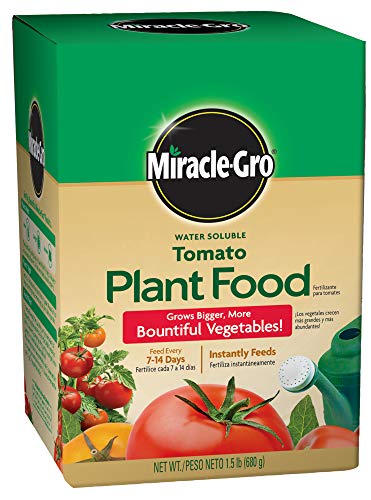
Liquid concentrates and water-soluble powders are the workhorses of container gardening. They are mixed with water and applied directly to the soil, making nutrients immediately available to roots. Because containers leach quickly, liquid feeding every one to two weeks is the most reliable way to keep tomatoes productive. Mid-range liquid tomato feeds typically offer a good balance of nutrients and trace elements, while premium options often include calcium and magnesium to prevent blossom end rot.
Slow-Release Granules
Slow-release granules are mixed into the potting mix at planting and release nutrients gradually over several weeks or months. They provide a useful baseline, especially for gardeners who cannot feed frequently. However, they are not a complete solution for hungry container tomatoes — most growers combine them with liquid feeding during fruiting. Entry-level granules are fine as a base layer, while mid-tier and premium products often include coated formulas that release more predictably.
Organic Fertilizers
Organic options such as fish emulsion, compost tea, worm castings, and seaweed extracts feed both the plant and the soil biology. They release nutrients slowly and are less likely to burn roots, but they generally require more frequent application and may be less concentrated than synthetic feeds. Organic gardening appeals to many container growers because it supports long-term soil health, even in pots. If you are interested in a broader organic approach, see our guide to organic gardening 101.
Tomato-Specific Formulations
Many manufacturers offer fertilizers formulated specifically for tomatoes. These typically include calcium to help prevent blossom end rot and magnesium to support chlorophyll production. They are convenient and take the guesswork out of ratio selection, which makes them a strong choice for beginners.
Building a Feeding Schedule
Consistency matters more than any single product. A simple, repeatable schedule keeps container tomatoes productive from transplant to final harvest.
- At planting: Mix a slow-release granular fertilizer into the potting mix according to the label. Avoid placing fertilizer directly against the root ball.
- Two weeks after transplanting: Begin light liquid feeding at half strength to encourage establishment without burning young roots.
- During vegetative growth: Feed every 10–14 days with a balanced formula. Watch for vigorous but not excessive leaf growth.
- At first flower set: Switch to a higher-phosphorus and potassium formula to support fruit development.
- During fruiting: Feed every 7–10 days, since demand peaks as fruit swells. Continue until the plant stops setting new fruit.
- Late season: Reduce nitrogen further to encourage ripening of existing fruit rather than new foliage.
Watering and feeding are closely linked. Nutrients are only taken up when soil moisture is adequate, so inconsistent watering undermines even the best fertilizer program. For container growers who travel or simply want a more reliable routine, an automatic watering system for outdoor plants pairs well with a regular feeding schedule.
Recognizing Nutrient Deficiencies
Container tomatoes often show visible signs when nutrition is off. Learning to read these signals lets you adjust before yields suffer.
- Pale yellow lower leaves: Often a sign of nitrogen deficiency, especially early in the season. Feed with a balanced liquid fertilizer.
- Purple-tinged leaves: Can indicate phosphorus deficiency, particularly in cool soils. A higher-phosphorus feed usually corrects it.
- Brown spots on fruit (blossom end rot): Caused by calcium deficiency, usually triggered by irregular watering rather than a lack of calcium in the soil. Improve watering consistency and use a calcium-containing tomato feed.
- Yellowing between leaf veins: Frequently a magnesium deficiency. A magnesium-rich feed or Epsom salt drench can help.
- Lush leaves, few flowers: Classic excess nitrogen. Switch to a low-nitrogen formula immediately.
For a deeper look at how watering interacts with nutrition in containers, see our guide to the best drip irrigation system for raised garden beds, which explains how steady moisture improves nutrient uptake.
Common Fertilizing Mistakes to Avoid
Even experienced gardeners make these errors with container tomatoes. Avoiding them is often more impactful than choosing a different product.
- Over-fertilizing: More is not better. Excess salts accumulate in containers and can burn roots. Always follow label rates.
- Using garden soil in containers: Garden soil compacts and drains poorly in pots. Use a quality potting mix designed for containers.
- Feeding dry soil: Always water before applying liquid fertilizer to avoid root burn.
- Ignoring pH: Tomatoes prefer slightly acidic soil (pH 6.0–6.8). If nutrients seem unavailable despite feeding, a pH test may reveal the problem.
- Stopping too early: Many growers stop feeding once fruit appears. In reality, demand is highest during fruiting.
How to Choose the Best Fertilizer for Your Setup
The right fertilizer depends on how much time you can invest and how you prefer to garden. Here is a simple framework:
- For busy gardeners: A premium tomato-specific slow-release granule combined with occasional liquid feeding offers the best balance of convenience and results.
- For hands-on growers: A mid-range water-soluble tomato formula applied weekly delivers precise control over nutrition.
- For organic gardeners: Fish emulsion, compost tea, and worm castings work well when applied consistently, ideally paired with a slow-release organic base.
- For beginners: Start with a tomato-specific liquid feed that includes calcium and magnesium. It removes the guesswork while teaching you how plants respond.
Whatever you choose, remember that fertilizer is only one part of the equation. Sunlight, consistent watering, and healthy potting mix matter just as much. If you are expanding your container setup, our guide to the 9-in-1 modular metal raised garden bed kit shows how modular beds can complement container growing.
Supporting Your Container Tomatoes
Healthy plants use nutrients more efficiently. Supporting indeterminate varieties with a sturdy cage keeps foliage off the ground and improves airflow, which reduces disease pressure and helps the plant focus energy on fruit. A 54-inch powder-coated galvanized steel wire round tomato cage is a durable option that suits most container-grown indeterminate varieties.
Good watering tools also make a difference. A 100-foot expandable garden hose with brass fittings makes it easy to reach containers on patios and balconies without hauling watering cans. For larger container collections, an automatic drip irrigation system for home gardening can be adapted to pots and keeps moisture consistent between feedings.
Final Thoughts
The best fertilizer for growing tomatoes in containers is the one you will apply consistently. A balanced slow-release base combined with regular liquid feeding during flowering and fruiting will outperform any single product applied sporadically. Pay attention to the plant's signals — leaf color, flower production, and fruit quality tell you more than any label.
With the right feeding routine, adequate sunlight, and steady moisture, container tomatoes can be just as productive as garden-grown plants. Start with a tomato-specific formula, adjust as the season progresses, and you will be rewarded with flavorful fruit from your own patio or balcony.