Best Full Spectrum LED Grow Lights for Indoor Plants
Full spectrum LED grow lights have transformed indoor gardening by delivering balanced, sunlight-like illumination that supports every growth stage — from seedling to flowering. Whether you are nurturing tropical houseplants, starting vegetable seedlings, or maintaining a year-round herb garden, choosing the right full spectrum fixture means the difference between leggy, pale growth and lush, vibrant plants. This guide breaks down what actually matters when comparing models so you can buy with confidence.
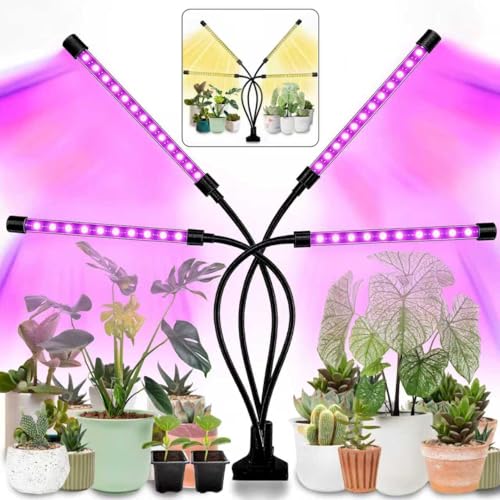
If you are new to indoor lighting, you may have encountered blurple (blue-purple) lights that were once the standard. While they work, full spectrum LEDs have largely replaced them because they render plants in their natural colors, making it easier to spot pests or nutrient deficiencies, and they deliver a more complete light recipe. For a broader look at lighting options for houseplants, you can also explore our guide to the best full spectrum grow lights for indoor plants.
Why Full Spectrum LED Grow Lights Matter
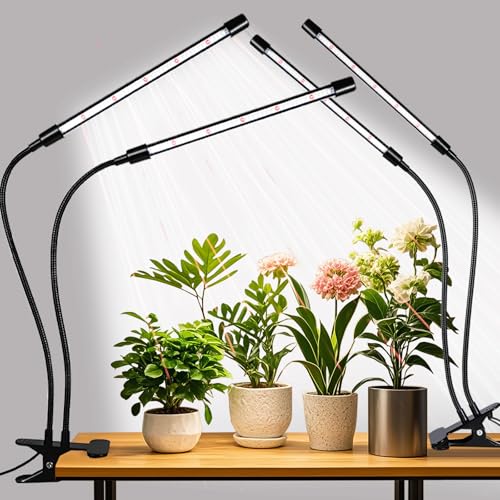
Plants absorb light primarily in the blue and red bands, but they also use green and other wavelengths for physiological processes. A true full spectrum LED emits a broad range that closely mimics the sun, typically with a color temperature between 3,000K and 5,000K. This balanced output:
- Supports all growth phases — no need to swap lights or switch modes between vegetative and bloom stages.
- Improves visual inspection — natural white light lets you see leaf color, pests, and deficiencies clearly.
- Reduces plant stress — a broader spectrum can help prevent stretching and support healthy, compact growth.
- Works with any plant type — from low-light pothos to high-light succulents, when intensity is matched correctly.
Modern LED chips also run cooler and consume far less energy than older HPS or fluorescent systems, which makes them ideal for the enclosed spaces typical of indoor growing.
Quick Picks by Use Case
Key Factors to Evaluate Before Buying
1. Actual Power Draw vs. Marketing Wattage
Many listings quote “equivalent” wattage that does not reflect real power consumption. Always look for the actual power draw (sometimes labeled “true wattage”) in the specifications. A fixture that draws 100W of actual power will generally outperform one that claims “1000W equivalent” but draws only 30W. As a rule of thumb, low-light plants need about 20–30W per square foot of actual draw, while high-light plants need 30–50W per square foot.
2. Coverage Area and PPFD
PPFD (Photosynthetic Photon Flux Density) measures how much usable light reaches your plants. Reputable brands publish PPFD maps at specific hanging heights. For a 2×2 ft grow area, look for a light that delivers at least 400–600 PPFD at 18 inches for vegetative growth and 600–900 PPFD for flowering high-light plants. Be skeptical of fixtures that do not provide PPFD data at all.
3. Spectrum Quality
A quality full spectrum light should include a healthy proportion of blue (400–500nm), green (500–600nm), and red (600–700nm) wavelengths, with some far-red (700–750nm) as a bonus for flowering. Look for white diodes rather than purely red/blue mixes if you want the most natural appearance and balanced growth.
4. Efficiency and Heat Management
Efficacy is measured in µmol/J — higher numbers mean more usable light per watt of electricity. Premium fixtures often exceed 2.5 µmol/J, while entry-level models may sit around 1.5–2.0 µmol/J. Good passive heatsinks or quiet active cooling extend the lifespan of the diodes and keep your grow space cooler.
5. Dimming and Programmability
Dimmable drivers let you dial intensity for seedlings and young plants without moving the fixture. Some mid-range and premium models also offer built-in timers or app control, which simplifies consistent light schedules — a critical factor for indoor plants that depend on stable photoperiods.
6. Build Quality and Warranty
Check for waterproof ratings (IP65 or higher is ideal for humid grow spaces), daisy-chain capability, and warranty length. A 3–5 year warranty on a mid-range or premium fixture is a strong signal of manufacturer confidence.
Comparing the Main Tiers
| Feature | Entry-Level | Mid-Range | Premium / Top-Tier |
|---|---|---|---|
| Efficacy (µmol/J) | 1.5–2.0 | 2.0–2.5 | 2.5+ |
| PPFD data published | Rarely | Usually | Comprehensive maps |
| Dimming | Manual or none | Built-in knob | App / smart control |
| Coverage (flowering) | Small (2×2 ft) | Medium (3×3 ft) | Large (4×4 ft+) |
| Warranty | 1–2 years | 3 years | 5 years |
| Best for | Houseplants, herbs | Full-cycle grows | High-light crops, large tents |
Entry-level fixtures are perfectly adequate for low-light houseplants and small herb gardens. Mid-range models offer the best balance for growers who want to run a full seed-to-harvest cycle. Premium and top-tier lights are aimed at serious indoor gardeners with larger spaces or demanding crops.
How to Match a Grow Light to Your Plants
Different plants have different light demands. Low-light houseplants like pothos, philodendron, and snake plants thrive under 100–200 PPFD. Medium-light plants such as African violets and begonias prefer 200–400 PPFD. High-light plants like succulents, tomatoes, and peppers need 400–800+ PPFD. Matching the light intensity to the plant’s natural habitat prevents both weak growth and light burn.
For those also growing edibles indoors, pairing your grow light setup with proper watering and nutrition makes a big difference. Our guides on fertilizer for growing tomatoes in containers and fertilizer for tomatoes and peppers in pots can help you build a complete indoor growing regimen.
Practical Tips for Getting the Most from Your LED Grow Light
- Hang height matters. Start seedlings 24–30 inches below the light, then lower gradually as plants establish. Most full-cycle growers settle around 18 inches during vegetative growth.
- Use a timer. Indoor plants benefit from a consistent 12–16 hour photoperiod for vegetative growth and 12 hours for flowering. An inexpensive outlet timer is one of the best accessories you can buy.
- Monitor for stress. Bleached or curled top leaves indicate light burn — raise the fixture or dim it. Long, spindly stems indicate insufficient light.
- Reflect light back. Hanging reflective material around your grow area (or using a grow tent) increases efficiency and reduces wasted light.
- Clean the diodes. Dust reduces output. Wipe the fixture gently with a dry microfiber cloth every few weeks.
Common Mistakes to Avoid
One of the most frequent errors is buying a light that is too small for the intended grow area. A fixture rated for 2×2 ft will not adequately cover a 4×4 ft tent, no matter how high you hang it. Another common mistake is trusting “equivalent wattage” claims over actual power draw. Finally, many new growers ignore spectrum quality and end up with a light that performs well in one stage but poorly in another.
If you are building out a broader indoor or patio growing space, it also helps to think about how your lighting fits with other equipment. For example, automated watering solutions can pair well with a grow light setup for low-maintenance indoor gardens — see our guide to the best automatic watering system for outdoor plants for ideas that translate well to indoor containers.
Frequently Asked Questions
What does full spectrum mean in LED grow lights?
Full spectrum LED grow lights emit light across the entire visible spectrum, closely mimicking natural sunlight. This includes blue wavelengths for vegetative growth, red wavelengths for flowering and fruiting, and green wavelengths that penetrate deeper into the canopy. A true full spectrum light supports all growth stages without needing separate veg and bloom switches.
How many watts do I need for my indoor plants?
The wattage you need depends on your grow area and plant type. As a general guideline, low-light houseplants need about 20–30 watts per square foot of actual draw power, while high-light plants like tomatoes or peppers need 30–50 watts per square foot. Always check the actual power draw rather than the equivalent wattage marketing claims.
Can full spectrum LED grow lights be used for all plant stages?
Yes, full spectrum LEDs are designed to support seedlings, vegetative growth, and flowering. Unlike blurple lights that require switching between veg and bloom modes, full spectrum lights provide a balanced output that works throughout the entire plant lifecycle. Some models offer dimming and spectrum tuning for more precise control.
How far should LED grow lights be from my plants?
Distance depends on light intensity and plant stage. For seedlings, keep lights 12–24 inches above the canopy. During vegetative growth, 18–24 inches is typical. For flowering plants, 12–18 inches works well with high-intensity lights. Always monitor plants for signs of light burn or stretching and adjust accordingly.
Ready to Choose Your Grow Light?
Use the recommended products section below to compare top-rated full spectrum LED grow lights and find the right match for your indoor garden.
Whether you are outfitting a small shelf for houseplants or a dedicated grow tent for edibles, the right full spectrum LED grow light will pay dividends in healthier growth and better yields. Combine it with good cultural practices — proper watering, nutrition, and airflow — and your indoor garden will thrive year-round.