
Best Full Spectrum Grow Lights for Indoor Plants
Transform any dim corner into a thriving indoor garden. Our expert buying guide breaks down spectrum, intensity, coverage, and efficiency so you can choose the right full spectrum grow light for healthier, happier houseplants.
See Our Top Picks💡 Quick Answer
The best full spectrum grow lights for indoor plants combine a balanced light spectrum (blue and red wavelengths plus green), sufficient PPFD output for your plant types, and even coverage across your growing area. Mid-range to premium models with adjustable intensity, daisy-chain capability, and energy-efficient LED chips offer the best long-term value for most indoor gardeners. Entry-level options work well for low-light houseplants and small setups.
Why Full Spectrum Grow Lights Matter for Indoor Plants
Indoor plants are limited by the light that comes through your windows. Even a bright room often delivers only a fraction of the intensity plants receive outdoors. A full spectrum grow light solves this by emitting light across the entire visible spectrum, closely mimicking natural sunlight. This means your plants get the blue wavelengths they need for strong vegetative growth, the red wavelengths that drive flowering and fruiting, and the green and other wavelengths that support overall health and pigment development.
Unlike older blurple (blue-purple) lights, full spectrum LEDs produce white light that is pleasant to look at and easier to evaluate plant health under. They are also more energy-efficient and run cooler than many legacy options. Whether you are growing tropical houseplants like African violets, herbs, leafy greens, or flowering plants, a quality full spectrum light gives you consistent, controllable results year-round.
Choosing the right light is not just about wattage. You need to consider spectrum quality, PPFD (photosynthetic photon flux density), coverage area, hanging height, heat output, and build quality. This guide walks you through each factor and helps you match a light to your specific indoor garden goals.
Key Features to Evaluate Before You Buy
🌞 Spectrum Quality
Look for a full spectrum that includes 400–700nm wavelengths with balanced blue, green, and red output. A good spectrum supports both vegetative growth and flowering without excessive peaks that waste energy.
⚡ PPFD & Intensity
PPFD measures usable light reaching your plants. High-light plants need higher PPFD; low-light houseplants need much less. Adjustable intensity lets you fine-tune output without changing hanging height.
📏 Coverage Area
Match the light's footprint to your growing space. A panel rated for 3x3 feet covers a small shelf; larger tents or plant walls need broader coverage or multiple fixtures.
🌡 Heat & Efficiency
Modern LED chips run cooler and convert more electricity into usable light. Passive heatsinks and quality drivers improve longevity and reduce heat stress on plants.
🔌 Adjustability & Control
Dimmers, timers, and daisy-chain ports add convenience. Being able to lower intensity for seedlings or raise it for mature plants makes one fixture far more versatile.
🔧 Build & Warranty
Look for solid heatsinks, water-resistant ratings where needed, and a warranty that reflects confidence in the LEDs and driver. A well-built light should last for years.
Grow Light Tiers at a Glance
To help you compare without focusing on price, we classify full spectrum grow lights into universal quality tiers. Use this table to understand what each tier typically delivers.
| Tier | Best For | Typical Strengths | Trade-Offs |
|---|---|---|---|
| Entry-Level | Low-light houseplants, small shelves, starter setups | Affordable, simple operation, lightweight | Lower PPFD, smaller coverage, fewer controls |
| Mid-Range | Mixed indoor gardens, herbs, leafy greens, medium tents | Better efficiency, dimming, wider coverage | Some models lack advanced spectrum tuning |
| Premium | High-light plants, flowering crops, serious indoor growers | High PPFD, excellent uniformity, robust build | Higher upfront investment, may require more setup |
| Luxury | Commercial-grade home setups, large plant collections | Top-tier efficiency, smart controls, premium materials | Overkill for casual houseplant owners |
How to Match a Grow Light to Your Plants
Low-Light Houseplants
Plants like pothos, snake plants, and most ferns do well with entry-level to mid-range full spectrum lights. You do not need extreme intensity. A fixture that provides gentle, even coverage for 10–12 hours per day is often enough. Adjustable intensity is helpful so you can avoid over-lighting. For more on selecting easy-care plants, see our guide to African violets and other flowering houseplants.
Herbs and Leafy Greens
Basil, mint, lettuce, and other culinary herbs grow best with moderate to high light. A mid-range full spectrum light with good blue output supports compact, flavorful growth. If you grow in a small indoor herb garden, consider a bar-style or panel light that spreads evenly across multiple pots. Pair your lighting with a consistent watering routine, and if you also maintain outdoor beds, our drip irrigation guide for raised beds can help you keep outdoor and indoor routines aligned.
Flowering and Fruiting Plants
Plants that flower or fruit indoors, such as peppers, dwarf citrus, or certain ornamentals, benefit from higher PPFD and a spectrum with strong red output. Premium-tier full spectrum lights with dimming and broader coverage are the safest choice. If you are also growing tomatoes outdoors or in containers, our guide to the best fertilizer for container tomatoes complements a strong lighting strategy.
Succulents and High-Light Plants
Succulents, cacti, and other high-light plants need intense light to prevent stretching. Choose a premium or luxury-tier fixture with high PPFD and place it at the manufacturer's recommended distance. Monitor for stress and adjust duration gradually. For outdoor landscaping inspiration that pairs well with a sunny indoor plant area, explore our best bushes for full sun.
💡 Pro Tip: Always acclimate your plants to a new grow light. Start with a shorter photoperiod (8–10 hours) and lower intensity, then increase gradually over 1–2 weeks. This prevents light burn and gives your plants time to adjust. Keep a simple journal of hours and intensity so you can fine-tune for each plant.
A Practical Buying Checklist
- Measure your space — know the exact footprint you need to cover and the distance from light to canopy.
- Identify your plant types — low-light, moderate, or high-light determines the PPFD range you need.
- Check spectrum details — a true full spectrum should list wavelength ranges and include blue, green, and red.
- Look for dimming — adjustable intensity is one of the most useful features for mixed plant collections.
- Consider heat and noise — passive cooling is quieter and often more reliable for long-term indoor use.
- Plan for expansion — daisy-chain ports let you add fixtures as your collection grows.
- Verify warranty and support — quality brands stand behind their LEDs and drivers.
If you are also upgrading your outdoor setup, our guides on full spectrum LED grow lights and automatic watering systems for outdoor plants can help you build a consistent care routine across indoor and outdoor spaces.
Recommended Full Spectrum Grow Lights for Indoor Plants
⚠️ AFFILIATE DISCLOSURE: This website contains affiliate links. As an Amazon Associate, we earn from qualifying purchases. If you make a purchase through these links, we may receive a small commission at no additional cost to you. Read our full affiliate policy.

Aokrean Grow Lights for Indoor Plants, Full Spectrum Plant Light with Base | 48 LEDs Halo Grow Lamp for Small Plants, Base/Soil Insert, 6.5-26in Adjustable,3 Spectra, 3/9/12H Timer, 10 Brightness,3 Pack
Check price on Amazon
GooingTop Grow Light,6000K Full Spectrum Indoor Plant Growing Lamp | Desk Lamp with White Red LEDs for Indoor Plants,Clamp with Flexible Gooseneck,Brightness Adjustable,Auto Timer 4 8 12Hrs
Check price on Amazon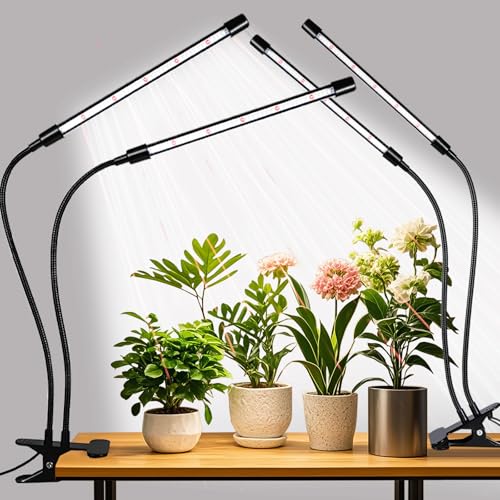
Grow Lights Upgrade 168 LEDs Clip Plant Lights for Indoor Plants, Full Spectrum White+ Red LED Plant Growing Lamps with Flexible Gooseneck, 3/9/12H Timer, 3 Spectral Modes, 10 Dimmable Levels 2 Pack
Check price on Amazon
Briignite Grow Light Bulbs, LED Grow Light Bulb A19 Bulb, Full Spectrum | Grow Light Bulb, Plant Light Bulbs E26 Base, 11W Grow Bulb 100W Equivalent,Grow Light for Indoor Plants,Seed Starting, 2Pack
Check price on Amazon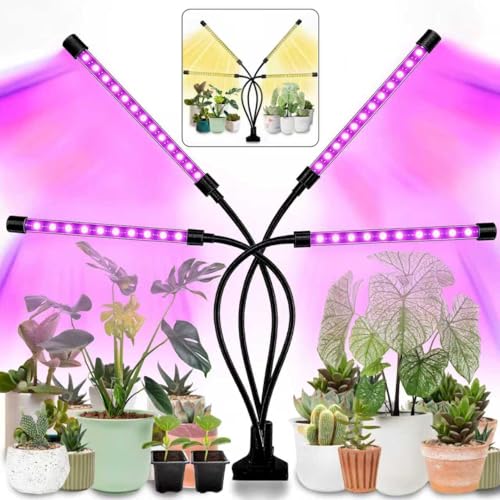
LEOTER Grow Light for Indoor Plants - Upgraded Version 80 LED Lamps with Full Spectrum & Red Blue Spectrum, 3/9/12H Timer, 10 Dimmable Level, Adjustable Gooseneck,3 Switch Modes
Check price on Amazon
5 Heads LED Grow Lights for Indoor Plants Full Spectrum 450 LEDs, Plant Lights for Indoor Growing with Tripod Stand, Floor Grow Light with Auto 3/6/9/12/15/18H Timer for Indoor Tall Plants.
Check price on Amazon
LBW Grow Light for Indoor Plants, 642 LEDs Grow Light with Stand | 3-Head Full Spectrum, 3/6/12H Auto Timer, 6 Brightness Levels, 3 Switch Modes, 68" Height Adjustable Stand, for Large Plants
Check price on Amazon
Full Spectrum Grow Lights for Indoor Plants 15-62 Inches Height Adjustable Aluminum Alloy Plant Growing Lamps with Detachable Tripod Stand, Auto On/Off Timer (Full Spectrum, Three Heads)
Check price on AmazonFrequently Asked Questions
What does full spectrum mean in a grow light?
Full spectrum grow lights emit light across the entire visible spectrum, closely mimicking natural sunlight. This includes blue wavelengths for vegetative growth and red wavelengths for flowering and fruiting, plus green and other wavelengths that support overall plant health. Unlike narrow-band lights, full spectrum fixtures give plants a balanced light diet.
How many hours should I run a full spectrum grow light?
Most indoor plants thrive with 12 to 16 hours of light per day. Leafy greens and tropical houseplants generally do well with 12 to 14 hours, while fruiting plants may benefit from 14 to 16 hours. Always provide a dark period of at least 8 hours for proper rest and respiration.
Can full spectrum grow lights burn my plants?
Yes, if placed too close or run too long. Even full spectrum lights can cause light burn, leaf bleaching, or heat stress. Always follow the manufacturer's recommended hanging distance, introduce higher intensity gradually, and monitor your plants for signs of stress such as crispy edges or faded leaves.
Are full spectrum grow lights good for all indoor plants?
Full spectrum lights are versatile and suitable for most indoor plants, including tropical houseplants, herbs, leafy greens, and even flowering plants. However, the ideal intensity and duration vary by species, so adjust based on your specific plants' needs and observe how they respond.
Do I need a full spectrum light for succulents?
Succulents generally need high light intensity. A full spectrum light with strong output and good coverage works well, but you may need to place the light closer or choose a higher-output model to prevent etiolation (stretching). Monitor your succulents closely and adjust distance as needed.
Final Thoughts
The best full spectrum grow light for your indoor plants is the one that matches your space, your plant types, and your level of involvement. Start by measuring your growing area and identifying whether your plants are low-light, moderate, or high-light. Then choose a tier that delivers the right PPFD and coverage without overspending on features you will not use.
For most indoor gardeners, a mid-range to premium full spectrum LED with dimming and even coverage offers the best balance of performance and longevity. Pair your new light with a consistent watering and fertilizing routine, and your indoor plants will reward you with vibrant growth all year long. Explore our recommended products above to find the right fit for your indoor garden.