
Best Products to Get Rid of Clover in Lawn
Discover effective, lawn-safe solutions to eliminate clover and keep your grass lush, green, and weed‑free.
Why clover takes over: Clover thrives in nitrogen-deficient soil, compacted turf, and under-watered lawns. While some homeowners appreciate its low-maintenance look, most prefer a uniform grass lawn. The right product—whether a selective herbicide, organic weed killer, or a weed & feed formula—can eliminate clover without harming your grass. This guide compares the top products available today, so you can choose the best solution for your lawn type and climate.
Top Clover Killers – Quick Comparison
Selective Herbicide (2,4‑D Based)
Broadleaf weed control that targets clover while sparing most lawn grasses. Effective on white and red clover.
- Fast-acting (results in 1–2 weeks)
- Safe for St. Augustine, Bermuda, Fescue
- Apply when clover is actively growing
Weed & Feed (Granular)
Combines fertilizer with a pre‑emergent/post‑emergent herbicide. Feeds your lawn while killing clover and other broadleaf weeds.
- Easy to apply with a spreader
- Prevents new weeds from germinating
- Ideal for spring and fall application
Organic / Natural Clover Killer
Iron‑based or corn gluten meal formulas that are safe for pets, children, and beneficial insects.
- Non‑toxic, eco‑friendly
- Best for spot treatments or small patches
- May require multiple applications
How to Choose the Right Clover Killer
Clover is a persistent weed that spreads through seeds and creeping stems. The best product for your lawn depends on your grass type, the severity of the infestation, and your preference for synthetic versus natural solutions.
Selective herbicides containing 2,4‑D, dicamba, or MCPA are highly effective against clover. They work by disrupting the weed's growth hormones without harming most turf grasses. For best weed control for lawns, these are often the go‑to choice. Apply them in early spring or fall when clover is actively growing and temperatures are between 60–80°F.
If you prefer a weed & feed combination, choose a product that matches your grass type. For example, a formula high in nitrogen will help your grass outcompete clover, while the herbicide component kills existing weeds. Best fertilizer and weed killer for St. Augustine grass is a popular choice for southern lawns.
For organic alternatives, look for iron‑based sprays (e.g., FeHEDTA) or corn gluten meal. These are safer for pets and pollinators, but they may take longer to show results. Organic pre‑emergent weed control principles can also be applied to lawns, though they are less potent than synthetic options.
Tips for Maximum Effectiveness
- ✔ Mow high: Keep grass at 3–4 inches to shade out clover seedlings.
- ✔ Water deeply but less often: Clover prefers moist conditions; infrequent watering encourages deeper grass roots.
- ✔ Apply in optimal weather: Calm, dry days with temperatures between 60–80°F are ideal.
- ✔ Repeat as needed: Most products require a second application 4–6 weeks later for complete control.
- ✔ Overseed thin areas: After clover dies off, overseed to prevent regrowth.
If you’re dealing with a severe infestation, consider a 2,4‑D weed killer concentrate that you can mix and spray yourself. This gives you precise control over the dosage and coverage. For smaller patches, a ready‑to‑use spray may be more convenient.
Remember that natural way to get rid of clover in grass often involves improving lawn health through regular aeration, proper fertilization, and adjusting soil pH. Clover thrives in acidic or alkaline soil, so a soil test can help you correct imbalances.
Finally, if you're unsure which product is right for you, consult the product label for compatibility with your grass type. Many products are safe for St. Augustine grass, Bermuda, and Fescue, but always double‑check.
Top Clover Control Products – Expert Picks
⚠️ AFFILIATE DISCLOSURE: This website contains affiliate links. As an Amazon Associate, we earn from qualifying purchases. If you make a purchase through these links, we may receive a small commission at no additional cost to you. Read our full affiliate policy.

Scotts Pursue Clover Lawn, 2 lbs.

Bonide Weed Beater Ultra, 32 oz Ready-to-Use Spray
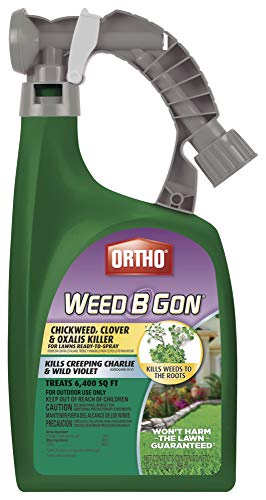
Ortho Weed B Gon Chickweed, Clover and Oxalis Killer for Lawns Ready-To-Spray, Kills Creeping Charlie, 32 fl. oz.
Frequently Asked Questions
Q: Will clover killer harm my grass?
A: Most selective herbicides target broadleaf weeds and are safe for common lawn grasses when used according to label directions. Always test on a small area first.
Q: How long does it take for clover to die after treatment?
A: You’ll typically see wilting within 3–5 days, with complete die‑off in 2–3 weeks. Repeat applications may be necessary for persistent clover.
Q: Can I apply clover killer during summer?
A: Avoid applying during extreme heat (above 85°F) or drought, as this can stress your grass. Early spring and fall are the best seasons.
Q: Is organic clover killer effective?
A: Yes, but it works slower and may need multiple applications. Iron‑based products are particularly effective and safe for pets.