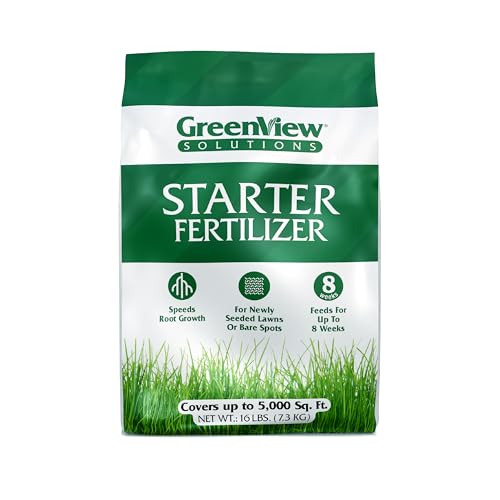
Starter Fertilizer for Grass: The Complete Guide to Stronger Roots and a Healthier Lawn
Everything you need to know about choosing, applying, and timing starter fertilizer for new grass seed, sod, and overseeded lawns — so your investment grows into a lush, resilient turf.
Jump to Buying GuideWhy starter fertilizer matters: New grass is fragile. Whether you are seeding a bare patch, laying sod, or overseeding a thinning lawn, the first few weeks determine long-term success. A starter fertilizer for grass delivers the phosphorus and nutrients young roots need to establish quickly, resist disease, and survive its first summer or winter. This guide explains what starter fertilizer does, how to choose the right formula, and how to apply it without wasting product or harming your lawn.
What Is Starter Fertilizer for Grass?
Starter fertilizer for grass is a specialized lawn fertilizer formulated to support root development rather than top growth. Unlike maintenance fertilizers that are high in nitrogen to push green blades, starter fertilizers are typically higher in phosphorus — the middle number in the N-P-K ratio — because phosphorus is essential for root formation, energy transfer, and early plant establishment.
Most starter fertilizers also contain a modest amount of nitrogen and potassium, plus secondary nutrients like calcium or sulfur in some premium blends. The goal is to give young grass seedlings or freshly laid sod the resources they need to anchor into the soil, absorb water efficiently, and build a deep root system before the plant focuses on leaf growth.
If you are planning a full lawn renovation, you may also need to evaluate your irrigation setup. A properly installed sprinkler system ensures even moisture during the critical germination period — which is just as important as the fertilizer itself.
Why New Grass Needs Starter Fertilizer
Newly germinated grass seedlings have very small root systems. They cannot reach deep into the soil for nutrients, and they compete with weeds, existing grass, and soil microbes for every available resource. Starter fertilizer addresses this by placing readily available nutrients right in the root zone.
- Faster root establishment: Phosphorus encourages vigorous root branching, helping seedlings anchor quickly and access water.
- Improved drought tolerance: Deep, healthy roots make young grass more resilient during dry spells.
- Reduced weed competition: Healthy seedlings fill in faster, shading out weeds before they can establish.
- Better winter survival: Well-rooted grass stores more energy and recovers faster after cold weather.
Without adequate phosphorus, seedlings may germinate but remain weak, shallow-rooted, and vulnerable to disease, heat stress, and foot traffic. In many soils, phosphorus is present but not in a form plants can immediately use — starter fertilizer delivers it in a plant-available form.
When to Apply Starter Fertilizer
Timing is critical. Applying starter fertilizer at the wrong stage can waste product, harm seedlings, or contribute to nutrient runoff. Follow these guidelines based on your lawn project:
New Seeding
Apply starter fertilizer at the time of seeding, or within a few days after. Incorporate it into the top 2–3 inches of soil before spreading seed, or apply it as a surface application immediately after seeding if you are using a granular product designed for surface application. Water lightly to activate the granules.
Sod Installation
Apply starter fertilizer to the bare soil before laying sod. This places nutrients directly under the root zone. Some growers also apply a light surface application after sod is laid, but always follow the product label — too much fertilizer against fresh sod can burn roots.
Overseeding
Apply starter fertilizer just before or immediately after overseeding. For best results, use a spreader to distribute granules evenly, then water gently to settle the product into the soil. Avoid applying during heavy rain or on frozen ground.
For warm-season grasses like St. Augustine, timing also depends on soil temperature and moisture. If you are managing an existing lawn and preparing to overseed, reviewing St. Augustine grass care can help you align fertilization with the right seasonal window.
Understanding the N-P-K Ratio in Starter Fertilizer
Every fertilizer label shows three numbers: nitrogen (N), phosphorus (P), and potassium (K). A starter fertilizer for grass is typically higher in phosphorus than nitrogen, unlike maintenance fertilizers that are high in nitrogen.
| Nutrient | Role in New Grass | Typical Starter Range |
|---|---|---|
| Nitrogen (N) | Leaf and shoot growth; supports photosynthesis | Low to moderate |
| Phosphorus (P) | Root development, energy transfer, early establishment | Higher than N and K |
| Potassium (K) | Stress tolerance, disease resistance, water regulation | Moderate |
A common starter fertilizer ratio is approximately 1-2-1 or similar, though formulations vary by brand and region. Some products include slow-release nitrogen to feed seedlings gradually, while others are fast-release for immediate uptake. Always read the label and match the product to your grass type and soil test results.
If you are also planning to improve your lawn's overall appearance with seasonal color, consider pairing your fertilizer program with full-sun perennials that bloom all summer for a landscape that looks great year after year.
How to Choose the Right Starter Fertilizer
Not all starter fertilizers are equal. The best choice depends on your grass type, soil condition, and whether you are seeding, sodding, or overseeding. Use the following criteria to narrow down your options:
- Check the N-P-K ratio: Look for a formula with phosphorus as the dominant nutrient. A ratio like 1-2-1 or 5-10-5 is common, but product labels vary.
- Consider slow-release vs. fast-release nitrogen: Slow-release formulas feed seedlings gently over several weeks and reduce burn risk. Fast-release products act quickly but require careful watering.
- Look for micronutrients: Premium starter fertilizers may include calcium, sulfur, iron, or other micronutrients that support root health and stress tolerance.
- Match your grass type: Warm-season grasses and cool-season grasses have different nutritional needs. Check the product label for recommended grass types, or consult a local extension service.
- Verify application equipment: Granular products work best with a broadcast or drop spreader. Liquid starter fertilizers can be applied with a hose-end sprayer or tank sprayer.
If you are also managing a new irrigation system alongside your seeding project, understanding sprinkler systems can help you deliver consistent moisture without overwatering, which is essential for fertilizer effectiveness.
For homeowners who prefer a more automated approach to lawn care, a top-rated battery-powered self-propelled lawn mower can make routine maintenance easier once your new grass is established, reducing stress on tender blades.
Application Tips for Best Results
Even the best starter fertilizer will underperform if applied incorrectly. Follow these practical guidelines to get the most from your product:
- Calibrate your spreader: Before applying, calibrate your spreader according to the product label. Uneven application can cause streaks of burned grass or under-fertilized patches.
- Apply at the recommended rate: More is not better. Over-application can burn seedlings, pollute waterways, and waste money. Stick to the label rate.
- Water immediately after application: A light watering helps granules dissolve and move nutrients into the root zone. Avoid heavy watering that causes runoff.
- Keep off hard surfaces: Sweep any fertilizer that lands on driveways or sidewalks back onto the lawn to prevent runoff into storm drains.
- Do not apply before heavy rain: Rain can wash fertilizer away before it reaches the roots. Check the forecast and apply during a dry window.
For large properties or steep slopes, a well-designed walkway and path system can improve access for spreading equipment and reduce the risk of uneven application.
Common Mistakes to Avoid
Many lawn failures trace back to simple fertilization errors. Avoid these common pitfalls:
- Using starter fertilizer on an established lawn: High-phosphorus products are designed for new grass. Mature lawns rarely need extra phosphorus and may contribute to runoff.
- Applying too much nitrogen: Excess nitrogen pushes leaf growth at the expense of roots, making new grass weak and disease-prone.
- Fertilizing dry soil: Applying fertilizer to bone-dry soil can burn roots. Water lightly before and after application.
- Skipping a soil test: A soil test tells you exactly what nutrients your lawn needs, preventing unnecessary applications and saving money.
- Ignoring grass type: Cool-season and warm-season grasses respond differently to fertilizer timing. Always match your product and schedule to your grass.
If you are dealing with existing weed pressure while trying to establish new grass, reviewing the best weed and feed for St. Augustine grass can help you avoid products that might harm tender seedlings.
Frequently Asked Questions
What is starter fertilizer for grass and why is it important?
Starter fertilizer is a specialized blend high in phosphorus that promotes rapid root development in newly seeded or sodded lawns. Strong early roots lead to a healthier, more drought-tolerant lawn.
When should I apply starter fertilizer to a new lawn?
Apply at the time of seeding or sodding, or within a few days of installation. For overseeding, apply just before or right after spreading seed. Avoid frozen ground and heavy rain.
Can I use starter fertilizer on an established lawn?
Starter fertilizer is formulated for new lawns. Established lawns generally need balanced or nitrogen-focused fertilizers. High-phosphorus starter fertilizer on mature grass can contribute to nutrient runoff.
What nutrient ratio is best for starter fertilizer?
A common ratio is approximately 1-2-1, with phosphorus higher than nitrogen and potassium. Always check the product label and consider a soil test for precise recommendations.