
Pet Safe Weed Killer That Won't Kill Grass: The Complete Guide
You love a lush lawn and a happy, healthy pet. The good news? You can have both. This guide explains how to choose and apply a pet-safe weed killer that targets weeds without harming your grass, your dog, your cat, or the kids who play outside.
Start With The BasicsWhy Pet-Safe Weed Control Matters
Conventional weed killers often rely on synthetic active ingredients that can be harmful to pets if ingested, inhaled, or absorbed through the skin. Dogs and cats explore the world with their noses and paws, and they frequently chew on grass. That makes the chemical residue on a treated lawn a real concern for conscientious pet owners.
At the same time, letting weeds take over is not an option. Weeds compete with your grass for water, nutrients, and sunlight, and they can harbor pests and diseases. The solution is a pet safe weed killer that won't kill grass — a product or method that targets unwanted plants while leaving your turf and your furry family members unharmed.
If you are also dealing with broader lawn health issues, our guide on liquid lawn fertilizer and weed control concentrate explains how feeding and weeding can work together. And if moss is your main problem, see my lawn is full of moss, what do I do for a targeted approach.
Types of Weed Killers That Spare Grass
Understanding the categories of weed control helps you make a confident choice. Here are the main types available to homeowners who want to protect both pets and turf.
1. Selective Post-Emergent Herbicides
These products are formulated to kill specific types of weeds (usually broadleaf weeds like dandelions and clover) while the grass remains unharmed. They work because grasses and broadleaf plants have different physiologies. Many selective products are available in pet-safe formulations that use lower-toxicity active ingredients. Always confirm the label lists your grass type as tolerant.
2. Iron-Based Herbicides
Iron (Fe) in a specific form is toxic to broadleaf weeds but safe for most established grasses when applied correctly. Iron-based products are popular among pet owners because iron is not a synthetic pesticide and breaks down naturally in the soil. They work best on small, young weeds and require thorough coverage.
3. Fatty Acid and Soap-Based Herbicides
These contact herbicides disrupt the cell membranes of weeds. They are considered low-toxicity for pets and are often labeled for organic gardening. However, they are non-selective, meaning they can damage grass if sprayed directly on it. They are best used for spot treatment, not broadcast application.
4. Corn Gluten Meal (Pre-Emergent)
Corn gluten meal is a natural pre-emergent that inhibits weed seed germination. It does not kill existing weeds, but it prevents new ones from sprouting. It is safe for pets and lawns, though it should not be used when overseeding because it also inhibits grass seed germination.
5. Horticultural Vinegar (Non-Selective)
Vinegar with a high acetic acid concentration (typically 20% or more) burns weeds on contact. It is non-selective and will kill grass if it touches it. Use it only for spot treatment on patios, walkways, and cracks — never as a lawn-wide spray. See our guide on a natural way to get rid of weeds in cracks for safe application tips.
Pet-Safe Ingredients to Look For
When reading labels, focus on active ingredients that have a favorable safety profile around pets and are compatible with lawn application. The following are commonly found in pet-friendly formulations:
- Iron (Fe) compounds — effective on broadleaf weeds; low toxicity to pets when used as directed.
- Fatty acids (pelargonic acid, caprylic acid) — contact herbicides derived from natural sources; low toxicity, but non-selective.
- Corn gluten meal — natural pre-emergent; safe for pets and lawns.
- Essential oils (clove, cinnamon, lemongrass) — found in some organic formulas; check for pet-specific warnings, as some oils can irritate pets.
- Soap-based surfactants — help products adhere to weed leaves; generally low toxicity.
Ingredients to Avoid Around Pets
Some weed killers carry significant risks for pets. Unless a product is explicitly labeled pet-safe and you have verified the active ingredients, avoid the following:
- Glyphosate — a broad-spectrum herbicide; concerns exist about pet exposure and environmental persistence.
- 2,4-D — a common broadleaf herbicide; pets should be kept off treated lawns until fully dry, and some formulations carry higher risk.
- Dicamba — another broadleaf herbicide with re-entry restrictions.
- Paraquat and diquat — highly toxic; not for homeowner use.
- Arsenic-based compounds — extremely toxic; avoid entirely.
If you are unsure about a product, contact the manufacturer or consult your veterinarian before applying it to any area your pet can access. For broader natural alternatives, see our resource on organic weed and grass killer for vegetable garden and natural way to get rid of weeds between pavers.
Selective vs. Non-Selective: Know the Difference
This distinction is the single most important factor in choosing a weed killer that won't kill grass.
| Type | How It Works | Effect on Grass | Best Use Case |
|---|---|---|---|
| Selective | Targets specific plant types (usually broadleaf weeds) based on plant physiology | Safe when label lists your grass type as tolerant | Lawn-wide broadleaf weed control |
| Non-Selective | Kills any plant it contacts | Will damage or kill grass | Spot treatment on hardscapes, cracks, and bare areas |
For a lawn-wide application, you want a selective product. For spot treatment in cracks or along fence lines, a non-selective pet-safe option like vinegar or fatty acid spray is appropriate. Never use a non-selective herbicide as a broadcast lawn treatment.
How to Apply Safely and Effectively
Even the safest product can cause problems if applied incorrectly. Follow these steps to protect your pets, your grass, and your results.
- Read the entire label first. Confirm the product is labeled for your grass type and for use in areas accessible to pets.
- Remove pets and children from the area. Keep them indoors during application and until the product has fully dried.
- Choose a calm day. Avoid windy conditions that can cause drift onto desirable plants or into areas where pets play.
- Spot-treat whenever possible. Targeted application reduces waste and limits exposure.
- Use the right equipment. A dedicated sprayer for herbicides prevents cross-contamination with other products. Clean it thoroughly after use.
- Water in if directed. Some products require watering after application to activate the ingredients. Follow the label exactly.
- Observe re-entry intervals. Typically 2 to 4 hours for pet-safe products, but always confirm on the label.
- Store products securely. Keep all weed killers locked away from pets and children.
Best Timing and Weather Conditions
Timing affects both efficacy and safety. Weeds are most vulnerable when they are actively growing, which is typically in spring and early fall. Apply selective herbicides when weeds are small and before they set seed.
Weather matters too. Apply on a day with mild temperatures, low wind, and no rain in the forecast for at least 24 hours. Avoid applying during extreme heat, as the product can volatilize and drift, and avoid applying before heavy rain that could wash the product into storm drains or onto non-target areas.
For seasonal lawn care guidance, explore our seasonal checklist and related guides in the Tips & Guides section.
Grass Type Compatibility
Not all selective herbicides are safe for all grass types. Cool-season grasses like fescue and Kentucky bluegrass tolerate different products than warm-season grasses like Bermuda, St. Augustine, and Zoysia. Always verify that the product label lists your grass type as tolerant before applying.
If you are unsure what grass you have, our lawn care guides can help you identify it and choose the right care regimen. Browse the Lawn Care section for grass-specific advice.
Organic and DIY Options
Many gardeners prefer to avoid synthetic chemicals entirely. Organic and DIY options can be effective when used correctly, but they require more frequent application and careful targeting.
- Corn gluten meal — pre-emergent; prevents weed seeds from germinating. Apply in early spring and again in early fall.
- Horticultural vinegar — non-selective contact killer; use only for spot treatment on hardscapes and cracks.
- Boiling water — effective for weeds in cracks and between pavers; non-selective and completely pet-safe once cooled.
- Mulch — a thick layer of organic mulch smothers weeds and improves soil health. See our mulch guide for depth and material recommendations.
- Manual removal — pulling weeds by hand is the safest method of all, especially for small infestations.
For more natural pest and weed solutions, visit our organic pest control and natural pest control resources.
Common Mistakes to Avoid
- Assuming "natural" means "pet-safe." Some essential oils and vinegar concentrations can irritate pets. Read labels carefully.
- Applying a non-selective product to the whole lawn. This will kill your grass along with the weeds.
- Skipping the re-entry interval. Letting pets out too soon exposes them to wet product.
- Spraying on a windy day. Drift can damage desirable plants and contaminate pet areas.
- Over-applying. More is not better; it increases risk without improving results.
- Ignoring grass type. A product safe for Bermuda may damage fescue. Always verify compatibility.
- Storing products in reach of pets. Secure storage is essential.
Top Pet-Safe Product Categories
Below are the product categories that consistently rank well for pet safety and grass compatibility. These are category recommendations, not specific brand endorsements — always read the label of the exact product you buy.
Selective Broadleaf Weed Killer (Ready-to-Use)
Convenient pre-mixed sprays for small lawns and spot treatment. Look for formulations labeled pet-safe and compatible with your grass type. These are ideal for beginners and for treating isolated weed patches without mixing concentrate.
Iron-Based Selective Herbicide (Concentrate)
Concentrates offer better value for larger lawns and let you control dilution. Iron-based formulas are popular among pet owners and are effective on broadleaf weeds when applied to young plants. Requires a sprayer and careful mixing.
Pet-Safe Selective Herbicide System with Sprayer
Complete kits that include a dedicated sprayer and a pet-safe selective formula. These systems reduce cross-contamination risk and simplify application. Best for homeowners who treat the lawn regularly and want a dedicated, safe setup.
Corn Gluten Meal Pre-Emergent
A natural pre-emergent that prevents weed seeds from sprouting. Safe for pets and lawns when used as directed. Best applied in early spring and early fall. Not for use when overseeding.
Fatty Acid or Vinegar-Based Contact Spray
Non-selective contact killers for cracks, patios, and fence lines. Low toxicity for pets but will damage grass if oversprayed. Use with a targeted nozzle and avoid windy conditions.
Ready to Choose a Pet-Safe Weed Killer?
Browse our curated selection of pet-safe weed control products and lawn care essentials. Every recommendation prioritizes safety for pets, kids, and your grass.
See Recommended ProductsFrequently Asked Questions
What is the safest pet-friendly weed killer that won't harm grass?
The safest options are selective post-emergent herbicides formulated with iron-based or fatty acid ingredients, combined with targeted application. Always verify the label lists your grass type as tolerant before applying, and keep pets off the lawn until the product has fully dried.
How long should I keep my dog off the lawn after applying weed killer?
Most pet-safe weed killers recommend keeping pets off the lawn until the product is completely dry, which typically takes 2 to 4 hours. Check the product label for specific re-entry times, and always err on the side of caution.
Will vinegar kill my grass along with the weeds?
Yes. Horticultural vinegar is non-selective, meaning it kills any plant it touches, including grass. It should only be used for spot treatment on hardscapes or in areas where you want to eliminate all vegetation, not as a broadcast lawn treatment.
Can I use weed killer around pets and children safely?
Yes, if you choose products labeled pet-safe, apply them according to the label, and observe all re-entry intervals. Keep children and pets away during application and until the treated area is dry. Store all products securely out of reach.
Are there weed killers that won't kill grass but are also safe for cats?
Yes. Selective broadleaf herbicides labeled pet-safe are generally safe for cats as well as dogs when used as directed. Cats are often more sensitive to certain essential oils, so check the label for cat-specific warnings. Iron-based and corn gluten meal products are commonly used in cat-accessible yards.
⚠️ AFFILIATE DISCLOSURE: This website contains affiliate links. As an Amazon Associate, we earn from qualifying purchases. If you make a purchase through these links, we may receive a small commission at no additional cost to you. Read our full affiliate policy.
Pet-Safe Weed Killers & Lawn Care Essentials

Spruce Weed & Grass Killer₃ Kit, Power Wand, 2 AA Batteries Included, 64 Oz | Pet Safe Weed Killer Spray, Reusable Weed Sprayer, Kills Weeds Around Lawns, Gardens, & Flower Beds, 2 AA Batteries Included
Check price on Amazon
Just For Pets Pet Safe Weed Killer - 1 Gallon (128 oz) w/Sprayer | Fast-Acting Safe for Dogs & Pets Weed & Grass Killer No Glyphosate
Check price on Amazon
Natural Elements Weed Killer | Pet Safe, Safe Around Children | Natural Herbicide (1 Gallon)
Check price on Amazon
Natural Armor Weed & Grass Killer - 1 Gallon (128 oz) w/Sprayer (128 OZ. Gallon)
Check price on Amazon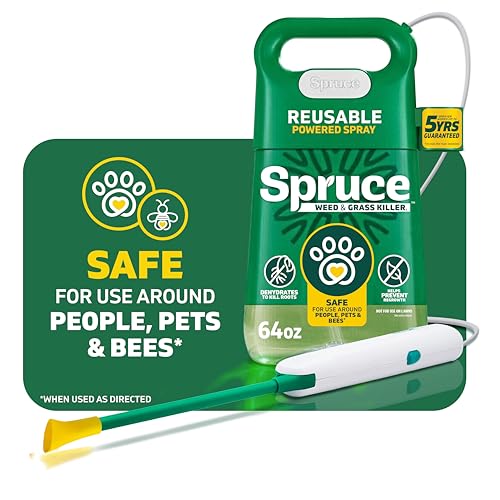
Spruce Snap & Spray Weed & Grass Killer₃ Powered Starter Kit, 64 Oz | Pet Safe Weed Killer Spray, Reusable Weed Sprayer, Spot-Treats Around Lawns, Gardens, Mulch & Flower Beds
Check price on Amazon
Just For Pets Pet Safe Weed Killer - 1 Gallon (128 oz) Refill | Fast-Acting Safe for Dogs & Pets Weed & Grass Killer No Glyphosate
Check price on Amazon
Ortho WeedClear Lawn Weed Killer Ready-to-Spray, 32 fl. oz. | Weed Killer Spray for Lawns, Kills Crabgrass, Dandelion and Clover, Hose-End Application, Covers 5,000 sq. ft.
Check price on Amazon
ECO Garden PRO - Organic Vinegar Weed Killer | Kid/Pet Safe | Clover Moss, Green Grass & Poison Ivy Killer for Lawns | Spray Ready Glyphosate Free Herbicide (1 Gallon)
Check price on AmazonDisclaimer
Let Gardening provides educational content only. Not a substitute for professional horticulturist or landscape architect services. Always consult a qualified professional for major landscaping or agricultural work. Some content may use AI. We are not responsible for plant damage, injuries, or outcomes. By using this site, you accept these terms. If you do not agree, please leave this website and discontinue its use. Read full disclaimer.