
The Best Weed and Grass Killer on the Market
A complete buyer's guide to choosing the right herbicide for your lawn and garden — comparing types, effectiveness, safety, and application methods so you can make an informed decision.
Why this guide matters: If you've found this page, you already know you need a weed and grass killer — you're just not sure which type is right for your situation. This guide breaks down the categories of weed killers, explains what separates entry-level products from premium formulations, and helps you match the right product to your specific lawn, garden, or landscape challenge. No guesswork, just clear information to help you buy with confidence.
Understanding Weed and Grass Killer Categories
Not all weed killers are created equal. Before you buy, it's essential to understand the three main categories, because choosing the wrong type can damage the very plants you're trying to protect. The best weed and grass killer on the market isn't a single product — it's the one that matches your specific situation.
1. Non-Selective Herbicides (Total Vegetation Killers)
These products kill any plant they contact, including grass, flowers, shrubs, and vegetables. They are ideal for clearing driveways, patios, fence lines, gravel paths, and areas where you want zero vegetation. Non-selective killers are typically the strongest formulations available and work fast, often showing visible results within days. However, they must be applied with extreme care to avoid drift onto desirable plants.
2. Selective Herbicides (Grass-Safe or Broadleaf-Safe)
Selective herbicides target specific plant types while leaving others unharmed. There are two sub-types:
- Broadleaf weed killers: These eliminate dandelions, clover, thistle, and other broadleaf weeds without harming grass. They are the go-to choice for lawn owners who want a lush, uniform turf.
- Grass killers (grass-specific): These target grassy weeds like crabgrass, nutsedge, and quackgrass while protecting broadleaf plants. They're useful in flower beds and ornamental gardens where grass has invaded.
If you need to protect a specific lawn type such as St. Augustine, look for a weed killer that won't kill St. Augustine grass — these formulations are designed to suppress weeds while preserving sensitive turf varieties.
3. Pre-Emergent vs. Post-Emergent
Pre-emergent herbicides create a barrier in the soil that prevents weed seeds from germinating. They're applied before weeds appear — typically in early spring or fall. Post-emergent herbicides kill weeds that are already growing. Most homeowners need both types for complete control: pre-emergent for prevention and post-emergent for active outbreaks.
What Separates Entry-Level, Mid-Range, and Premium Weed Killers
Weed killers are not priced by brand prestige alone — the differences in formulation, speed of action, and safety profile are real. Here's how to think about the tiers without getting caught up in price tags.
| Feature | Entry-Level | Mid-Range | Premium |
|---|---|---|---|
| Active Ingredients | Basic single-ingredient formulas (e.g., glyphosate or 2,4-D) | Dual-action blends for broader spectrum control | Triple-action or specialized formulations with adjuvants for faster absorption |
| Speed of Results | Visible wilting in 7–14 days | Visible wilting in 3–7 days | Visible wilting in 1–3 days; complete kill in 1–2 weeks |
| Rainfastness | Requires 24+ hours of dry weather | Rainfast in 4–6 hours | Rainfast in 1–2 hours |
| Coverage per Application | Standard coverage; may need repeat applications | Extended coverage; fewer repeat applications | Maximum coverage; often one application is sufficient |
| Safety Profile | Basic precautions required; some formulations harsh on surrounding soil | Improved safety for nearby plants with targeted action | Advanced formulations with reduced soil residual and pet-safe options |
| Best For | Occasional use, small areas, budget-conscious buyers | Regular lawn maintenance, moderate weed pressure | Severe infestations, large properties, sensitive landscapes |
Mid-range products typically offer the best balance for most homeowners — they're effective enough to handle common weeds without the premium markup. However, if you're dealing with a severe infestation or have pets and children who use the lawn daily, investing in a premium pet-safe formulation is worth considering. For those situations, a pet-safe weed killer that won't kill grass provides peace of mind without sacrificing effectiveness.
Key Factors to Evaluate Before Buying
Type of Weeds You're Targeting
Different weeds require different active ingredients. Dandelions and broadleaf weeds respond well to 2,4-D or dicamba. Crabgrass and grassy weeds need quinclorac or fenoxaprop. Nutsedge (nutgrass) is notoriously difficult and often requires halosulfuron — a specialized ingredient found only in mid-range to premium products. Identify your weeds first, then match the ingredient.
Where You'll Apply It
Lawn, flower beds, vegetable gardens, driveways, and patios each demand different formulations. Using a non-selective killer near your flower beds is a recipe for disaster. If you're treating a vegetable garden, you need a weed and grass killer safe for vegetable gardens — these break down quickly and don't leave harmful residues in the soil. For flower beds, a weed killer for flower beds that won't kill plants is essential to protect your ornamentals.
Application Method and Equipment
Ready-to-use spray bottles are convenient for small spots, but hose-end sprayers cover larger areas faster. Concentrates are more economical for large properties but require mixing and a dedicated sprayer. For precise application around desirable plants, a wand-style sprayer with a narrow nozzle gives you the most control. Pair your sprayer with proper weeding tools for manual removal of stubborn roots before spraying.
Speed vs. Residual Control
Fast-acting products (like those containing pelargonic acid) show results within hours but don't prevent regrowth. Systemic herbicides (like glyphosate) take longer — up to two weeks — but kill the root system entirely, preventing the weed from returning. For long-term control, systemic is superior. For quick cleanup before a garden party, fast-acting contact killers work better.
Environmental and Safety Considerations
If you have pets, children, or a well you draw drinking water from, pay close attention to the label. Look for products labeled pet-safe, biodegradable, or approved for organic gardening. Vinegar-based solutions (acetic acid) are popular natural alternatives, and a weed killer made with vinegar and Dawn dish soap is a common DIY approach for small areas — though it's best for patios and driveways, not lawns.
How to Apply Weed Killer for Best Results
Even the best weed and grass killer on the market will disappoint if applied incorrectly. Follow these application principles to get maximum effectiveness:
- Apply when weeds are actively growing. Herbicides work best when plants are in active growth phase — typically spring and early summer for most weeds. Avoid applying during drought stress or extreme heat.
- Check the weather. Don't spray if rain is expected within the rainfast window (usually 2–24 hours, depending on the product). Also avoid windy days to prevent drift onto desirable plants.
- Calibrate your sprayer. Test your sprayer with water first to ensure even coverage and to calculate how much product you need for the area.
- Use the right nozzle. A flat-fan nozzle works well for broadcast application on lawns. A narrow cone nozzle is better for spot treatment near ornamentals.
- Don't over-apply. More product does not mean faster results — it means wasted money and potential damage to surrounding soil. Follow the label rate exactly.
- Reapply if necessary. Some weeds (especially perennials with deep taproots) may require a second application after 2–3 weeks. Wait at least 14 days between applications.
For large properties, a hose-end sprayer attached to a garden hose makes the job faster and more even. If you're also maintaining a sprinkler system, keep in mind that irrigation should be paused for at least 24–48 hours after applying post-emergent herbicides. For installation or repair of your irrigation setup, refer to resources on sprinkler install to ensure your system is ready when you resume watering.
Our Top Picks for the Best Weed and Grass Killer
After reviewing dozens of formulations and considering factors like effectiveness, safety, application ease, and value, these are the products that stand out for different use cases. Whether you need a total vegetation killer for your driveway, a selective herbicide for your lawn, or a pet-safe option for your backyard, there's a product here for you.
Below you'll find our curated selection of weed and grass killers available on Amazon. Each product has been evaluated for its active ingredients, coverage area, and suitability for common weed problems. We recommend reading the individual product descriptions and customer reviews to confirm the product matches your specific needs.
Top-Rated Weed and Grass Killers for Your Lawn and Garden
⚠️ AFFILIATE DISCLOSURE: This website contains affiliate links. As an Amazon Associate, we earn from qualifying purchases. If you make a purchase through these links, we may receive a small commission at no additional cost to you. Read our full affiliate policy.

Spectracide Weed & Grass Killer Concentrate for Driveways & Walkways, 6 Pk | Kills Broadleaf Weeds & Grasses Down To The Root, Use on Driveways, Walkways, Patios & More, Visible Results in 3 Hours
Check price on Amazon
Spectracide Weed & Grass Killer Concentrate for Driveways & Walkways, 40 Oz | Kills Broadleaf Weeds & Grasses Down To The Root, Use on Driveways, Walkways, Patios & More, Visible Results in 3 Hours
Check price on Amazon
Spectracide Weed & Grass Killer Concentrate for Driveways & Walkways, 1 Gal | Kills Broadleaf Weeds & Grasses Down To The Root, Use on Driveways, Walkways, Patios & More, Makes up to 40 Gallons
Check price on Amazon
Image Herbicide Noxall Weed & Grass Killer Granules, 10 Lb | For Use on Gravel Walks, Along Fences, Around Building and Under Decks, Prevents Weeds for Up to 1 Year
Check price on Amazon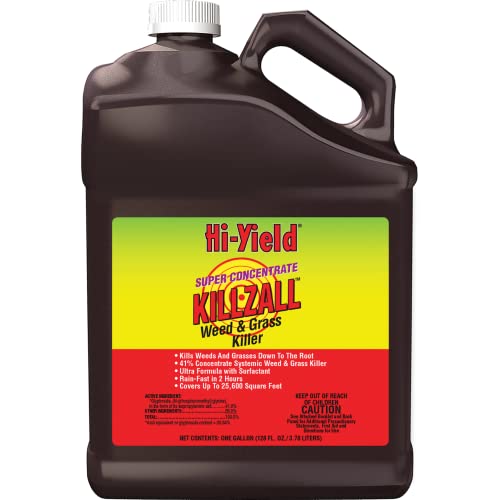
Hi-Yield (33693) Super Concentrate Killzall Weed & Grass Killer, 1 gal | Glyphosate 41% super concentrate - Kills weeds & grasses to root, mixes to treat large areas, 1 gal - Serious DIYers
Check price on Amazon
Ortho GroundClear Year Long Vegetation Killer Refill, 1 gal. | Ready-To-Use Weed Killer Spray, Kills Weeds and Grasses to the Root, Prevents Unwanted Growth for up to 1 Year
Check price on Amazon
Spectracide Weed & Grass Killer Concentrate for Driveways & Walkways, 16 Oz | Mix & Apply With Sprayer, Kills Broadleaf Weeds & Grasses Down To The Root, Use on Driveways & Walkways, Visible in 3 Hours
Check price on Amazon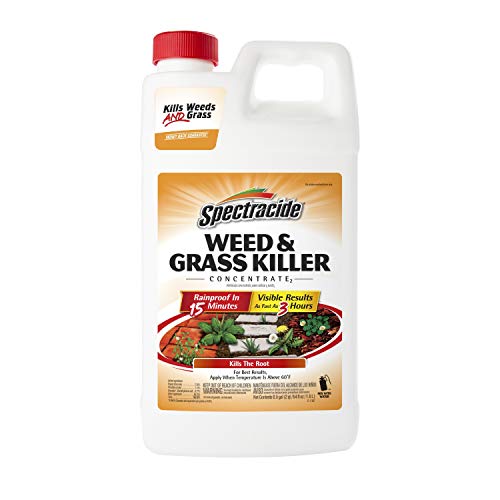
Spectracide Weed & Grass Killer Concentrate for Driveways & Walkways, 64 Oz | Mix & Apply With Sprayer, Kills Broadleaf Weeds & Grasses Down To The Root, Use on Driveways & Walkways, Visible in 3 Hours
Check price on AmazonFrequently Asked Questions
What is the strongest weed and grass killer available?
Non-selective herbicides containing glyphosate or industrial-strength acetic acid are generally the strongest options for total vegetation control. These kill any plant they contact, so they're best used on driveways, patios, and fence lines — not on lawns. For lawn-safe options, look for selective herbicides with multiple active ingredients.
Can I use weed killer on my lawn without killing the grass?
Yes — selective herbicides are formulated to kill broadleaf weeds while leaving grass unharmed. Look for products labeled "lawn-safe" or "grass-safe." Always check that the product is compatible with your specific grass type, as some formulations can damage St. Augustine, centipede, or other sensitive turfs.
How long does it take for weed killer to work?
Fast-acting contact herbicides show visible wilting within hours to a couple of days. Systemic herbicides take longer — typically 7–14 days for full kill — but they destroy the root system, preventing regrowth. Premium formulations often work faster than entry-level products due to advanced adjuvants that speed absorption.
Is it safe to use weed killer around pets?
Many modern weed killers are labeled pet-safe once dry, but you should always read the label. Products labeled "pet-safe" or "organic" are formulated to break down quickly and pose minimal risk. Keep pets off treated areas until the product has fully dried, typically 2–4 hours for most formulations. For a dedicated solution, consider a weed and grass killer that is safe for pets.
Can I use weed killer in my vegetable garden?
Only if the product is specifically labeled for use in vegetable gardens. Some herbicides leave residues that can harm future crops or contaminate produce. Look for products approved for organic gardening or those with short soil half-lives. A weed and grass killer safe for vegetable gardens is the right choice for edible plots.
Should I use pre-emergent or post-emergent weed killer?
Both have their place. Pre-emergent herbicides prevent weed seeds from sprouting and are applied in early spring and fall. Post-emergent herbicides kill weeds that are already growing. For complete control, many homeowners use a pre-emergent in spring followed by spot treatments with a post-emergent as needed throughout the season.
Final Thoughts: Choosing Your Weed and Grass Killer
There is no single "best" weed and grass killer — only the best one for your specific situation. A non-selective herbicide is ideal for hardscapes and fence lines. A selective broadleaf killer is the right choice for a lawn full of dandelions. A grass-specific herbicide handles crabgrass invading your flower beds. And a pet-safe formulation gives you peace of mind when kids and dogs share the backyard.
Before you buy, identify your weeds, decide where you'll apply the product, and consider who uses the treated area. Then choose a product from the tier that matches your needs — entry-level for occasional small jobs, mid-range for regular maintenance, and premium for severe infestations or sensitive environments. With the right product and proper application, you can reclaim your outdoor space and enjoy a weed-free landscape all season long.
For related lawn care topics, you may also find these guides helpful: the best weed and feed for St. Augustine grass, the best weed killer that won't kill grass, and weed killer for lawns that won't kill grass. If you're dealing with a specific lawn variety, our guide on tall fescue care may also be useful.
Ready to Reclaim Your Lawn and Garden?
Browse our top-rated weed and grass killers above and choose the one that fits your needs. With the right product and proper application, a weed-free landscape is within reach.
View Our Top Picks