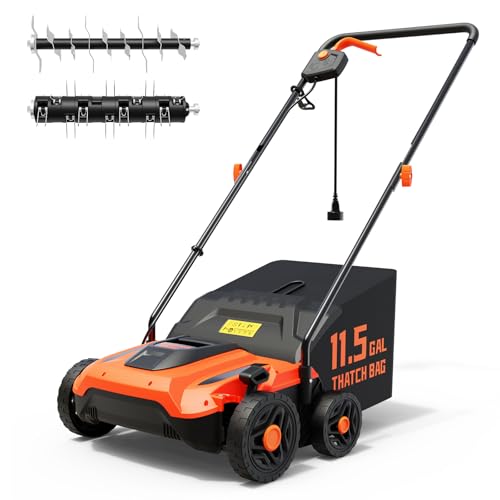
15-Inch 13-Amp Electric Lawn Dethatcher with Collection Bag: A Complete Guide
Everything you need to know about choosing, using, and maintaining an electric dethatcher that pulls thatch, collects debris, and helps your lawn breathe again.
If your lawn feels spongy underfoot, water seems to pool on the surface, or fertilizer never seems to make a difference, the culprit is often a thick layer of thatch. A 15-inch 13-amp electric lawn dethatcher with a collection bag is one of the most practical tools for tackling this problem on a residential property. It combines a manageable cutting width with enough power for routine thatch removal, and the collection bag saves you from the back-breaking cleanup that usually follows.
Homeowners who reach this page are typically past the browsing stage. You already know the product exists, and you want to understand what it does, whether it fits your lawn, and what to expect from ownership. This guide answers those questions in plain language so you can make a confident buying decision.
Quick summary: A 15-inch, 13-amp electric dethatcher is a mid-range, corded tool aimed at small to medium residential lawns. It is best suited for seasonal thatch removal rather than heavy-duty renovation, and a collection bag is a meaningful convenience that reduces raking time.
What Is a 15-Inch 13-Amp Electric Lawn Dethatcher?
A dethatcher is a specialized lawn tool that rakes through the surface layer of your grass to remove thatch, which is the mat of dead stems, roots, and clippings that builds up between the green blades and the soil. When thatch becomes too thick, it blocks air, water, and nutrients from reaching the root zone, creating a shallow-rooted, stressed lawn.
The specific configuration described here has three defining characteristics. The 15-inch working width determines how much lawn you cover per pass, and it is a sweet spot for yards where a wider machine would be unwieldy around beds and curves. The 13-amp motor is the power source, and it sits in a class that handles routine dethatching with authority without the weight and noise of a gas engine. The collection bag attaches to the rear and captures the loosened material, so it does not end up scattered across your lawn.
Compared to manual dethatching rakes or hand-held scarifiers, this machine does the hard work for you. Compared to gas-powered dethatchers, it starts with the pull of a trigger, weighs less, and needs no fuel or oil changes. The trade-off is that the cord limits your range, which is why cord management and a suitable outdoor extension cord become part of the ownership experience.
How the Dethatching Mechanism Works
Beneath the housing, a rotating shaft carries a set of spring tines or flail blades. As the motor spins the shaft, the tines sweep through the top layer of the lawn, snagging loose thatch and pulling it upward while leaving the healthy, rooted grass largely intact. The depth is usually adjustable, allowing you to set the tines just deep enough to scratch the surface without scalping the soil.
The rear collection bag is positioned directly behind the tine assembly. As the tines throw material upward and backward, the bag catches it. This is the practical advantage over bagless designs: you spend your time dethatching rather than stopping to rake. On a typical residential lawn, this single design choice can cut the total project time substantially.
The motor's 13-amp rating tells you how much electrical current the tool draws. In practice, this translates to a motor that maintains speed under load, which matters when the tines encounter thicker patches of thatch or slightly uneven ground. A slower motor might bog down and leave material behind; a well-matched motor keeps the tines moving consistently.
Because the tool is corded, it operates at constant power with no battery recharge cycle. For a task like dethatching, which is typically done in one continuous session, that is an advantage. If you are also tackling related lawn maintenance, pairing this with a core aerator or aeration tools later in the season gives you a complete soil-relief routine.
Benefits of Electric Dethatching for Your Lawn
The most immediate benefit is improved water and nutrient penetration. Once thatch is reduced, irrigation reaches the soil instead of running off, and fertilizer can do its job. Lawns that have been dethatched regularly tend to develop deeper roots, thicker turf density, and better tolerance for drought and heat.
Dethatching also reduces the habitat for certain lawn pests and fungal problems. Thick thatch holds moisture against the soil surface, creating conditions where diseases like brown patch can thrive. Removing the excess layer improves airflow and allows the turf canopy to dry more quickly after rain or irrigation.
From a practical standpoint, an electric dethatcher is quiet, emissions-free, and lightweight enough for most adults to maneuver. It is a reasonable choice for homeowners who value low maintenance and predictable starting, and who have a reliable outdoor outlet nearby. For broader lawn health, you can explore our complete lawn care guides to see how dethatching fits alongside mowing, fertilizing, and watering schedules.
Key Features to Evaluate Before Buying
When comparing models, the depth adjustment mechanism is worth close attention. Entry-level dethatchers may offer only one or two fixed positions, while mid-range and premium models provide a multi-position lever or dial that lets you fine-tune how aggressively the tines engage the lawn. For a 15-inch machine intended for regular use, a range of depth settings is genuinely useful because different grass types and thatch conditions call for different levels of aggressiveness.
The collection bag capacity matters as well. A larger bag means fewer stops to empty, which is important on larger lawns. Look for bags that attach and detach with simple clips or hooks, since you will be removing them frequently. A bag that is awkward to reattach will slow you down more than you might expect.
Wheel size and tread affect maneuverability. Larger rear wheels roll more easily over uneven ground, and a tread pattern that provides grip without digging into soft turf is preferable. Handles should be adjustable so users of different heights can work comfortably, and a foldable handle design makes storage easier in a garage or shed.
Finally, consider cord management. Some dethatchers include a cord hook or strain relief near the handle, which prevents the extension cord from pulling loose during use. If your model lacks this feature, a simple aftermarket cord guide can solve the problem. For related equipment decisions, our guide to self-propelled electric mowers for hills covers how corded and battery tools compare on slopes.
How to Use the Dethatcher Effectively
Start by assessing your thatch layer. If you can pull up a handful of grass and see a brown, spongy layer more than roughly half an inch thick above the soil, dethatching is probably warranted. If the layer is thin, a lighter approach such as a rake or a seasonal mow may be enough. Over-dethatching a thin lawn can stress the grass unnecessarily.
Choose a day when the lawn is moderately moist but not wet. Bone-dry grass makes the tines less effective at grabbing thatch, while saturated soil can be damaged by the machine's weight and tines. Early morning after a light rain is often ideal, provided the surface is not muddy.
Set the depth conservatively on your first pass. The goal is to remove thatch, not to tear up the lawn. Run the dethatcher in straight, overlapping lines, similar to mowing patterns. For heavily thatched areas, a second pass at a slightly deeper setting may be needed. Empty the collection bag before it becomes completely full; an overfilled bag reduces airflow and collection efficiency.
After dethatching, water the lawn lightly and avoid heavy foot traffic for a few days. If you plan to overseed, dethatching creates good seed-to-soil contact, making it an excellent precursor to that task. You can read more about post-dethatching recovery in our guides on overseeding tips.
Maintenance and Long-Term Care
Electric dethatchers are refreshingly low-maintenance. There is no oil to change, no spark plug to replace, and no fuel system to winterize. The main wear items are the tines or flail blades, which gradually dull or bend with use. Inspect them after each session and replace worn sets according to the manufacturer's schedule.
After every use, disconnect the power and clear the underside of the housing. Thatch, grass clippings, and soil can accumulate around the tine shaft and reduce performance over time. A stiff brush and a quick visual inspection are usually sufficient. Check the collection bag for tears or loose seams, since a damaged bag will leak debris.
Store the machine in a dry location, and coil the cord loosely rather than wrapping it tightly around the handle, which can strain the wiring. If your model has a foldable handle, use it to save space and to protect the controls. For broader tool care guidance, see our article on cleaning and sharpening garden tools.
Who Should Consider This Type of Dethatcher
This configuration is best suited to homeowners with small to medium residential lawns who want a dedicated seasonal tool for thatch control. It is also a good fit for gardeners who already own a corded electric mower and are comfortable managing an extension cord. The combination of a 15-inch width and a collection bag makes it efficient without being oversized.
It is less ideal for very large properties, where a wider gas-powered or tow-behind unit would reduce the number of passes required. It is also not the right tool for heavy lawn renovation, such as complete turf removal or significant grading work. If your goals lean toward renovation, our residential zero-turn mower guide for rough terrain covers equipment that handles more demanding conditions.
For apartment dwellers or those with tiny courtyards, a manual dethatching rake may be sufficient and easier to store. The electric dethatcher earns its place when the lawn is large enough that hand-raking becomes a chore but small enough that a walk-behind electric machine is practical.
Buying Considerations: Tiers and Trade-Offs
Electric dethatchers generally fall into three broad tiers. Entry-level models tend to have simpler depth controls, smaller collection bags, and lighter-duty motors. Mid-range models, which include the 13-amp, 15-inch category described here, usually offer better depth adjustment, more robust tines, and improved bag attachment systems. Premium models add features such as larger bags, more powerful motors, and sturdier frames, often with a corresponding increase in weight.
The practical takeaway is that the mid-range tier is where most homeowners find the best balance of capability and usability. A mid-range unit will typically handle a full season of routine dethatching without complaint, while an entry-level model may be better suited to occasional use on very small lawns. Premium models make sense for larger properties or for users who want the smoothest possible operation and are willing to accept extra weight.
Pay attention to the warranty and the availability of replacement tines. A tool is only as good as its support ecosystem. Brands that stock replacement parts and publish clear maintenance instructions are generally a safer long-term choice. Also confirm the recommended extension cord gauge for the motor's amp draw, since using an undersized cord can cause voltage drop and reduce performance.
Fitting Dethatching into a Complete Lawn Care Plan
Dethatching is one piece of a larger puzzle. A healthy lawn program typically includes proper mowing height, consistent watering, seasonal fertilization, and periodic aeration. Dethatching pairs naturally with aeration, since both improve soil access, but they are usually done at different times to avoid stressing the grass too much in one season.
If your lawn has weed pressure, addressing that before or after dethatching can improve results. Our guides on the best products to get rid of weeds in lawns and natural weed killers that won't harm grass can help you plan the sequence. Similarly, if you are repairing bare spots after dethatching, our article on bare spot repair walks through the steps.
For homeowners comparing equipment, our overview of self-propelled mowers for uneven terrain and riding mowers for hills and rough terrain can help you build a coherent tool lineup. And if you are also improving the broader landscape, our guides on grass seed for clay soil and full sun and grass seed for sandy soil cover the seeding side of lawn restoration.
Frequently Asked Questions
What does a 13-amp electric lawn dethatcher actually do?
A 13-amp electric dethatcher uses rotating tines or blades to pull up the layer of dead grass, roots, and organic debris known as thatch from the surface of your lawn. Removing this layer allows water, air, and nutrients to reach the soil and grassroots, which helps the lawn breathe and grow healthier.
Why does a collection bag matter on a dethatcher?
The collection bag captures the loosened thatch as you work, so you are not left raking piles of debris across the yard afterward. It keeps the lawn surface cleaner, reduces the number of passes you need to make, and makes cleanup significantly faster for most homeowners.
When is the best time to dethatch a lawn?
The best time to dethatch is during the active growing season for your grass type, typically early spring or early fall. Dethatching when the grass is actively growing helps it recover quickly. Avoid dethatching during heat stress or dormancy periods.
Is a 15-inch electric dethatcher suitable for large lawns?
A 15-inch width is ideal for small to medium-sized lawns. For very large properties, a wider gas-powered or tow-behind unit may be more efficient. For most residential yards, however, a 15-inch electric model provides a good balance of maneuverability and coverage.
Does an electric dethatcher require much maintenance?
Electric dethatchers are generally low-maintenance compared to gas models. There is no engine oil, spark plug, or fuel to manage. Routine care mostly involves inspecting the tines or blades for wear, cleaning the underside after use, and checking the collection bag for tears.
Final Thoughts
A 15-inch 13-amp electric lawn dethatcher with a collection bag is a focused, practical tool for homeowners who want to address thatch without committing to gas-powered equipment. It is at its best on small to medium lawns, during the active growing season, and as part of a broader lawn care routine that includes proper mowing, watering, and aeration. The collection bag is not a minor detail; it is the feature that turns dethatching from a two-step chore into a single, manageable task.
If your lawn is showing signs of thatch buildup and you are ready to take the next step, browse the recommended models below. Each listing is drawn from current product data, and the disclosure notice explains how affiliate links support this site at no additional cost to you.