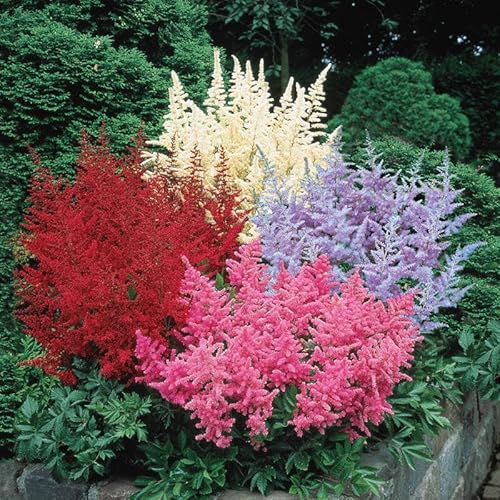
Astilbe: Feathery Plumes for the Shade Garden
Transform dark corners into vibrant displays with astilbe — the low-maintenance perennial that blooms in rich colors even where sun is scarce. Perfect for woodland gardens, borders, and moist soils.
Jump to Care Guide ↓Astilbe (also known as false spirea or false goat's beard) is a shade-loving perennial that produces spectacular feathery plumes in pink, red, white, and lavender. Blooming from early to late summer, these hardy plants add texture and color to areas where many flowers struggle. Whether you're filling a woodland edge, a shady border, or a damp corner, astilbe delivers reliable beauty with minimal fuss.
Native to Asia and North America, astilbe thrives in moist, well-drained soil and prefers dappled to partial shade. With proper care, these clump-forming perennials will return year after year, gradually expanding into impressive mounds of fern-like foliage topped with airy flowers.
🌱 Planting & Care Essentials
📍 Where to Plant
- Light: Partial to full shade (morning sun + afternoon shade is ideal).
- Soil: Rich, humusy, consistently moist but well-drained. pH 5.5–6.5.
- Spacing: Plant 18–30 inches apart, depending on variety.
- Hardiness: Zones 4–8 (most varieties).
Astilbe pairs beautifully with hostas, ferns, and coral bells in a shade garden.
💧 Watering & Feeding
- Water: Keep soil evenly moist — never let it dry out completely. Mulch to retain moisture.
- Fertilizer: Apply a balanced slow-release fertilizer in spring (10-10-10 or similar).
- Deadheading: Remove spent flower plumes to encourage a second flush (though not required).
- Dividing: Divide clumps every 3–4 years in early spring or fall to rejuvenate.
For a complete feeding schedule, see our guide to fertilizers.
🌸 Popular Astilbe Varieties
Most astilbe varieties grow 18–40 inches tall with a spread of 18–30 inches. Dwarf types are perfect for containers or small gardens.
🌿 Landscape Design with Astilbe
Woodland & Shade Borders
Astilbe shines in woodland gardens alongside hostas, ferns, and bleeding heart. Use taller varieties at the back of borders, shorter ones at the front.
Moist Areas & Water Features
Astilbe thrives near ponds, streams, or rain gardens where soil stays consistently moist. Its feathery plumes soften the edges of water features beautifully.
Combine with liriope or creeping phlox for groundcover contrast.
💡 Pro Tip: Astilbe is generally pest-free, but watch for powdery mildew in dry conditions. Water at the base, provide good airflow, and mulch to keep roots cool. If leaves scorch, it’s a sign of too much sun — move to a shadier spot.
✨ Why Astilbe Belongs in Your Garden
- ✔ Thrives in shade where other flowers fade
- ✔ Low-maintenance & deer-resistant
- ✔ Long bloom period (4–6 weeks)
- ✔ Attracts pollinators like bees & butterflies
- ✔ Excellent cut flower for bouquets
- ✔ Hardy, reliable, and easy to divide
📘 Keep exploring: Learn more about shade plants that attract hummingbirds, or discover full-sun perennials for other parts of your garden. For a complete shade garden design, check our shade garden design ideas.