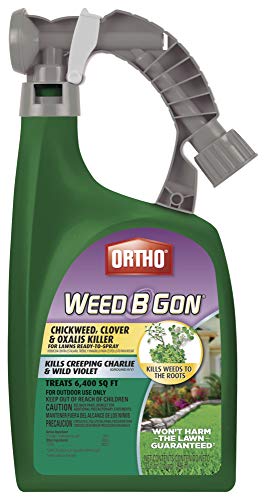
Best Weed and Feed to Get Rid of Clover
Clover is more than a cosmetic nuisance—it is a signal that your lawn is struggling. The right weed and feed product can eliminate existing clover while feeding the grass to crowd out future growth. Here is everything you need to choose and apply it correctly.
Why clover keeps coming back: White clover is a nitrogen-fixing legume. It thrives in lawns that are thin, under-fertilized, or compacted because it can produce its own nitrogen while turfgrass cannot [citation:4][citation:8]. A weed and feed product addresses both problems at once—it kills the clover you see and feeds the grass so it can outcompete weeds in the future. But not every weed and feed is safe for every grass type, and timing matters more than most homeowners realize.
What to Look for in a Clover-Killing Weed and Feed
Weed and feed products combine a selective herbicide with a lawn fertilizer. For clover control, the herbicide component must contain one or more of the active ingredients that are proven effective against broadleaf weeds like clover. According to extension specialists and lawn care experts, the most reliable options include 2,4-D, dicamba, MCPP (mecoprop), and triclopyr [citation:6][citation:10]. Products that combine multiple active ingredients tend to be more effective than single-ingredient formulas because clover can be stubborn and may require a multi-pronged approach.
The fertilizer component is equally important. Clover establishes where grass is thin and nitrogen-poor. A weed and feed with a nitrogen-forward analysis—such as 26-0-2 or 25-0-2—feeds the turf so it thickens and shades the soil, making it harder for clover seeds to germinate [citation:7][citation:15]. If you are also dealing with other broadleaf weeds or grassy weeds, a broader-spectrum product may be worth considering. For dedicated clover and creeping Charlie control, you can also review our guide to the best weed killer for clover and creeping Charlie.
| Product Type | Key Active Ingredients | Best For | Important Cautions |
|---|---|---|---|
| Granular Weed & Feed (standard) | 2,4-D, dicamba, MCPP | Cool-season grasses (fescue, bluegrass, ryegrass) and many warm-season grasses | Do not use on St. Augustinegrass or centipedegrass unless the label explicitly permits it; apply to wet grass for granule adhesion [citation:7] |
| Warm-Season Formula | 2,4-D, dicamba (formulated for southern grasses) | Bermudagrass, zoysiagrass, and other warm-season lawns | Verify the label for your specific grass species; some formulas still exclude St. Augustine [citation:5] |
| Liquid Concentrate | 2,4-D, dicamba, triclopyr | Spot treatment, faster visible results, and precise coverage | Requires mixing and a sprayer; can be more difficult to apply evenly over large areas [citation:5] |
| Fall Formula | 2,4-D, dicamba, plus potassium and micronutrients | Fall application when clover is still active but grass is preparing for dormancy | Fall is often cited as the optimal season for clover control because the plant is storing energy for winter [citation:18] |
How to Apply Weed and Feed for Clover Control
Application technique determines whether a weed and feed works or wastes your money. Granular products need to stick to the clover leaves long enough for the herbicide to be absorbed. That is why most manufacturers instruct you to apply to a damp lawn—either early morning dew or a light watering—and then hold off on watering for at least 24 hours [citation:7]. If rain is in the forecast within 24 hours, wait.
- Mow first, but not immediately before. Mow your lawn one to two days before application so the clover leaves are intact and tall enough to catch the granules. Do not mow for at least 24 hours after applying [citation:7].
- Apply when weeds are actively growing. Daytime temperatures should be consistently between 60°F and 90°F. Clover is most vulnerable when it is actively growing, typically in spring or early fall [citation:7][citation:18].
- Use the right spreader setting. Follow the product label for your specific spreader. Scotts products, for example, list settings for broadcast, drop, and handheld spreaders. An uneven application can leave streaks of dead grass or patches of surviving clover.
- Water lightly before, then wait. Dampen the lawn so granules adhere to the clover leaves. Do not water for 24 hours after application. After that window, water normally to activate the fertilizer component [citation:7].
- Be patient. Clover leaves will begin to curl and twist within a few days, but complete control can take two to four weeks. Do not reapply immediately if you do not see results within a week [citation:7].
If your lawn is a warm-season variety and you prefer a liquid application, our article on the best liquid weed and feed concentrate for sprayers covers options that may work faster on existing clover. For St. Augustine lawns specifically, check our dedicated guide to the best liquid weed and feed for St. Augustine grass to avoid products that could damage your turf.
Beyond Weed and Feed: Making Sure Clover Stays Gone
Weed and feed kills the clover that is present, but it does not fix the underlying conditions that allowed clover to establish. To keep clover from returning, pair your treatment with cultural practices that strengthen the turf:
Fertilize on a schedule. Clover thrives in low-nitrogen soil. A consistent fertilization program—typically two to four applications per year depending on your grass type—keeps nitrogen levels up and turf density high [citation:4][citation:8]. If you prefer a combined approach, an organic fertilizer and weed killer for lawns can be a good alternative for homeowners who want to minimize synthetic inputs.
Mow higher. Scalping your lawn exposes soil to sunlight and gives clover an advantage. Raising your mower deck to the upper end of the recommended range for your grass type shades the soil and helps grass outcompete weeds [citation:18].
Water deeply and infrequently. Shallow, frequent watering encourages shallow roots and weak turf. Deep watering—about 1 inch per week, including rainfall—promotes deeper grass roots that can compete better with clover [citation:18]. If you need help with irrigation coverage, see our guide on the best way to water grass without a sprinkler system.
Address bare spots. Clover seeds germinate readily in bare soil. Overseed thin areas in early fall so grass fills in before clover has a chance to establish. For lawns with challenging soil, choosing the right grass seed makes a difference—our articles on the best grass seed for clay soil and full sun and the best grass seed for full sun and sandy soil can help you select a variety that will thicken up reliably.
When Weed and Feed Is Not Enough
If clover has completely overtaken large sections of your lawn, a single weed and feed application may only thin it out rather than eliminate it. In severe cases, a dedicated post-emergent herbicide applied as a spot treatment—followed by overseeding once the clover is dead—may be more effective than a combined product. Our guide to the best product to get rid of clover in lawn covers standalone herbicide options, and the best way to get rid of clover in your lawn walks through a step-by-step removal strategy for heavily infested turf.
For homeowners who prefer to avoid synthetic herbicides altogether, hand-pulling after rain is effective for small patches, and improving lawn health alone can gradually crowd out clover over one to two seasons [citation:2][citation:14]. If you are dealing with other broadleaf weeds alongside clover, a broader approach may be needed—see the best product to get rid of weeds in lawn for combination strategies.
Frequently Asked Questions
Can I use weed and feed on St. Augustinegrass to kill clover?
Most standard weed and feed products containing 2,4-D or dicamba are not safe for St. Augustinegrass and can cause severe injury. You must use a product specifically labeled for St. Augustinegrass, or use a liquid formula designed for sensitive warm-season turf. Always read the label before applying [citation:7][citation:15].
Is it better to apply weed and feed in spring or fall for clover?
Fall is generally considered the optimal time for clover control because clover is actively storing energy for winter and translocates herbicides more effectively. Spring applications can work, but clover may regrow from roots if the application is made too early or during heat stress [citation:18].
How long does it take for weed and feed to kill clover?
You will typically see clover leaves curling and twisting within a few days. Complete death of the plant, including the root system, can take two to four weeks. Cool temperatures or dry conditions may slow the process further [citation:7].
Will weed and feed kill grass if I apply too much?
Yes. Over-application can damage turfgrass, especially if the product contains dicamba or if you apply in overlapping passes. Use a calibrated spreader and follow the label rate exactly. If you accidentally over-apply, water the lawn lightly to dilute the concentration and monitor for yellowing or browning.
Can I overseed after using weed and feed?
Most weed and feed products require a waiting period before seeding—often at least four weeks, and sometimes longer for products containing certain herbicides. Check the label. If you plan to overseed in fall, apply weed and feed early enough to leave adequate time before seeding, or use a product specifically formulated to allow overseeding sooner.
For a complete weed management strategy that goes beyond clover, explore our best weed control for lawns guide and the best weed killer for lawns that doesn’t kill grass.